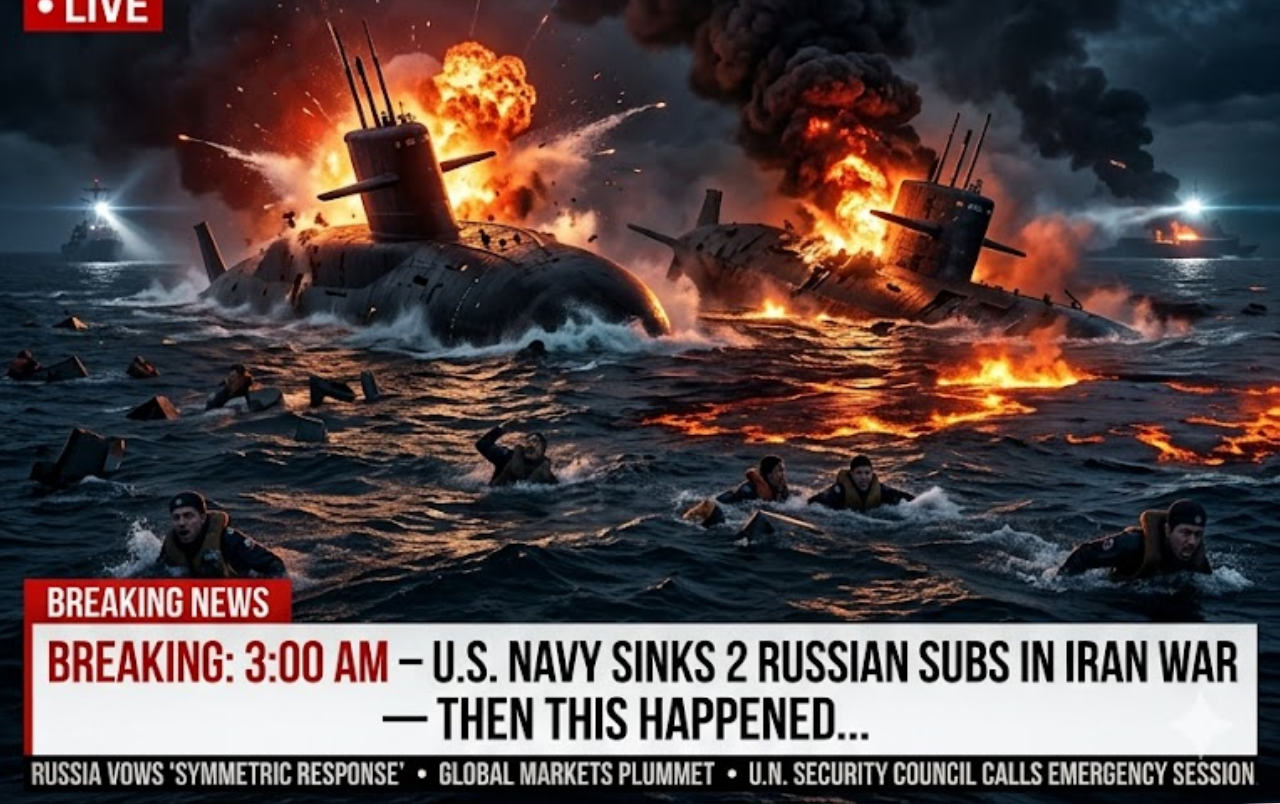
In the early hours of the morning, a dramatic and highly contested development has emerged from the escalating US–Iran conflict: reports claim that the US Navy has sunk two Iranian submarines, triggering an urgent response from Russia and raising fears of a broader geopolitical crisis.
While no official confirmation has verified the destruction of two submarines specifically, there is confirmed evidence that US naval forces have already carried out major maritime strikes in this conflict. In one notable incident, a US submarine torpedoed and sank an Iranian warship — the first such attack of its kind since World War II — marking a significant escalation in naval warfare.
Building on that context, new claims suggest that US forces may now be expanding their operations beneath the surface, targeting Iranian submarine assets believed to be operating in or near strategic waters such as the Persian Gulf and the Strait of Hormuz. If true, this would represent a major shift toward anti-submarine warfare (ASW) in an already volatile theater.
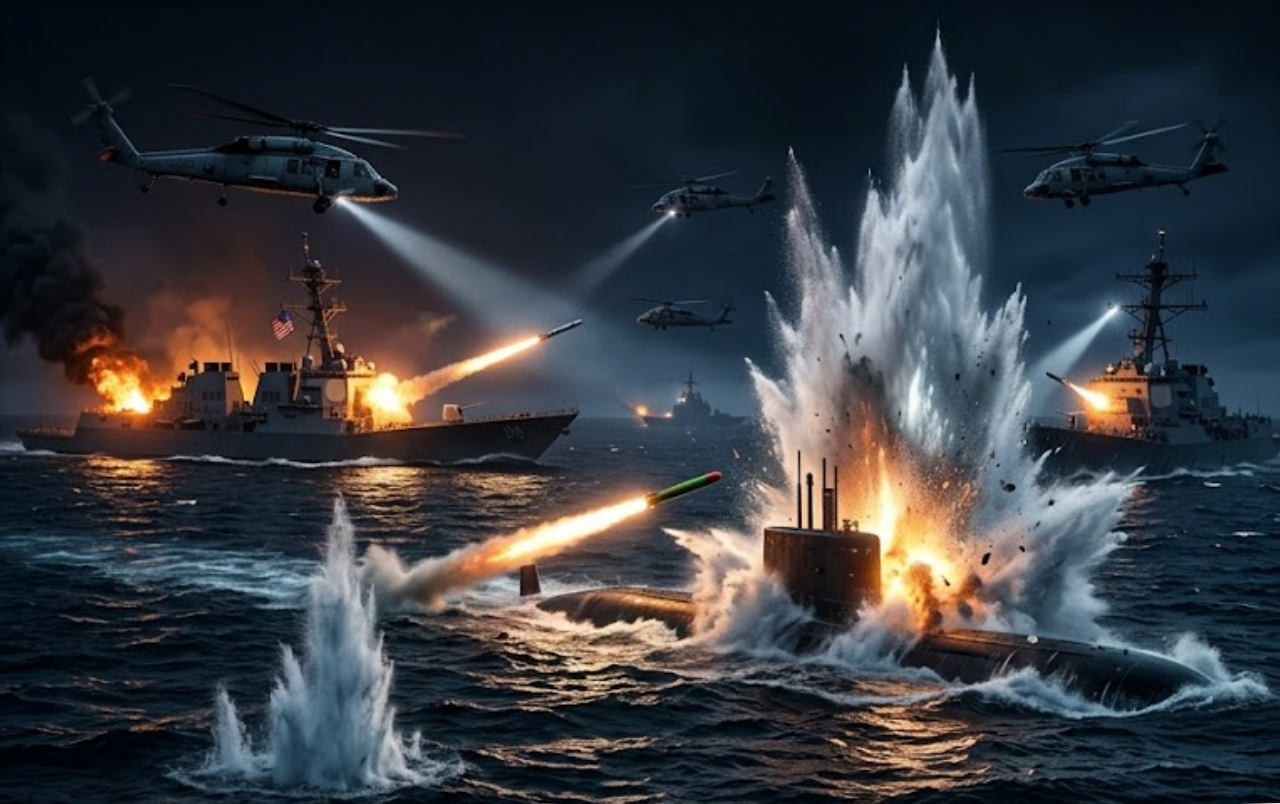
According to unverified reports circulating online, the alleged submarine strikes occurred around 3:00 AM local time, with US naval assets detecting and engaging hostile underwater targets using advanced sonar tracking and torpedo systems. The destruction of two subs would deal a significant blow to Iran’s naval capabilities, particularly its ability to conduct stealth operations, mine shipping lanes, or launch surprise البحرية attacks.
What has captured global attention, however, is the reported immediate response from Russia. Sources claim that Moscow initiated urgent communication channels following the incident, possibly seeking clarification, de-escalation, or coordination amid rising tensions. While details of the call remain unclear, Russia has consistently positioned itself as a key geopolitical player in the region, often opposing US-led military actions.
Despite the intensity of these claims, it is crucial to note that no major international news outlets or official defense departments have confirmed the sinking of two Iranian submarines. In contrast, verified reports continue to focus on air losses and surface naval engagements rather than confirmed underwater battles.
Military analysts caution that such narratives may be part of information warfare, where real events are amplified or altered to shape perception and influence global reactions. In modern conflicts, especially one as complex as the US–Iran confrontation, the line between verified العمليات and viral speculation is increasingly blurred.
Strategically, if submarine losses were confirmed, the consequences would be severe. Submarines represent one of the most valuable and covert components of any navy, capable of disrupting trade routes, launching missiles, and maintaining strategic deterrence. Their loss would weaken Iran’s ability to control critical waterways and project power.
As the situation continues to unfold, one thing is certain: the الحرب is no longer confined to land or air — it is expanding into the depths of the sea, where visibility is low, but stakes are extraordinarily high.
For now, the world watches and waits for confirmation — because in today’s battlefield, the truth often surfaces last.