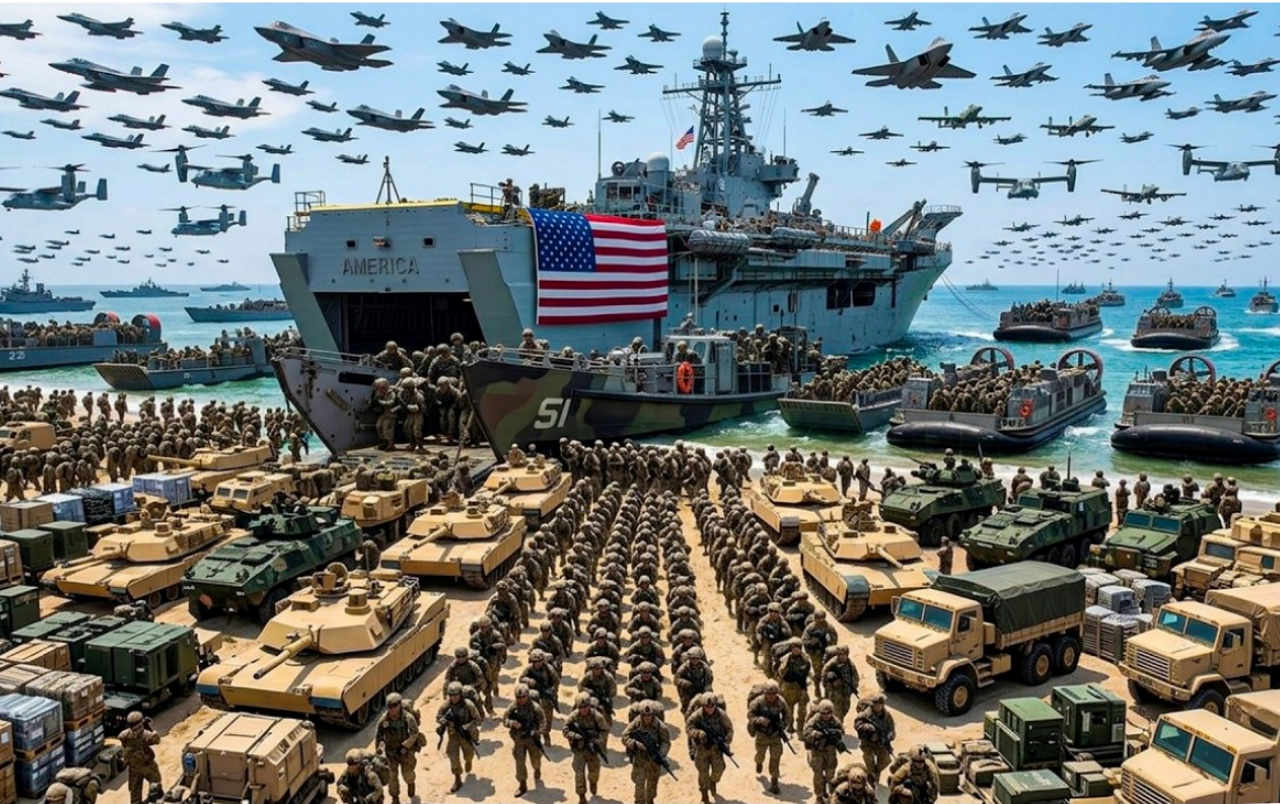
A massive US military buildup is unfolding across the Middle East, as thousands of American troops, advanced fighter jets, and attack helicopters are rapidly deployed amid the intensifying conflict with Iran. While viral headlines suggest an all-out offensive, verified reports confirm a significant and ongoing escalation of US military presence in the region.
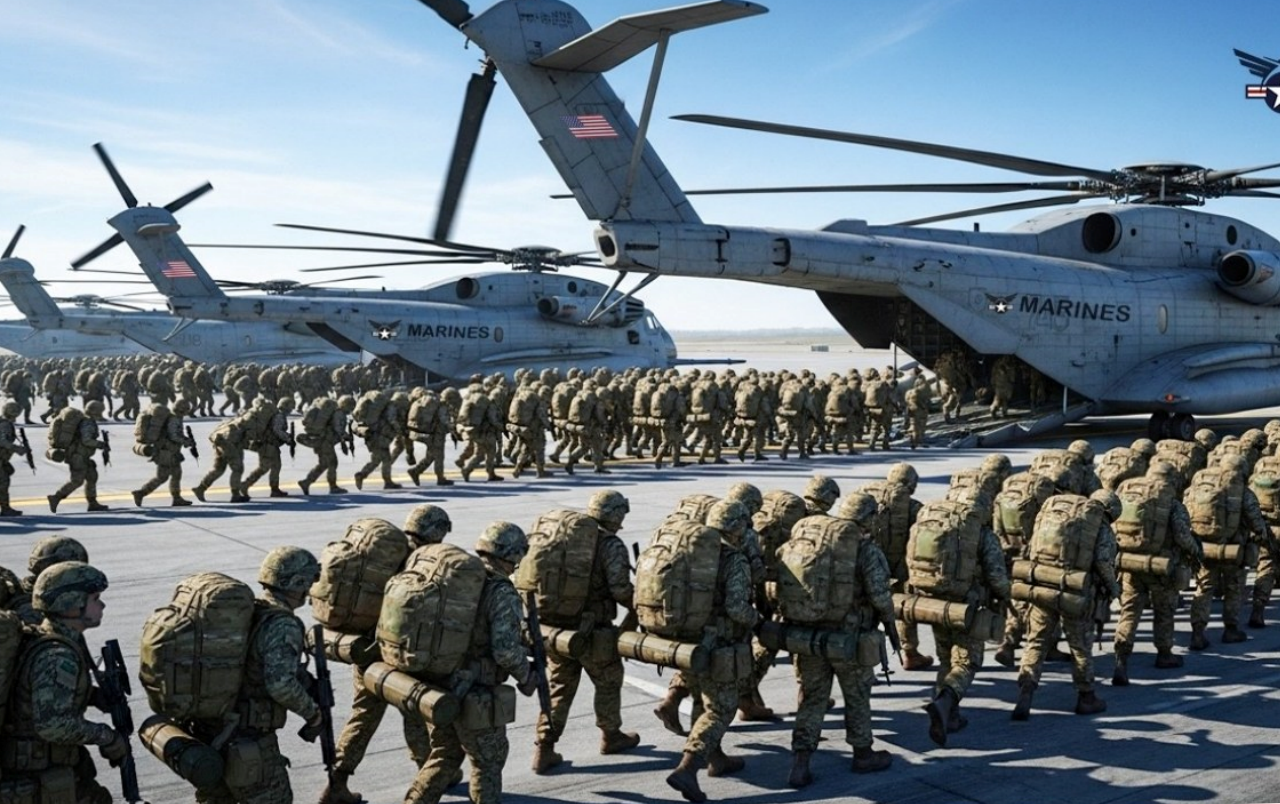
Recent defense updates indicate that between 2,500 and 3,500 US Marines have been deployed aboard amphibious warships, including the USS Tripoli, forming a powerful expeditionary force capable of rapid combat operations. These Marine Expeditionary Units (MEUs) are specifically designed for crisis response, amphibious assaults, and high-intensity battlefield scenarios — giving the US flexible options ranging from deterrence to direct engagement.
In addition to ground forces, the buildup includes fighter aircraft, attack helicopters, and airborne units, significantly expanding America’s operational capabilities. Reports confirm that assets such as A-10 attack aircraft and Apache helicopters are either deployed or being positioned for combat readiness. Meanwhile, elements of elite rapid-response units like the 82nd Airborne Division have also arrived in the region, signaling preparedness for potential ground operations.
The timing of this buildup is critical. The US–Iran war has already seen intense aerial combat, missile strikes, and naval clashes, including the confirmed downing of US aircraft and ongoing rescue operations for missing personnel. These incidents highlight that despite earlier claims of air dominance, Iran retains significant military capability — particularly in missile and drone warfare.
So, is this a full-scale invasion?
Not necessarily — at least not yet.
Military analysts emphasize that Marine deployments of this scale are often used as strategic leverage rather than immediate invasion forces. MEUs can secure shipping lanes like the Strait of Hormuz, evacuate civilians, reinforce embassies, or conduct limited strike operations. However, their presence also creates the option for rapid escalation, should the conflict intensify further.
From a strategic perspective, this buildup represents a shift toward multi-domain warfare — combining air superiority, ground mobility, and naval dominance into a unified combat framework. The integration of fighter jets, helicopters, and Marines allows the US to respond dynamically across land, sea, and air.
At the same time, the psychological impact is undeniable. The image of thousands of Marines moving toward the conflict zone sends a powerful signal — not just to Iran, but to the entire region.
Still, uncertainty remains. While headlines may frame this as America “unleashing everything,” the reality is more nuanced: a calculated, high-stakes military posture designed to maintain pressure, deter escalation, and prepare for multiple scenarios.
As tensions continue to rise, one thing is clear — the conflict is entering a far more dangerous phase, where the line between deterrence and full-scale war is becoming increasingly thin.