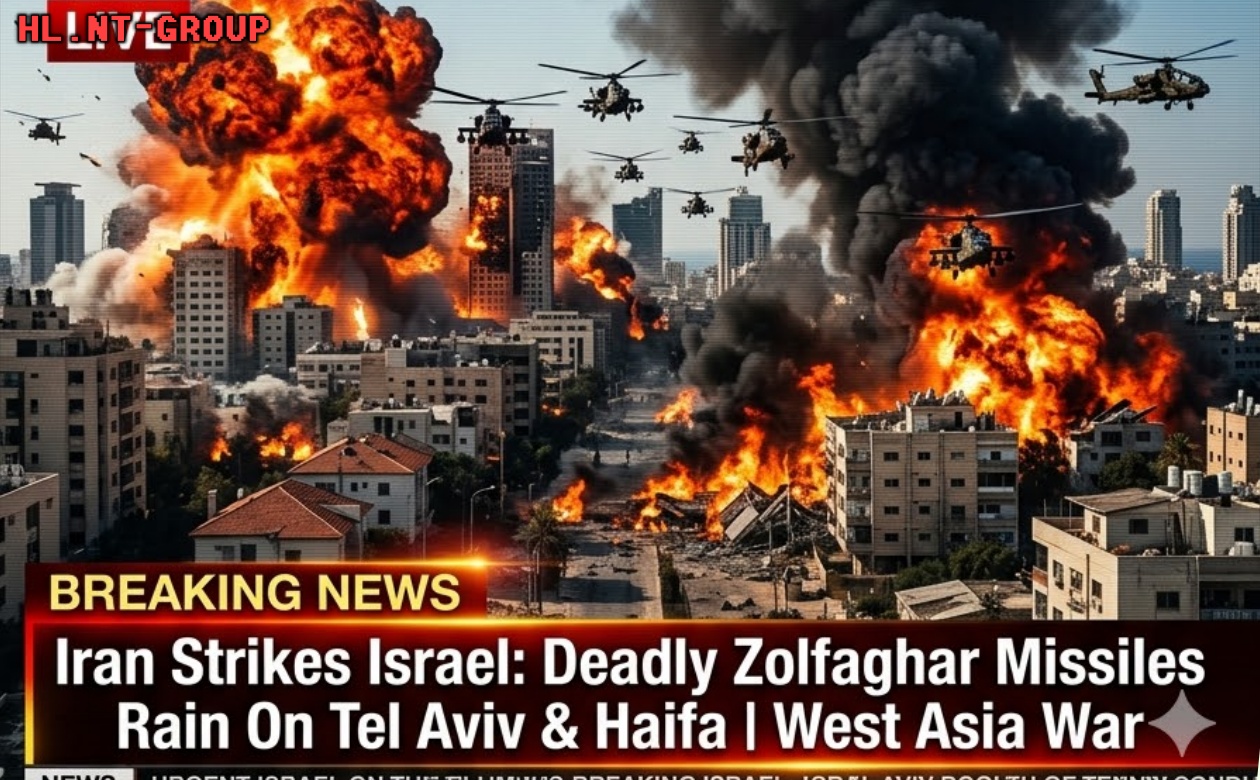
The West Asia war has reached a terrifying new level of intensity as Iran unleashes waves of deadly Zolfaghar ballistic missiles on major Israeli cities, including Tel Aviv and Haifa, marking one of the most aggressive phases of the ongoing conflict. These strikes, carried out by Iran’s Islamic Revolutionary Guard Corps (IRGC), are part of a broader campaign of sustained missile barrages aimed at overwhelming Israel’s air defense systems and inflicting both strategic and psychological damage.
The Zolfaghar missile, a short-range ballistic system with a range of up to 700 kilometers and a high-explosive payload, is designed for precision strikes against high-value targets. Its advanced guidance system and ability to deploy submunitions make it particularly dangerous in urban environments, where even near-misses can cause widespread destruction. As these missiles rain down on densely populated areas, explosions have rocked residential neighborhoods, industrial zones, and critical infrastructure, leaving civilians scrambling for shelter amid sirens and interception attempts.
Recent attacks have demonstrated the devastating impact of these العمليات. In Haifa, missile strikes have caused fatalities and severe structural damage, while in Tel Aviv, residential buildings have been hit, resulting in casualties and widespread panic. Eyewitness footage and reports describe fireballs lighting up the skyline, shockwaves shattering windows, and debris scattering across city streets. Even when intercepted, fragments from incoming missiles or defensive countermeasures continue to pose lethal risks to civilians.
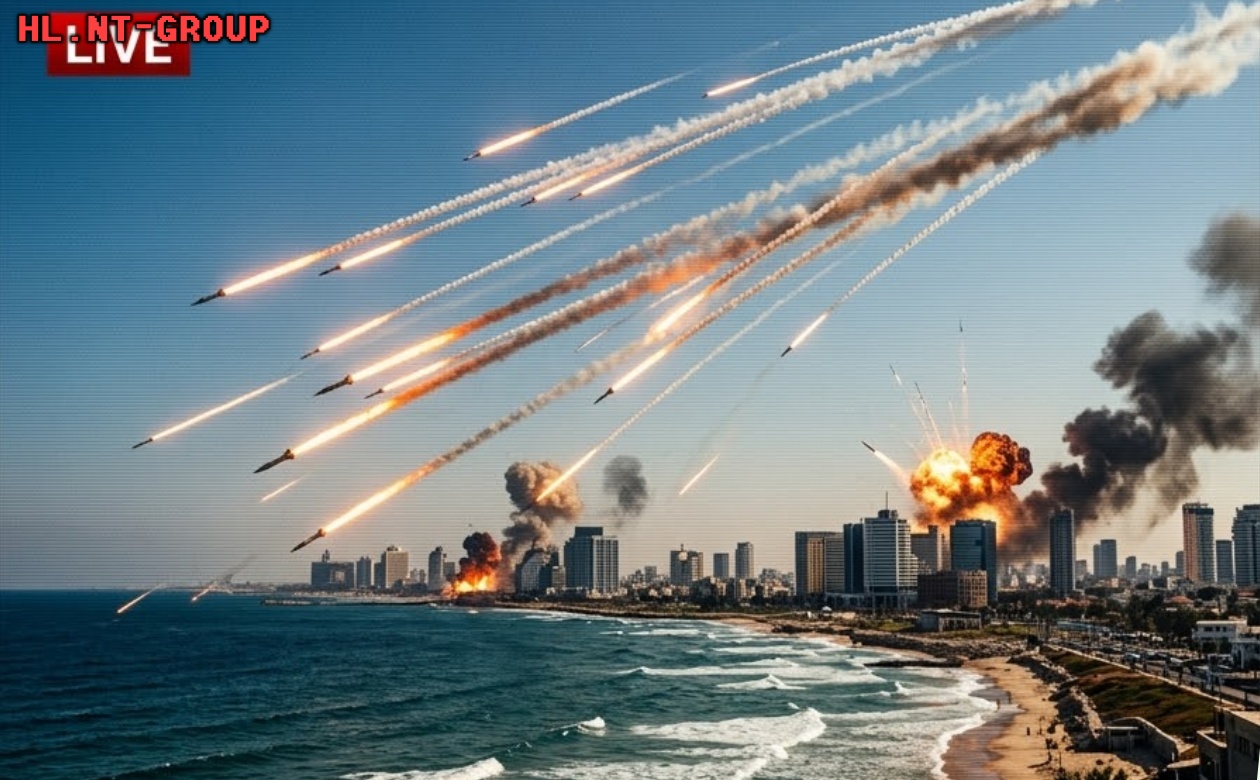
Iran’s strategy appears to rely on saturation tactics—launching multiple waves of missiles in quick succession to stretch Israel’s multi-layered defense systems to their limits. Reports indicate that dozens of missile waves have already been fired as part of ongoing operations, targeting not only urban centers but also military installations and economic assets. This approach increases the likelihood that some missiles will penetrate defenses, amplifying the overall impact of each attack.
The humanitarian consequences are severe and growing. Civilian casualties continue to rise, with families killed or injured in their homes, and emergency services struggling to respond under constant threat. The use of cluster-type warheads in some missile strikes has further heightened concerns, as unexploded submunitions can pose long-term dangers even after the initial attack.
From a strategic perspective, these missile assaults signal a shift toward prolonged, high-intensity warfare. Iran’s ability to sustain repeated strikes demonstrates its offensive reach, while Israel’s continued interceptions highlight its defensive capabilities—yet neither side appears able to decisively dominate the battlefield. The الحرب is evolving into a contest of endurance, where missile stockpiles, technological resilience, and civilian morale all play critical roles.
Ultimately, the rain of Zolfaghar missiles over Tel Aviv and Haifa underscores the escalating масштабы of the West Asia war. As both sides intensify their military operations, the conflict is becoming more destructive, more unpredictable, and increasingly difficult to contain—raising urgent concerns about what the next phase of this الحرب might bring.