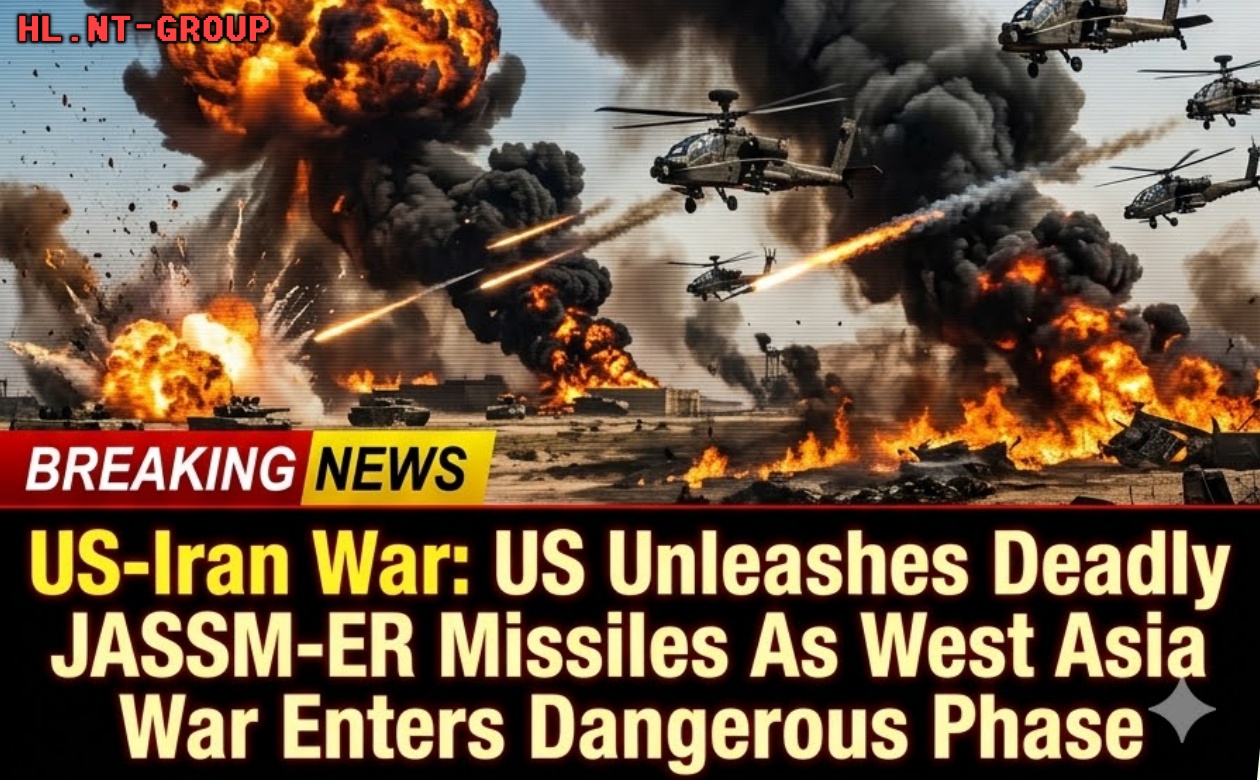
The US-Iran war is entering an increasingly dangerous and निर्णायक phase as the United States intensifies its military campaign by deploying large numbers of advanced JASSM-ER cruise missiles—one of the most lethal and sophisticated weapons in its arsenal. This escalation signals a clear shift toward long-range, high-precision warfare, as Washington seeks to strike deep into Iranian territory while minimizing risks to its aircraft and personnel.
The AGM-158 JASSM-ER (Joint Air-to-Surface Standoff Missile–Extended Range) is a stealth-enabled cruise missile designed to penetrate heavily defended airspace and destroy high-value targets with exceptional accuracy. With a strike range of over 600 miles (approximately 1,000 kilometers), the missile allows US forces to engage critical infrastructure, military bases, and underground facilities without entering hostile zones. This capability has become central to the US strategy, particularly as Iranian air defense systems and battlefield risks continue to evolve.
Recent reports indicate that the United States is committing nearly its entire inventory of JASSM-ER missiles to the Iran conflict, pulling them from global stockpiles and redeploying them to bases under US Central Command. In fact, more than 1,000 of these missiles have already been used in the early stages of the war, highlighting both the intensity of operations and the reliance on this high-tech weapon system. This масштаб deployment underscores the seriousness of the campaign, as well as the strategic importance placed on precision strike capabilities.
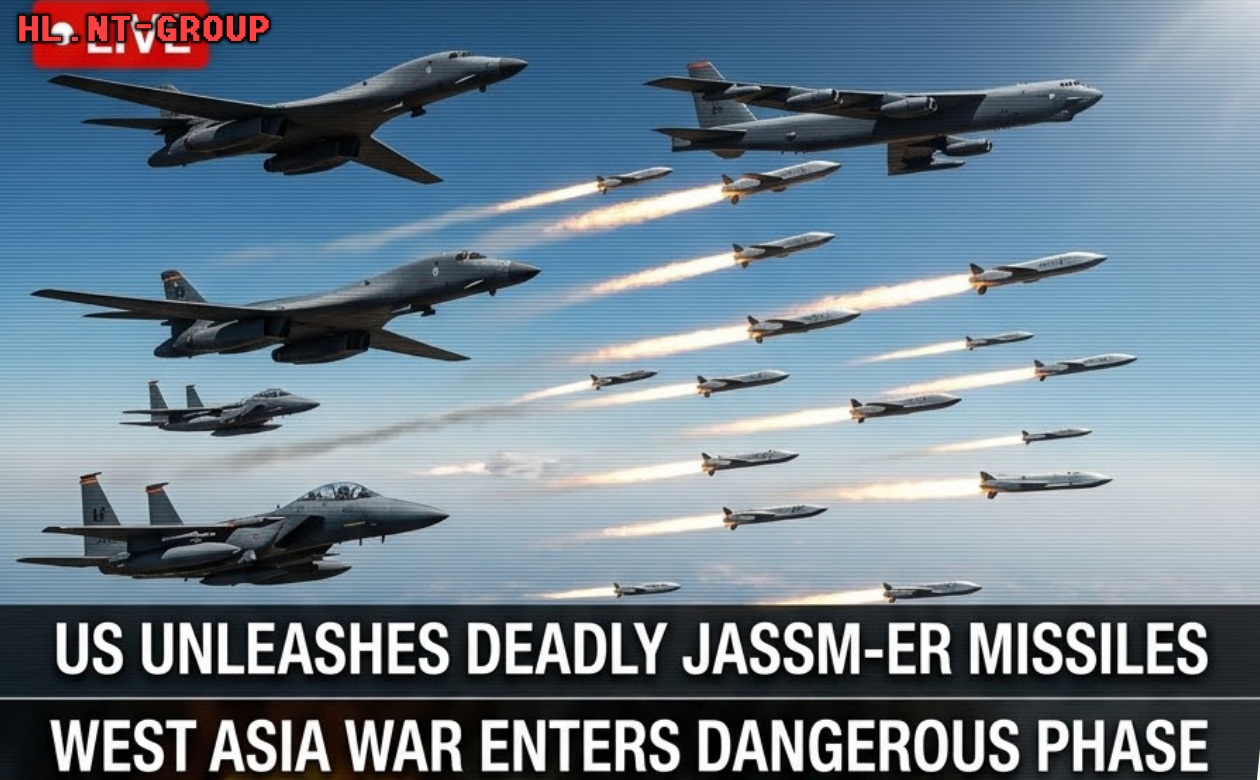
The impact of these missiles on the battlefield has been significant. Their stealth design and low-altitude flight path make them difficult to detect and intercept, allowing US forces to hit deeply buried or heavily protected targets. This has enabled a سلسلة of coordinated strikes aimed at weakening Iran’s military infrastructure, disrupting command centers, and degrading missile launch capabilities. However, such heavy reliance on advanced munitions also reflects the growing complexity of the conflict, where traditional air superiority alone is no longer sufficient.
At the same time, this escalation raises serious concerns about sustainability and long-term strategy. With stockpiles rapidly depleting, analysts warn that the US may face logistical challenges if the conflict continues at this intensity. Replenishing these missiles takes time and resources, and diverting them from other regions could create vulnerabilities elsewhere.
The broader geopolitical implications are equally alarming. As the war intensifies, tensions across West Asia continue to rise, with regional actors closely monitoring the situation. Key النفط routes, particularly the Strait of Hormuz, remain under threat, adding an economic dimension to the conflict that could impact global energy markets and international trade.
Ultimately, the deployment of JASSM-ER missiles represents a pivotal moment in the US-Iran war—one that highlights the growing reliance on advanced, long-range strike technology. As both sides continue to escalate, the conflict is becoming more unpredictable, more technologically driven, and increasingly difficult to contain, pushing West Asia closer to a wider and potentially devastating regional war.