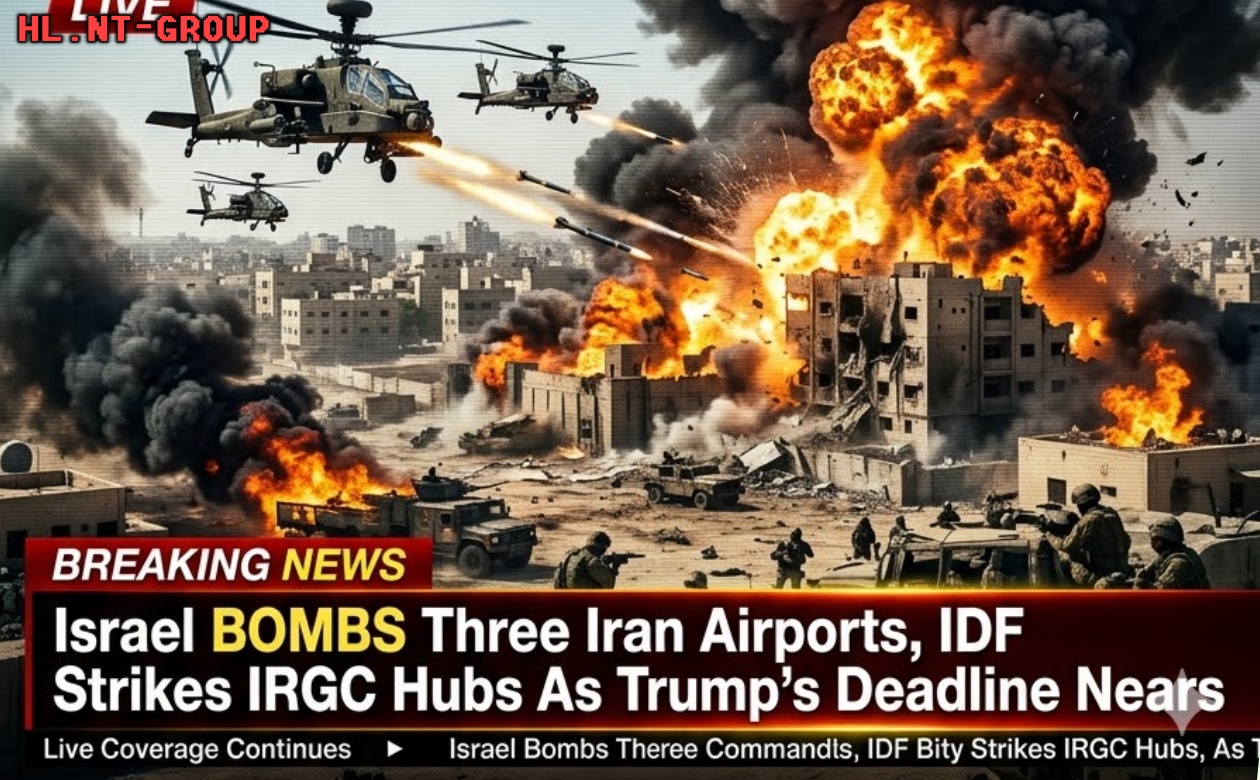
The ongoing Israel‑Iran war has entered a perilous new phase as Israeli forces launched a significant aerial assault deep into Iranian territory, bombing three major airports and hitting key Islamic Revolutionary Guard Corps (IRGC) facilities. The strikes come amid a rapidly approaching ultimatum issued by former U.S. President Donald Trump, who has set a tight deadline for Tehran to meet Western demands or face intensified military action.
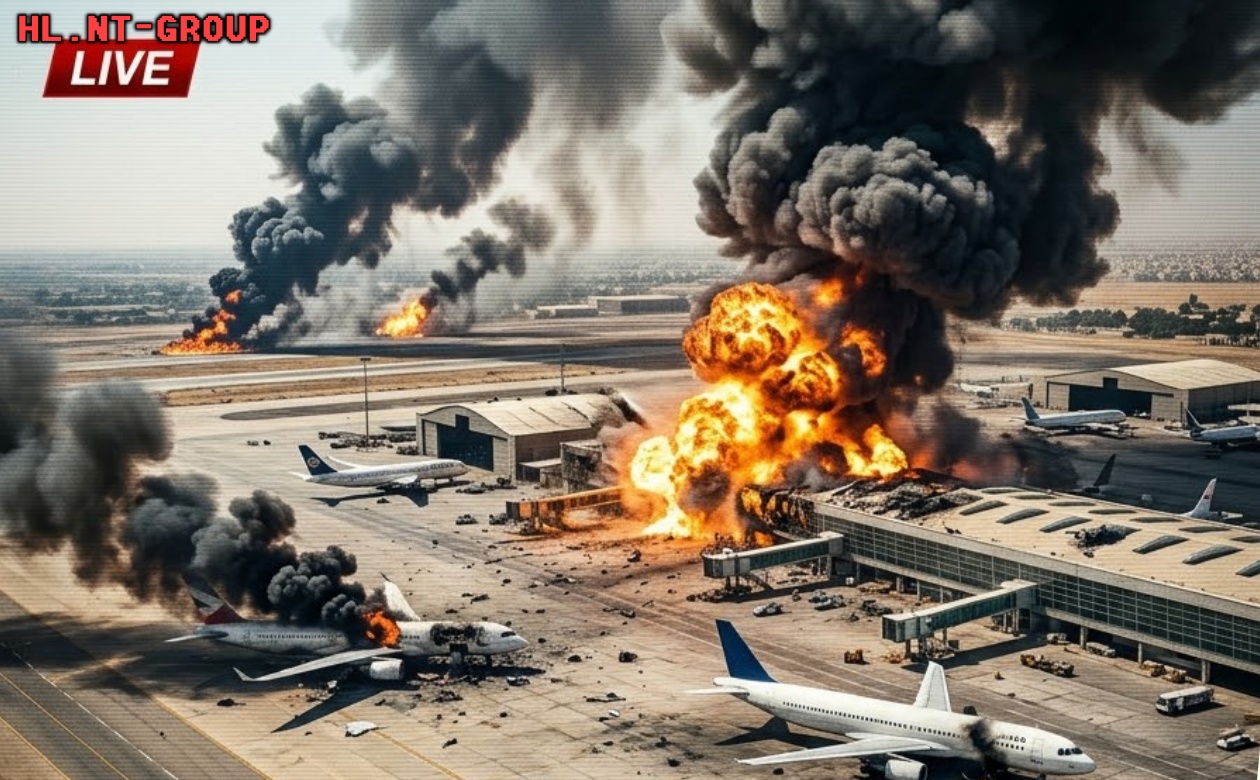
In the early hours of April 7, the Israel Defense Forces (IDF) dispatched fighter jets in a coordinated operation striking Mehrabad International Airport, Bahram Airport, and Azmayesh Airport near Tehran. According to Israeli military statements, the attacks were designed to “neutralize Iran’s capability to arm and finance hostile proxy groups” and to degrade the Islamic Republic’s ability to project military power both regionally and beyond. Aircraft, helicopters, and other air assets believed tied to the IRGC were reportedly damaged or destroyed. Prime Minister Benjamin Netanyahu framed the mission as necessary to weaken Tehran’s operational infrastructure.
These large‑scale airstrikes mark a dramatic escalation in a conflict that began months ago and has since spilled across the Middle East. Iran has consistently responded to U.S. and Israeli military pressure with missile and drone attacks on Israeli cities, Gulf neighbours, and military installations, raising fears of a broader regional conflagration. Civilian casualties have mounted, and global energy markets continue to be rocked by disruptions — particularly around the strategically vital Strait of Hormuz.
Compounding the crisis is the looming deadline from Donald Trump, who has repeatedly threatened severe retaliation if Iran does not accede to demands centered on reopening the Strait of Hormuz to international shipping and ending support for regional proxy forces. Tehran has so far rejected ceasefire proposals tied to these conditions, instead insisting on broader terms, including an end to sanctions and a permanent cessation of hostilities, reflecting a widening diplomatic impasse.
The timing of the airport strikes suggests coordination with Washington’s pressure campaign, though U.S. officials have framed the conflict as separate from direct American bombing raids on Iranian infrastructure. Nonetheless, the convergence of Israeli strikes and mounting U.S. threats illustrates the entwined military strategy of both allied nations as they seek to force Iranian acquiescence or significantly erode Tehran’s warfighting capacity.
International reaction has been mixed. Some U.S. and European partners have expressed cautious support for efforts to restore the free flow of energy and secure regional stability. Others have warned that hitting critical civilian infrastructure — such as airports — risks violating international humanitarian law and further inflaming tensions. Humanitarian organizations and neutral observers have called for immediate de‑escalation and respect for non‑combatant protections as the conflict deepens.
As Trump’s deadline draws near and clashes intensify, the Middle East stands on fragile ground. The strikes on Iranian airports and IRGC hubs underscore how quickly the conflict has shifted from proxy engagements and limited bombardments to broad, high‑impact military attacks with potentially far‑reaching consequences.