Tensions in the Strait of Hormuz have long been a focal point of global maritime security concerns, given its role as one of the world’s most critical oil transit chokepoints. In a widely circulated scenario report titled “70 Iranian Boats SWARM U.S. Aircraft Carrier in Strait of Hormuz | America’s 9-Minute Response,” analysts explore a high-intensity naval confrontation involving U.S. and Iranian forces in one of the most strategically sensitive waterways on the planet.
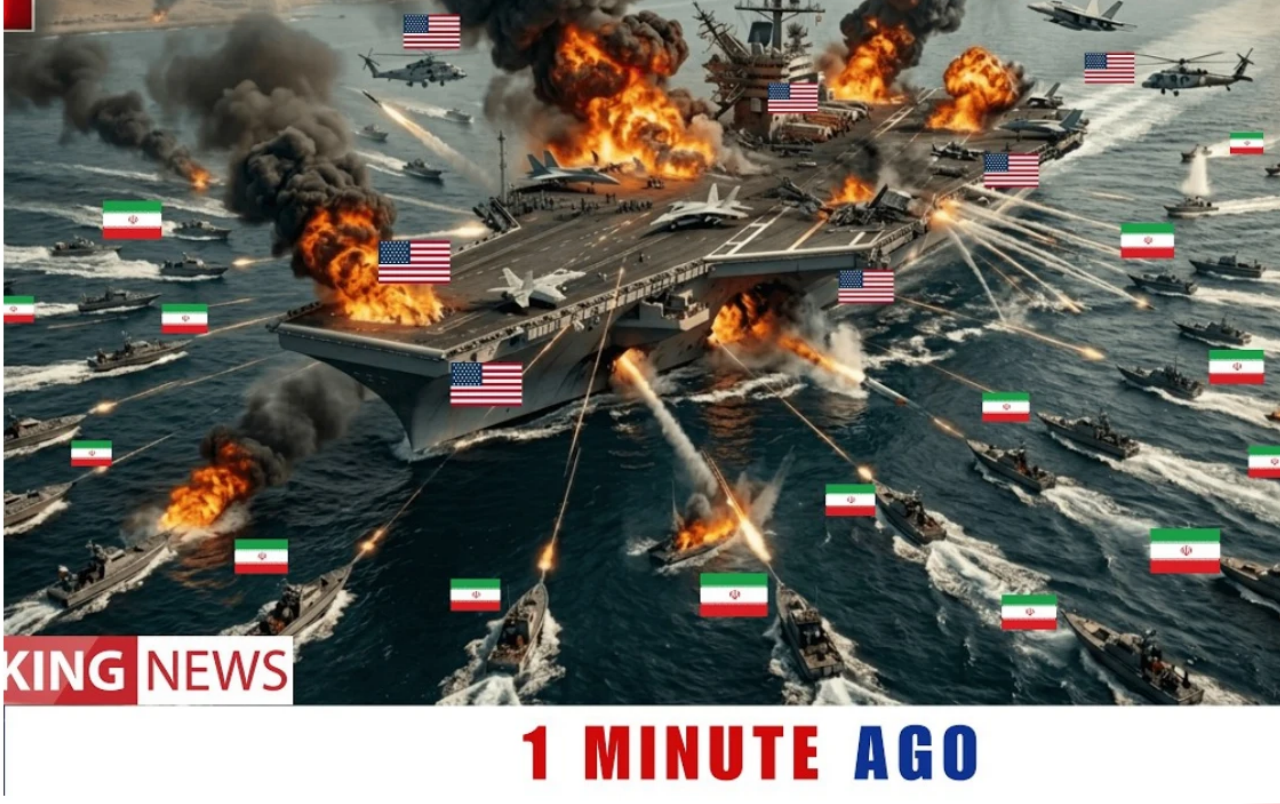
According to the scenario, a U.S. Navy aircraft carrier strike group was conducting routine operations in international waters near the Strait of Hormuz when it was approached by a large number of fast attack craft allegedly operated by Iran’s Islamic Revolutionary Guard Corps Navy. The boats, numbering around seventy, are described as small, highly maneuverable vessels designed for swarm tactics—approaching in coordinated formations intended to overwhelm larger ships through speed, numbers, and unpredictability.
The simulated encounter highlights a rapidly escalating situation in which the boats close in on the carrier group from multiple directions. Electronic surveillance and airborne reconnaissance assets reportedly detect the movement early, allowing the carrier strike group to initiate defensive protocols. In response, escort ships within the group—equipped with advanced radar systems, close-in weapon systems, and guided missiles—begin tracking and deterring the approaching vessels.
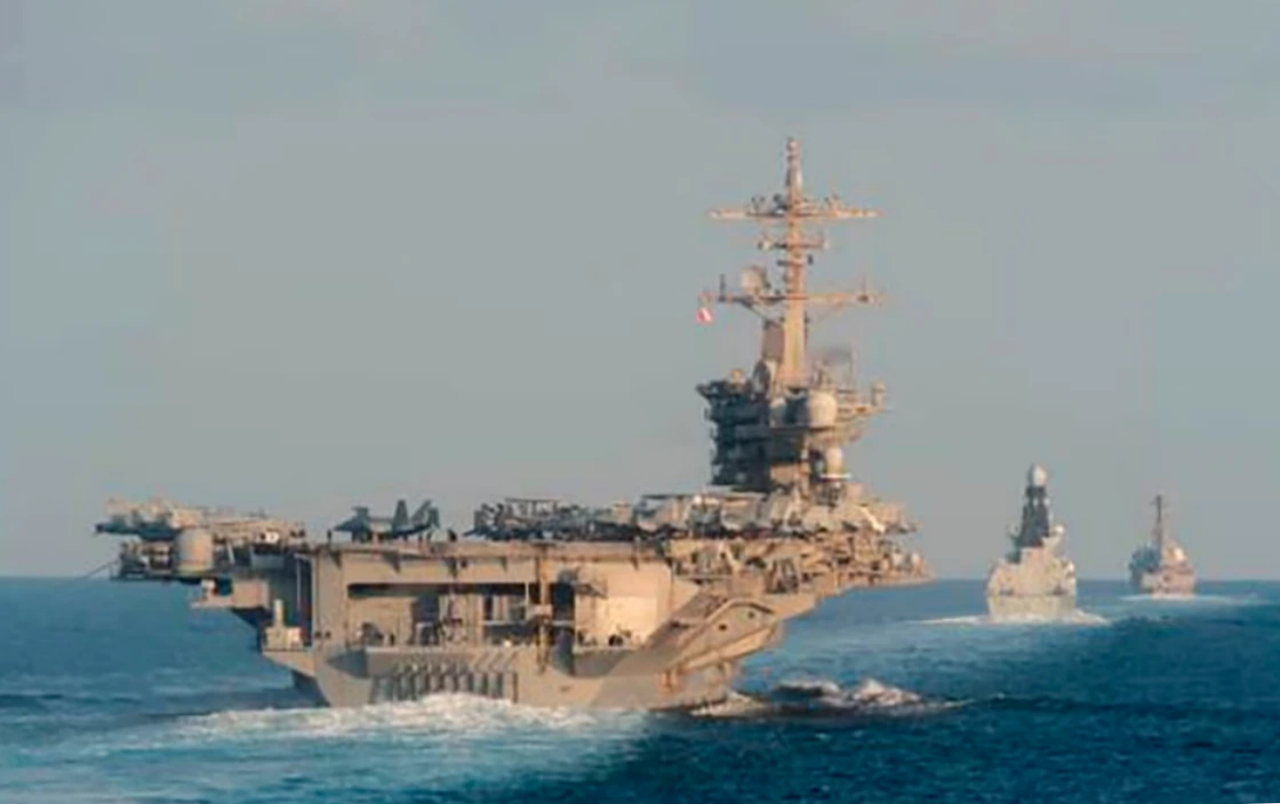
Central to the scenario is the so-called “9-minute response window,” referring to the speed at which the U.S. Navy allegedly transitions from detection to a fully coordinated defensive posture. During this time, fighter jets from the carrier are launched, surveillance drones expand situational awareness, and warning communications are issued through international maritime channels. The goal, according to the simulation, is deterrence and de-escalation rather than immediate engagement.
Military analysts often use such hypothetical engagements to examine the risks of miscalculation in confined maritime environments like the Strait of Hormuz. The narrow waterway, combined with heavy commercial traffic and the proximity of multiple national forces, creates conditions where misunderstandings could quickly escalate into armed conflict.
The scenario also underscores the evolving nature of naval warfare, where asymmetric tactics—such as swarm boat strategies—are increasingly considered in contrast to traditional large-ship dominance. It highlights the importance of electronic warfare, rapid decision-making, and layered defense systems in modern naval doctrine.
While the report does not represent a confirmed real-world incident, it reflects ongoing strategic concerns among defense planners regarding freedom of navigation, regional power projection, and crisis stability in the Persian Gulf. The “9-minute response” concept serves as a symbolic benchmark for readiness in high-pressure maritime environments, where seconds can determine whether a confrontation is contained or escalates into broader conflict.