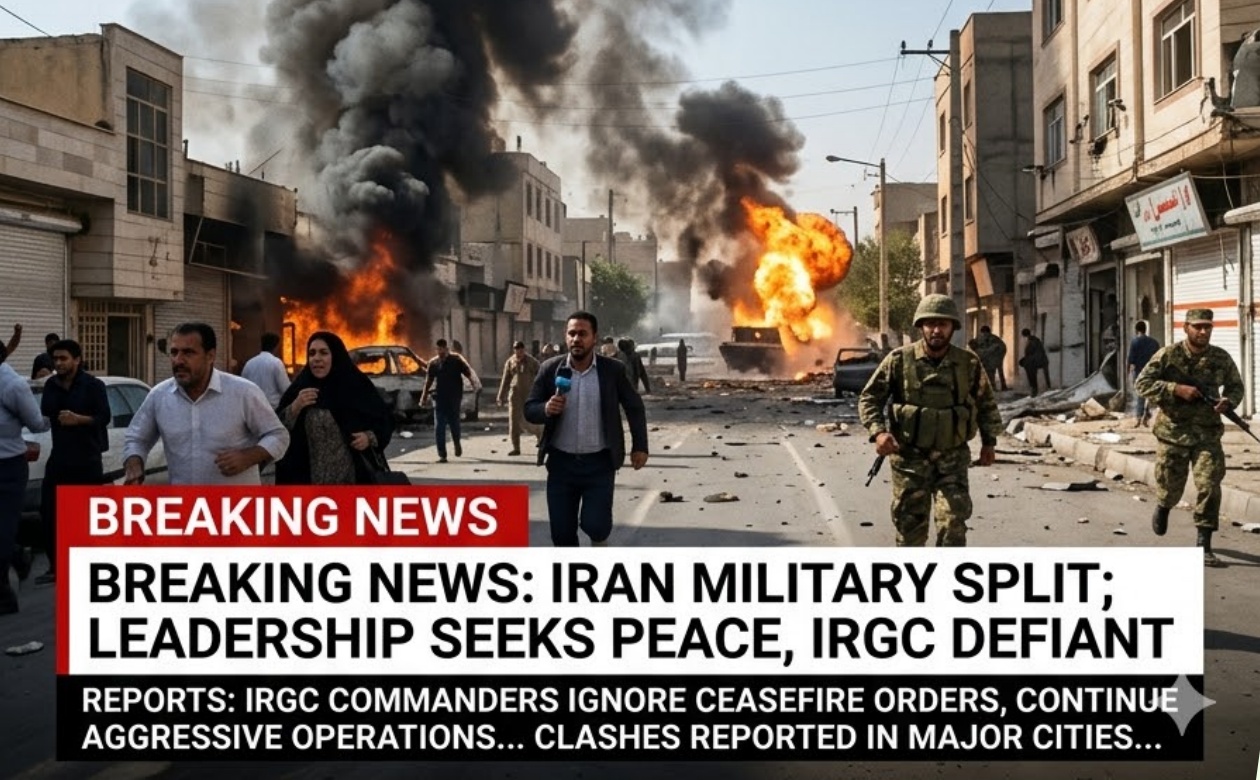
In a stunning and deeply complex turn of events, new reports suggest that Iran may be facing growing internal tensions at the highest levels of power—raising urgent questions about who is truly in control of the country’s military strategy. While political leaders appear to be signaling interest in ending the war, powerful hardline forces within the military—particularly the Islamic Revolutionary Guard Corps (IRGC)—may be pulling in the opposite direction.
At the center of this unfolding situation is a leadership structure already shaken by months of conflict, targeted strikes, and the assassination of top officials. The rise of a new supreme leadership has not fully stabilized the system. Instead, analysts point to increasing fractures between political authorities and military commanders, especially as the war intensifies.
Recent developments indicate that Iran’s civilian leadership may be exploring pathways to de-escalation. Behind closed doors, discussions about ceasefire conditions and long-term guarantees are believed to be taking place. However, these efforts face a major obstacle: the growing influence of the IRGC, which has steadily consolidated power during the conflict and now plays a dominant role in shaping Iran’s military decisions.
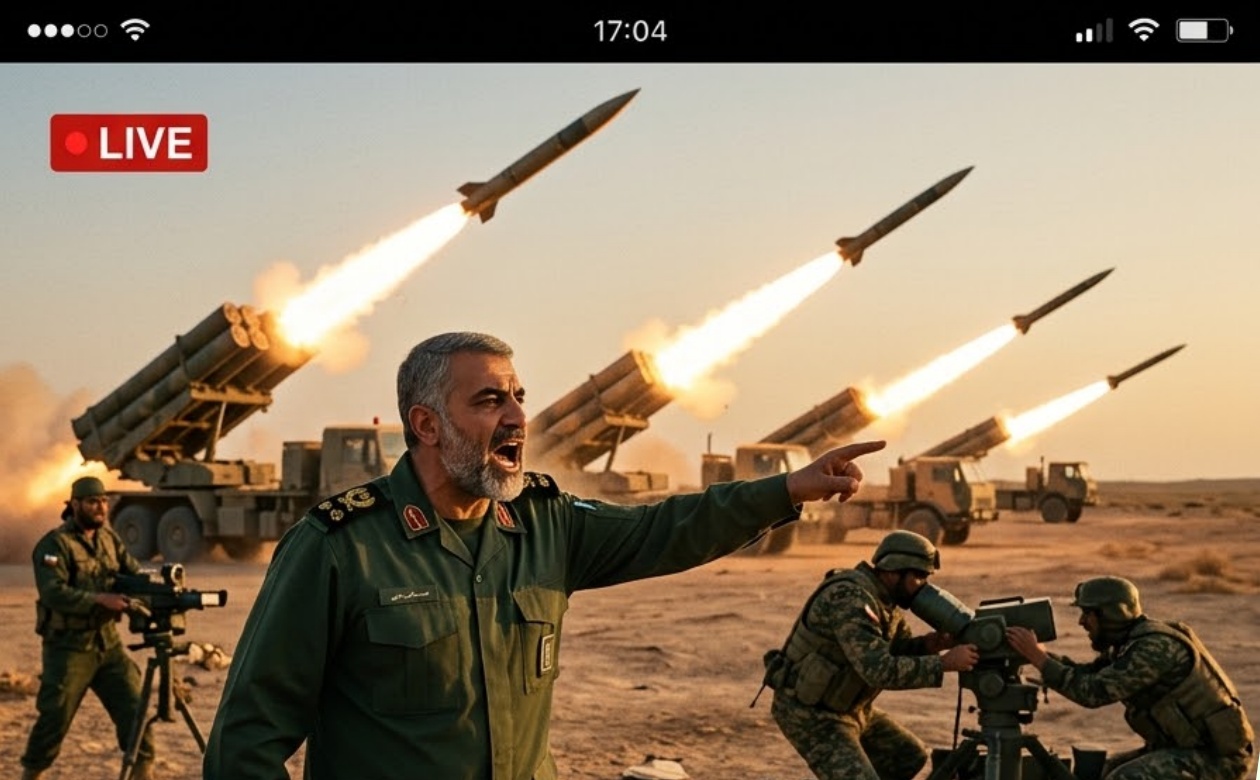
This dynamic creates a dangerous imbalance. While politicians may seek to reduce pressure and avoid further devastation, the IRGC—built on an ideology of resistance and long-term confrontation—appears committed to continuing the fight. Their decentralized command structure, designed to function even under extreme disruption, allows operations to continue even when central authority is weakened.
On the ground, the consequences are already visible. Iran has escalated retaliatory attacks across the region, targeting strategic assets and demonstrating its ability to sustain pressure despite heavy losses. At the same time, public appearances by Iranian officials aim to project unity and control—but behind the scenes, the reality may be far more fragmented.
International observers are increasingly concerned that this internal divide could make the situation even more unpredictable. If political leaders lack full control over military actions, the risk of unintended escalation rises sharply. Decisions that could trigger wider conflict may no longer be centralized—or even fully coordinated.
Adding to the uncertainty is the ideological shift within Iran’s leadership. Rather than softening after major losses, recent assessments suggest the system is becoming more hardline, not less. This makes the prospect of a quick diplomatic resolution increasingly unlikely, even if some factions are pushing for it.
The result is a volatile and confusing picture: a nation that may want peace—but cannot fully control the forces driving it toward continued war.
As the situation evolves, one critical question remains unanswered:
Who is really calling the shots in Iran?
And until that question is resolved, the risk of further escalation remains dangerously high.