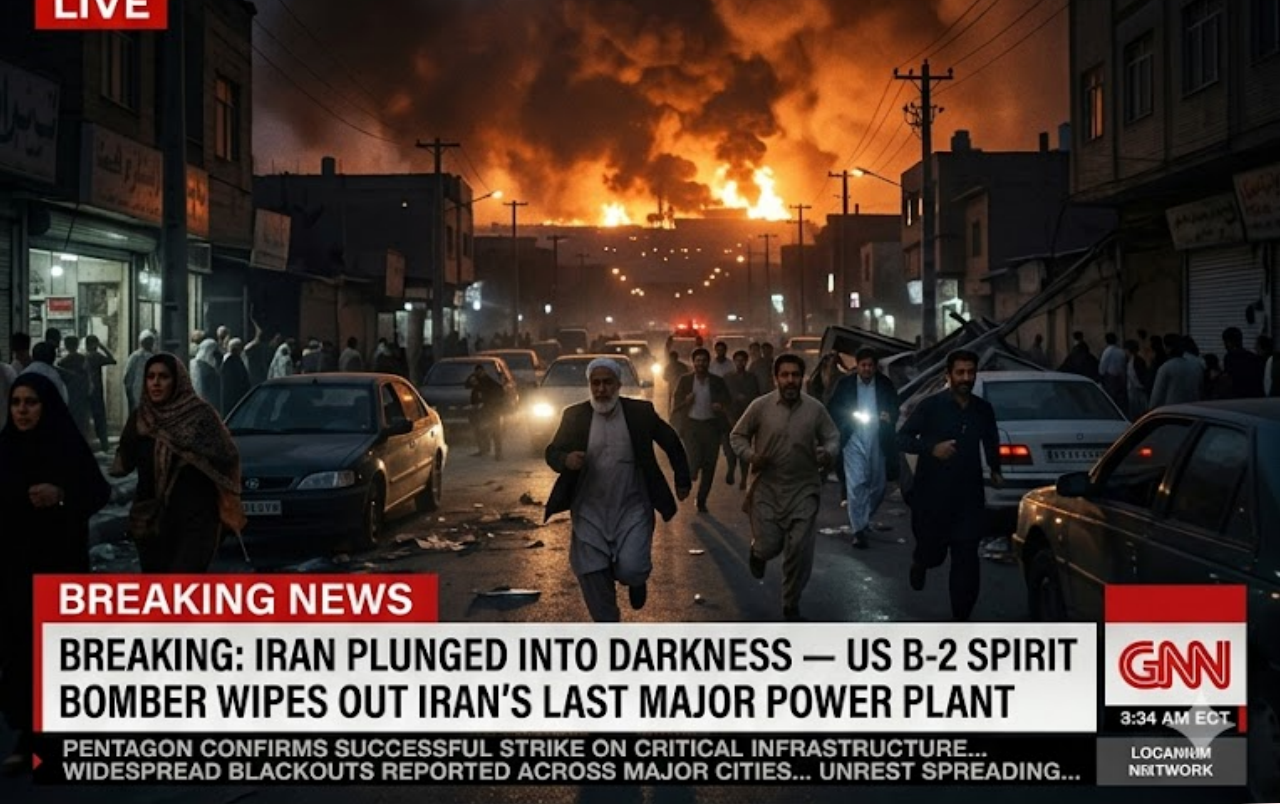
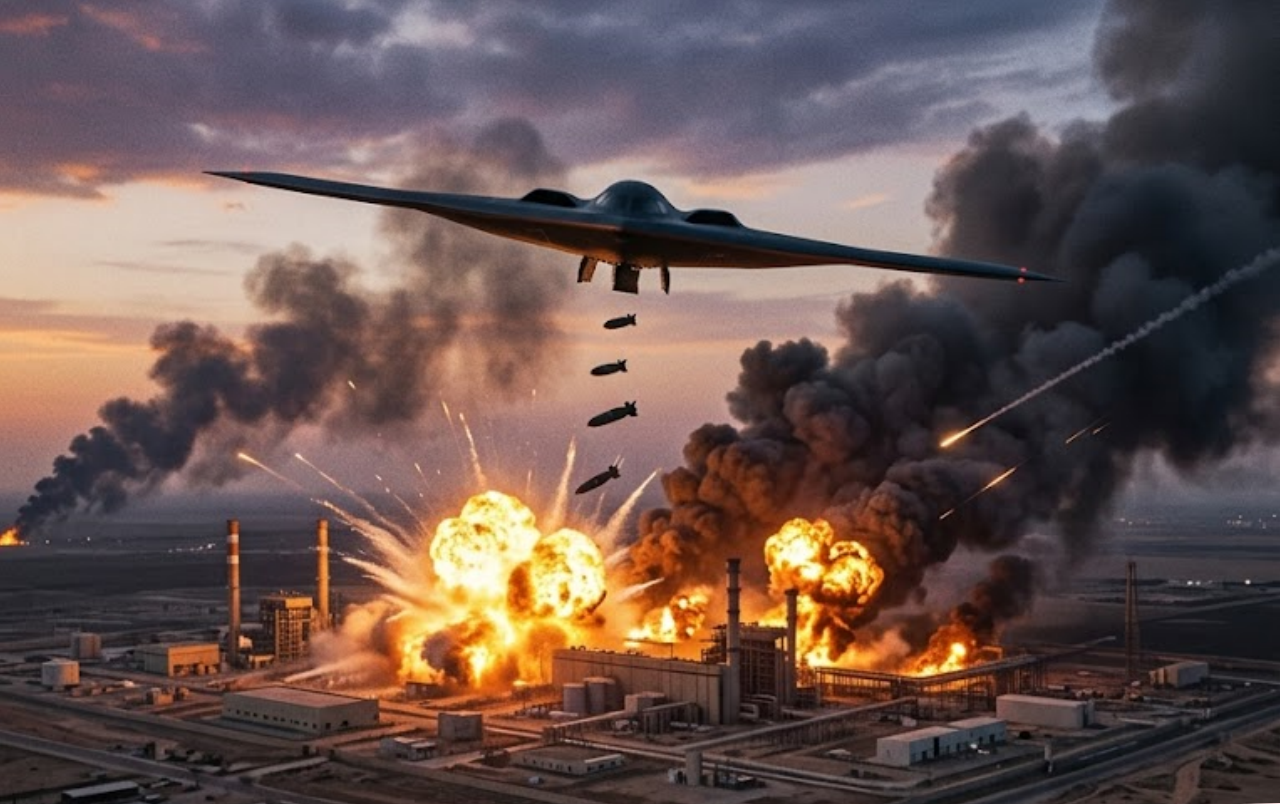
In a dramatic escalation of the U.S.–Iran war, American strategic forces reportedly carried out a high‑impact airstrike on one of Iran’s last major power plants using B‑2 Spirit stealth bombers, leaving vast swathes of the country without electricity and throwing daily life into chaos. The strike — confirmed indirectly through public threats and battlefield reporting — represents a significant moment in the conflict as Washington intensifies pressure on Tehran to reopen the vital Strait of Hormuz, a key global oil transit route that Iran has effectively sealed.
President Donald Trump had issued explicit warnings in recent days that if Iran did not reopen Hormuz within a narrow deadline, U.S. forces would target critical civilian infrastructure, including power plants and bridges. In a social media post widely reported by international outlets, Trump declared that “Tuesday will be Power Plant Day,” signaling that the United States was prepared to unleash overwhelming military force on Iran’s electricity network if Tehran continued its blockade.
Shortly after that deadline lapsed with no breakthrough in diplomatic talks, reports emerged from U.S. defense sources that multiple B‑2 Spirit strategic bombers had flown long‑range sorties from forward bases, bypassing surviving Iranian air‑defense systems to drop precision munitions on the targeted power station. Although no official casualty figures have been released, preliminary accounts suggest that the attack severed major transmission lines and destroyed key generating capacity, plunging cities and industrial regions into darkness.
Iranian officials responded with outrage, condemning the strike as a deliberate attack on civilian infrastructure and a violation of international law. Tehran warned that it would retaliate “devastatingly” against U.S. and allied targets if further assaults on essential services continued. Iran’s state media also blamed the outages for widespread disruption to hospitals, water supplies, and other critical services, claiming the bombings were aimed at harming ordinary civilians.
Energy experts say the blackout could have ripple effects far beyond Iran’s borders. Electrical grid failure in a country of nearly 90 million people risks destabilizing not only urban life but also water treatment and industrial production, potentially forcing Tehran to divert scarce resources to emergency response rather than military operations. Some analysts also warn that prolonged outages could spark humanitarian crises if fuel, food distribution, and medical care infrastructure are unable to cope.
The reported strike comes amid faltering peace negotiations brokered by regional mediators, which collapsed just before Washington’s deadline demanding Iran reopen the Strait of Hormuz. Deputy Iranian officials had indicated earlier that attacks on power plants would not bring about a total blackout due to the diversified nature of their grid, though the destruction of the last major station has likely overwhelmed remaining capacity.
International reaction has been mixed. Some allied governments have supported efforts to pressure Tehran into compliance with global shipping norms, while others have raised alarm at the targeting of civilian infrastructure and cautioned that further such actions risk a wider regional war.
As darkness spreads across Iran and the Middle East remains on tenterhooks, the use of stealth strategic bombers to strike civilian energy infrastructure signals a new and deeply ominous chapter in the conflict over the Strait of Hormuz.