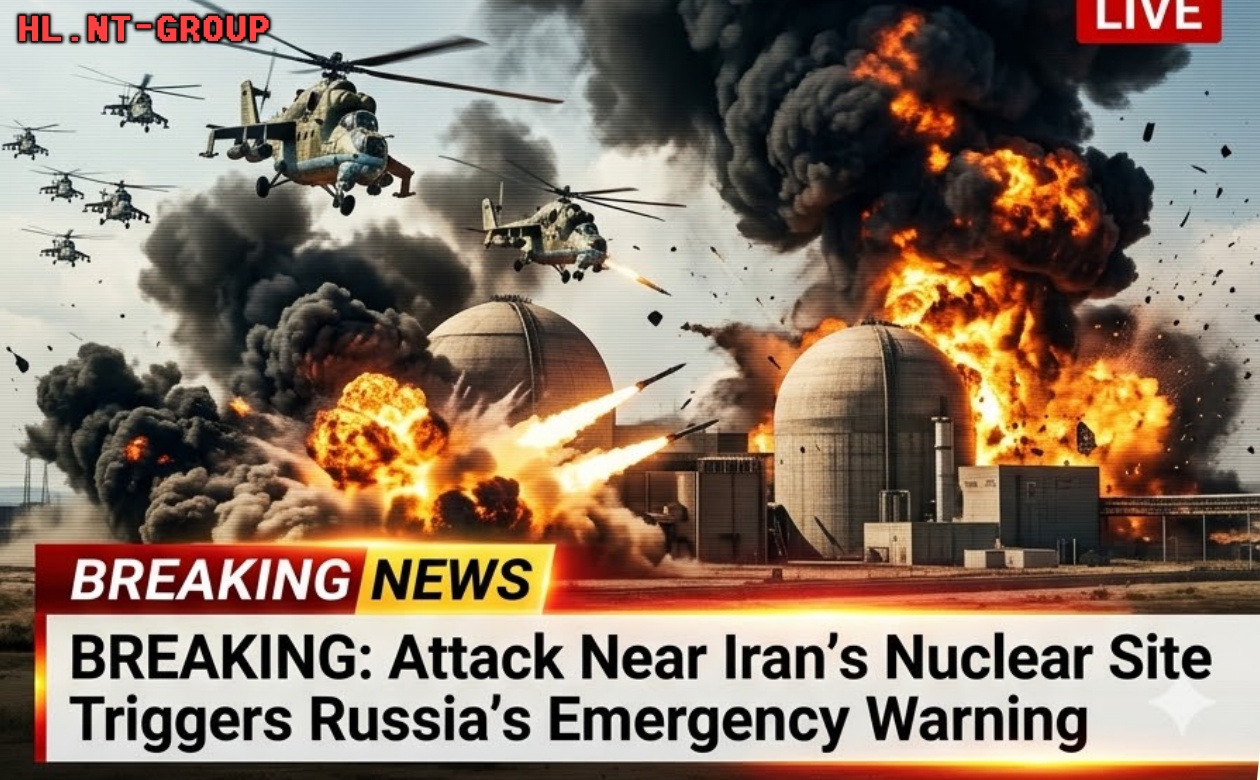
A dangerous new escalation in the ongoing Middle East conflict has emerged after a military strike occurred near one of Iran’s key nuclear facilities, prompting an urgent warning from Russia and raising global fears of a potential nuclear disaster. The incident reportedly took place close to the Bushehr Nuclear Power Plant, Iran’s only operational civilian nuclear reactor and a site of critical importance to both the country’s energy supply and regional safety.
According to international monitoring bodies, the strike landed within close proximity to the facility, damaging nearby structures and resulting in at least one casualty. While the reactor itself was not directly hit, the International Atomic Energy Agency (IAEA) confirmed that the attack came dangerously close to critical infrastructure, warning that continued military activity in the area could trigger a radiological emergency with far-reaching consequences.
The incident has sparked an immediate and forceful reaction from Moscow. Russian officials, whose state nuclear agency has long been involved in the construction and operation of the Bushehr facility, issued what analysts describe as an “emergency warning” over the risks posed by further strikes. Russia’s nuclear chief cautioned that the situation is approaching a “dangerous point”, emphasizing that any direct hit on the plant could lead to catastrophic environmental and humanitarian fallout not only for Iran but for neighboring countries as well.
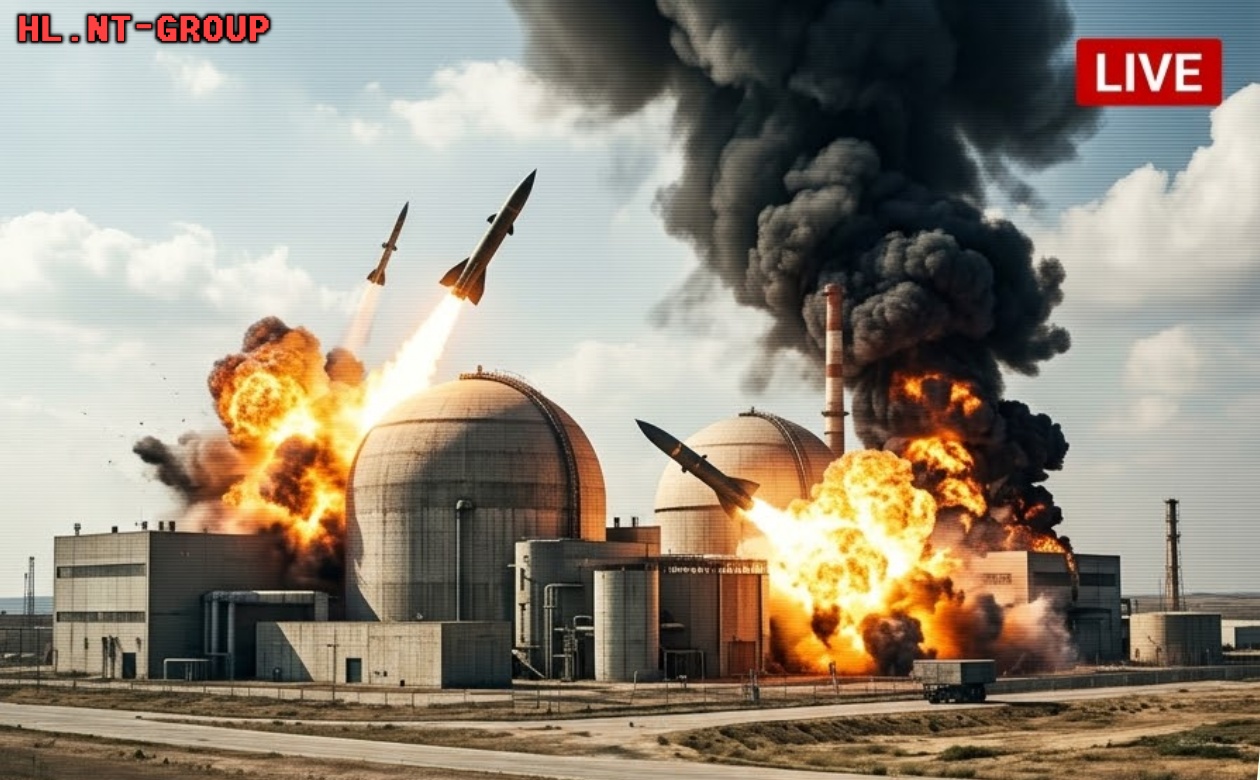
In response to the escalating threat, Russia has reportedly begun evacuating some of its personnel from the site, underlining the seriousness of the situation. Officials stressed that even indirect damage — such as disruptions to power systems or auxiliary infrastructure — could compromise the plant’s safety mechanisms and lead to a crisis similar to past nuclear incidents.
Iranian authorities have strongly condemned the strike, accusing foreign forces of recklessly endangering civilian lives and violating international norms that protect nuclear facilities during armed conflict. Tehran warned that continued attacks near such sensitive sites could have “uncontrollable consequences,” while also criticizing the international community for failing to prevent repeated incidents targeting nuclear-related infrastructure.
The strike is part of a broader pattern of escalating hostilities involving the United States, Israel, and Iran, with multiple waves of missile and air attacks reported across the region in recent weeks. However, attacks near nuclear facilities represent a particularly alarming development, as even a minor miscalculation could trigger long-term environmental damage, mass displacement, and global economic disruption.
Experts note that nuclear power plants are especially vulnerable during conflict because they rely on stable external systems — including electricity grids and cooling infrastructure — which can be compromised by nearby explosions. Any failure in these systems could lead to overheating or radiation leaks, even without a direct strike on the reactor itself.
As tensions continue to rise, international organizations and world leaders are calling for immediate restraint and de-escalation, warning that the risks associated with military operations near nuclear facilities are too great to ignore. With Russia’s stark warning and the IAEA’s concerns, the latest incident has underscored just how close the region may be to a crisis with consequences far beyond the battlefield.