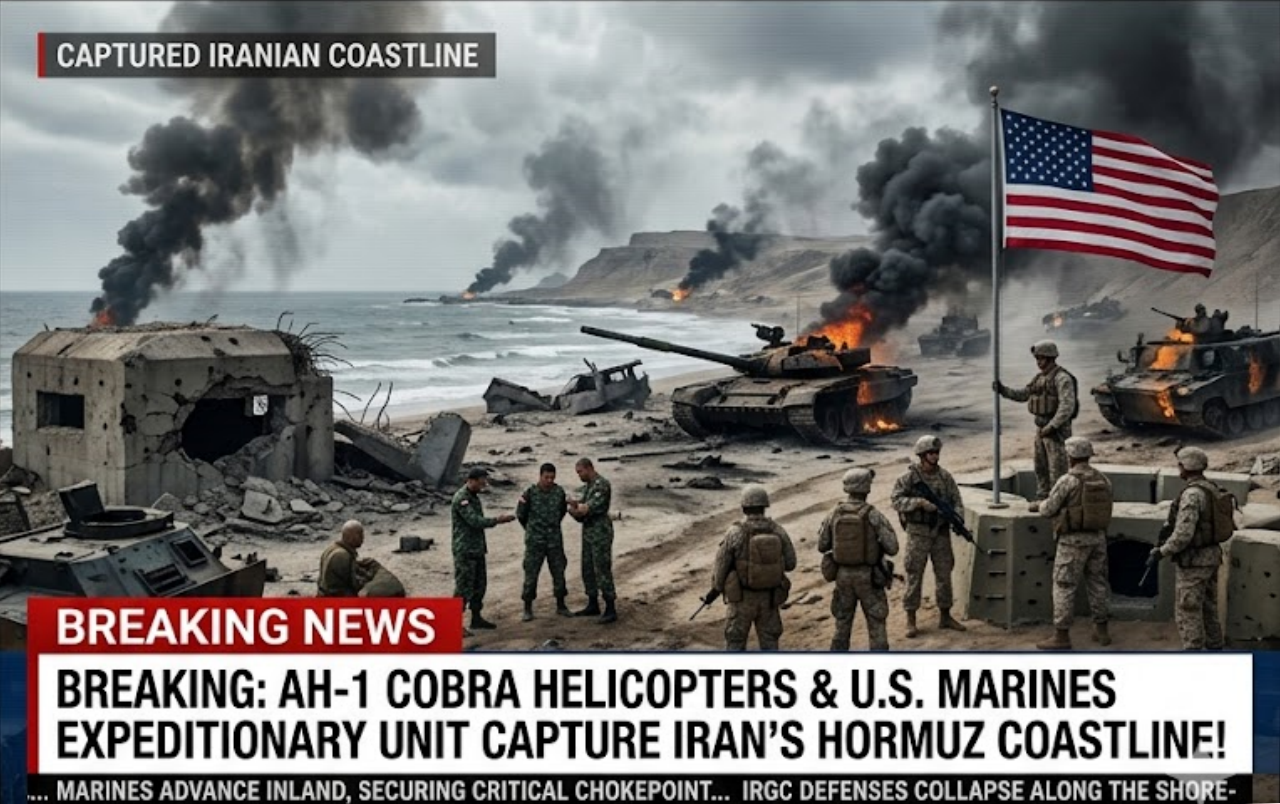
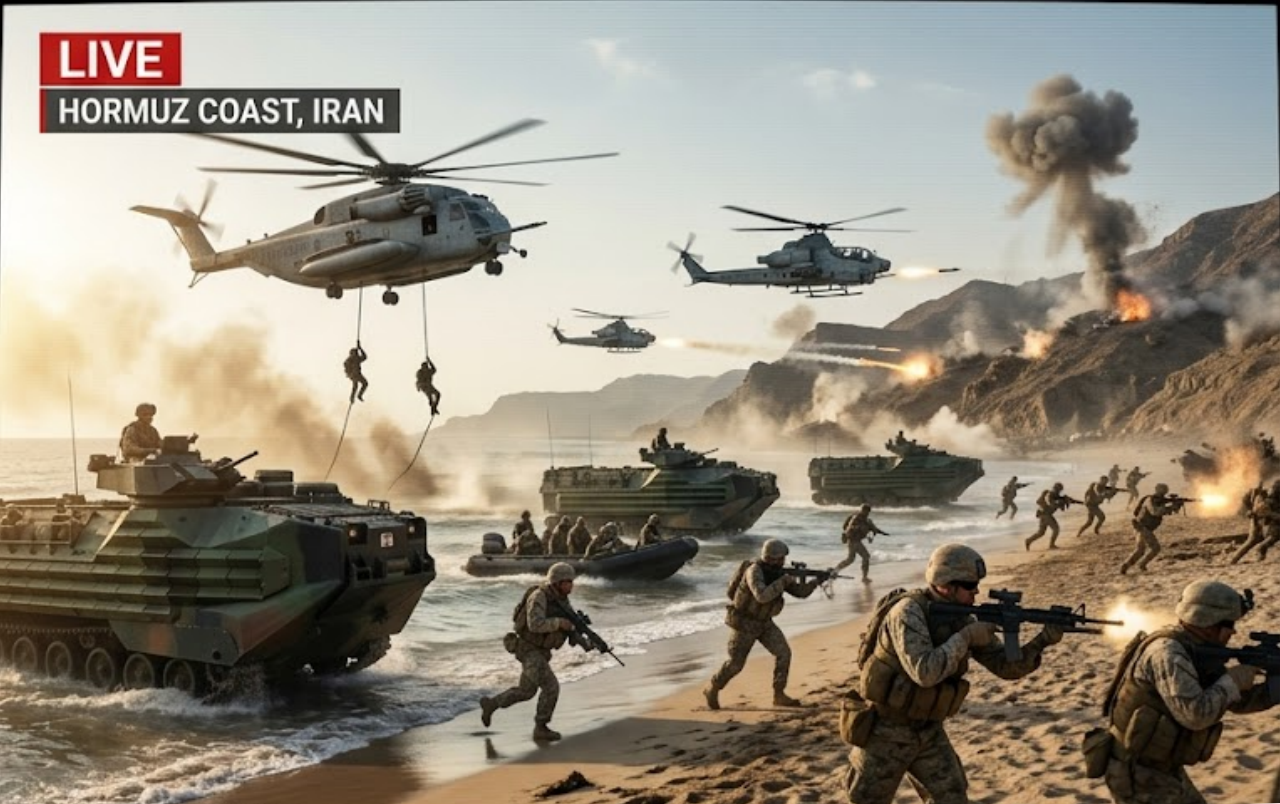
In a stunning turn of events that marks a dramatic escalation in the ongoing conflict with Iran, sources are reporting that advanced AH‑1 Cobra attack helicopters and a U.S. Marine Expeditionary Unit (MEU) have successfully seized control of strategic positions along Iran’s Hormuz coastline. According to defense analysts and battlefield sources, this operation represents one of the boldest ground manoeuvres by American forces in the Middle East in decades, as Washington pushes to break Iran’s hold over the vital Strait of Hormuz shipping lane.
The swift airborne assault was reportedly spearheaded by AH‑1 Cobras — highly maneuverable attack helicopters equipped with precision‑guided weapons — which provided close air support and suppressive fire as Marine infantry units conducted amphibious landings along key coastal points. Witnesses in the region described low‑flying helicopters tearing through early‑morning fog, laying down rocket salvos and paving the way for Marines to establish footholds on the rugged shoreline.
While U.S. military leaders have not formally confirmed the full scale of the operation, strategic intent for such a mission has been increasingly discussed among Pentagon planners. U.S. Marine Expeditionary Units, including the 31st and possibly elements aboard the USS Tripoli and USS Boxer, have been dispatched to the region in recent weeks — indicating preparation for precisely this kind of rapid assault to secure strategic terrain.
The Hormuz coastline is a critical geopolitical chokepoint. The Strait of Hormuz, situated between the Arabian Gulf and the Gulf of Oman, is one of the world’s most important maritime passages — accounting for nearly a fifth of global oil transit. Iran’s influence and control over nearby islands and coastal terrain have allowed it to threaten global shipping and apply pressure on oil markets.
Military analysts suggest that capturing parts of the Iranian coastline could significantly undermine Tehran’s ability to deploy anti‑ship missiles, drones, and naval mines — methods Iran has used to disrupt international shipping and challenge U.S. naval operations. Reconnaissance footage and satellite images circulating on military networks show columns of U.S. Marines securing coastal exits and establishing defensive positions near key ports and elevated terrain overlooking the strait.
Iranian state media has condemned the operation as an outright invasion, accusing the United States of “provocative aggression” and vowing to push back with all available means. Tehran’s leadership has not yet released a comprehensive report on troop engagements, casualties, or defensive operations, but military analysts warn that Iran’s Revolutionary Guard Corps (IRGC) could launch asymmetric retaliatory strikes using ballistic missiles, drones, and coastal missile batteries.
The world’s reaction has been swift and polarized: allied governments express shock and concern over the use of ground troops on Iranian soil, while American officials defend the operation as a necessary step to reopen the Strait of Hormuz and restore freedom of navigation for global commerce. Oil markets are already reacting to the news, with prices spiking in anticipation of prolonged instability.
This extraordinary military move — combining Marine amphibious power with helicopter assault capability — signals that the conflict has entered a new, highly unpredictable phase. For many observers, the deployment of U.S. combat forces on Iran’s coastline is the clearest indication yet that diplomatic options have narrowed, and that strategic military confrontation may be intensifying further.