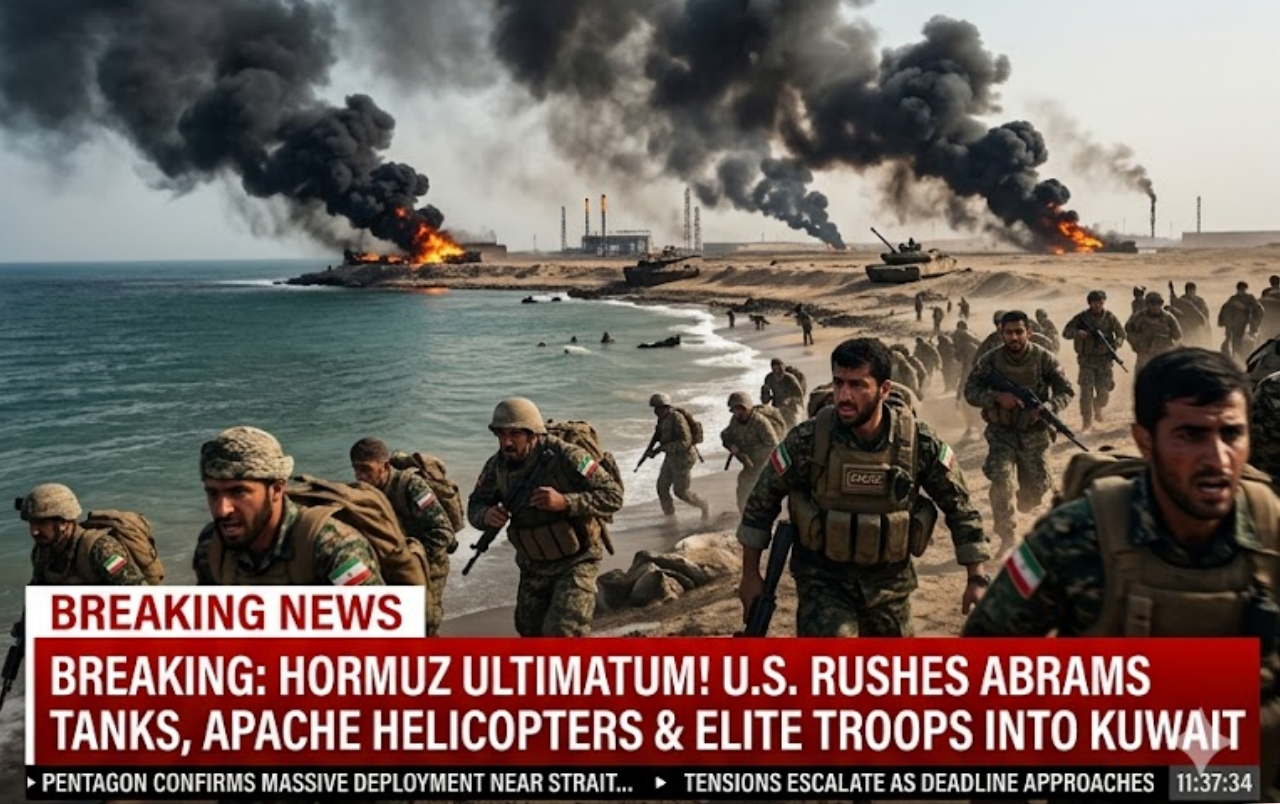
The Middle East is once again on the brink of a major escalation as tensions erupt over control of the strategic Strait of Hormuz, a critical oil transit route carrying nearly one‑fifth of the world’s petroleum supplies. In a dramatic show of force, the United States has reportedly rushed heavy military assets — including M1 Abrams tanks, Apache attack helicopters, and elite ground troops — into Kuwait as part of its broader strategy to deter Tehran’s continued blockade and military pressure in the Gulf. While the exact numbers and deployment details have not been fully disclosed by U.S. defense officials, analysts say the buildup underscores Washington’s concern that Iran’s refusal to ease restrictions on shipping could spiral into a wider regional war.
U.S. President Donald Trump has issued what he calls an ultimatum to Iran: reopen the Strait of Hormuz for international shipping or face “massive consequences” targeting key energy infrastructure. This directive was publicized through official channels and social media posts that threatened strikes on Iranian power plants and bridges if Tehran did not comply within a tight deadline. However, Iranian commanders have publicly rejected this ultimatum, describing it as provocative and unreasonable, and warning that any attack on Iranian facilities would prompt retaliation against Gulf states, including Kuwait.
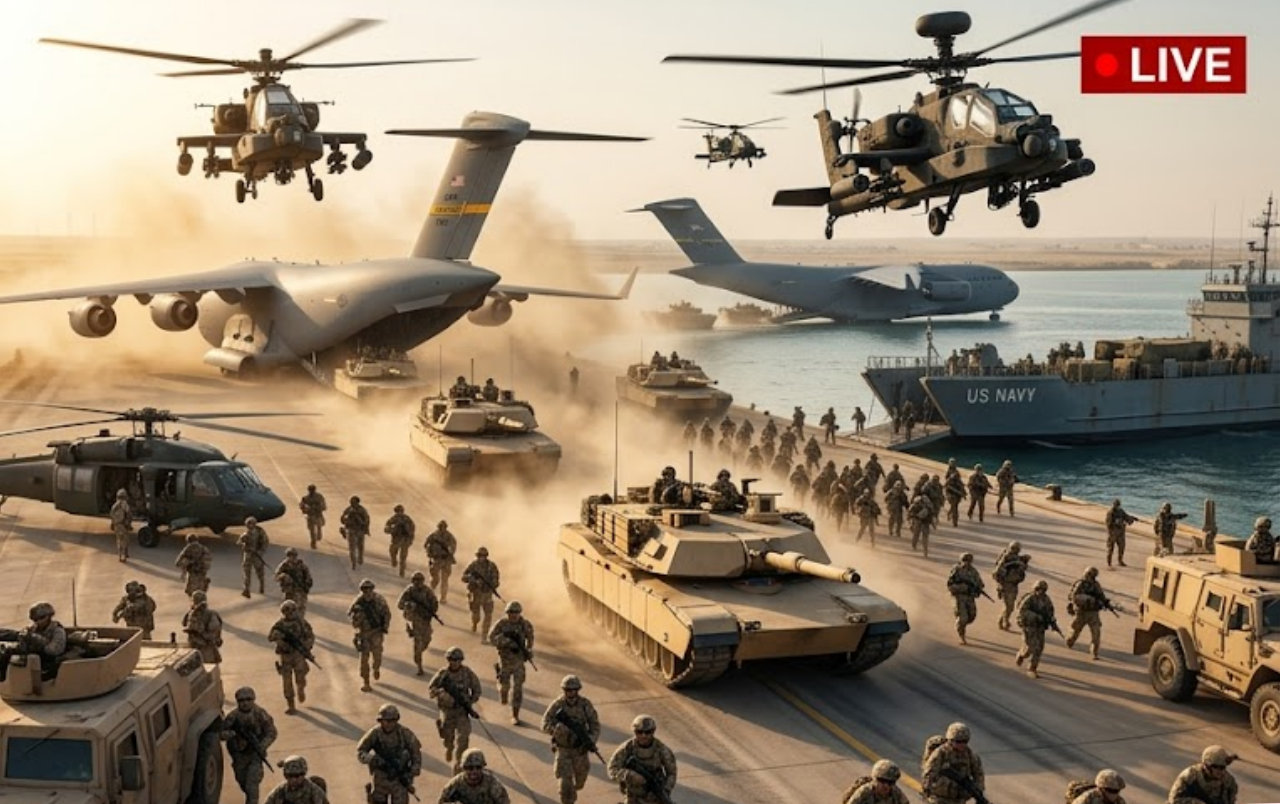
The deployment of heavy armor and attack helicopters into Kuwait reflects not only a deterrence posture but also preparation for a potential ground contingency if the crisis intensifies. Kuwait, home to significant U.S. military installations, has been hit by Iranian drone and missile strikes in recent days, which damaged petrochemical facilities and power infrastructure, adding urgency to Washington’s decisions. Iran’s cross‑border strikes — aimed at American allies and strategic infrastructure — signal that Tehran is willing to expand the conflict beyond its borders if pressured.
International reaction has been mixed. Some European and Gulf nations have supported U.S. demands to keep the Strait of Hormuz open for commercial traffic, emphasizing the risk to global energy markets. Others, wary of outright war, have pushed for diplomatic channels and ceasefire proposals that include phased reopening of Hormuz while seeking negotiated de‑escalation. Even so, mediators from Pakistan, Egypt, and Turkey have circulated a draft peace framework aimed at temporarily halting hostilities, but neither Washington nor Tehran has formally accepted it.
The presence of Abrams tanks and Apache helicopters in Kuwait plays a dual role: it sends a clear message of deterrence toward Iran, and it reassures regional partners grappling with the fallout of disrupted oil exports and rising prices. However, security experts warn that military deployments alone cannot secure the strait or guarantee safe commercial passage. The entanglement of global energy, regional alliances, and asymmetric warfare means that any miscalculation could ignite a larger confrontation with unpredictable consequences.