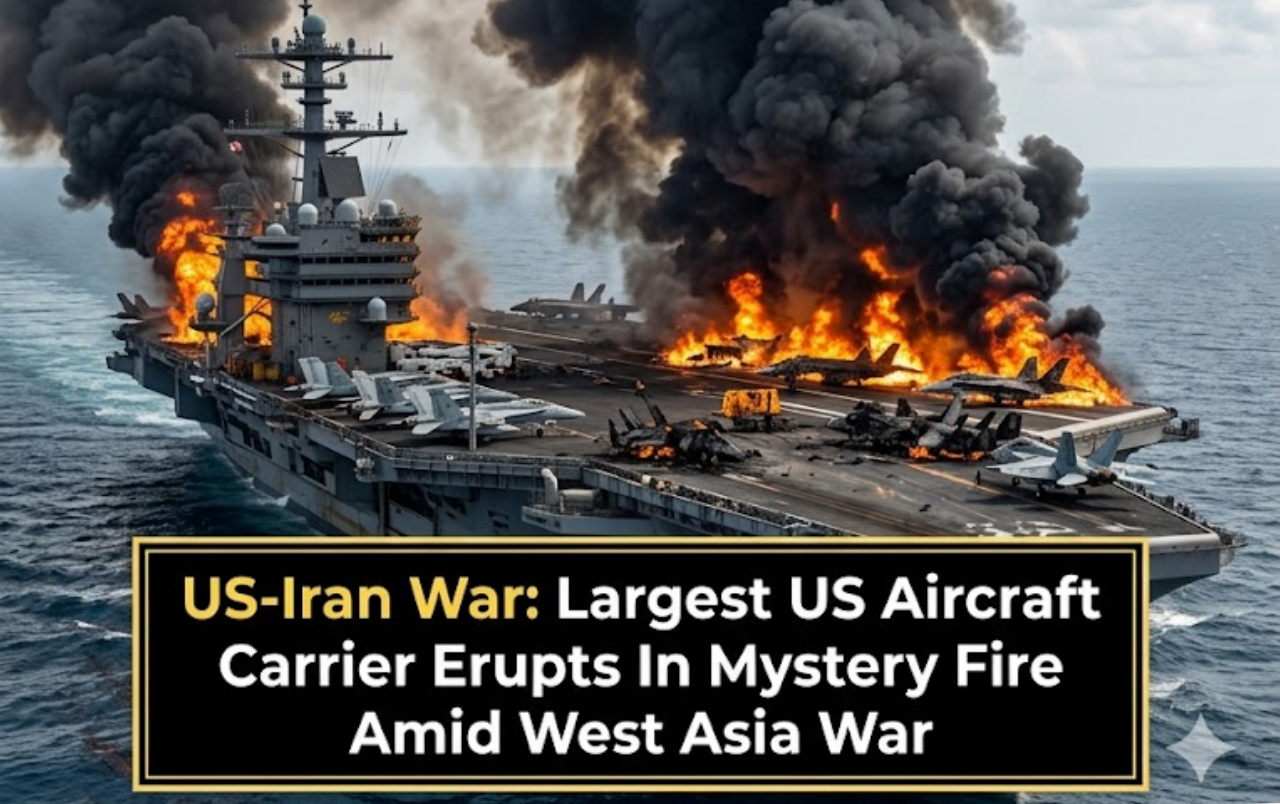
Amid escalating tensions in West Asia, a dramatic incident involving one of the United States’ most advanced aircraft carriers has raised fresh concerns about operational risks in an already volatile conflict zone. Reports confirm that the USS Gerald R. Ford, the largest and most technologically advanced aircraft carrier in the U.S. Navy, experienced a serious onboard fire during its deployment linked to operations near Iran.
The fire, which reportedly broke out in a laundry area of the massive warship, triggered an intense emergency response that lasted for hours. While initial reports described the blaze as contained, the incident forced significant disruptions onboard. Several sailors sustained non-life-threatening injuries, and hundreds were temporarily displaced from their living quarters due to smoke and damage.
The USS Gerald R. Ford has been a central component of U.S. military operations in the region, particularly as Washington increases pressure on Iran amid ongoing disputes over security, maritime control, and regional influence. Its presence, alongside other carrier strike groups, reflects a broader strategy of deterrence and rapid-response capability in key waterways such as the Red Sea and the Strait of Hormuz.
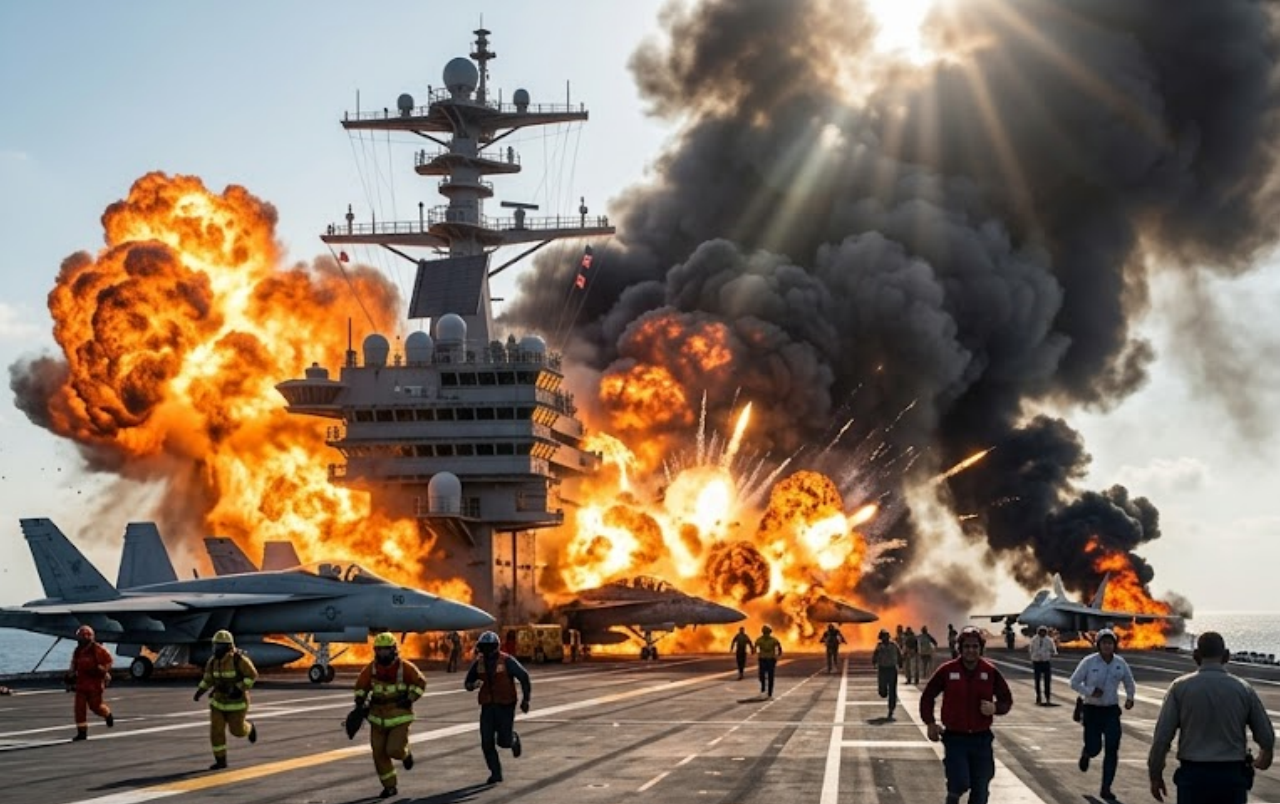
However, the fire has sparked speculation and concern. While U.S. officials have indicated that the incident was not combat-related, its timing—occurring during active military operations—has fueled questions about whether the ship’s systems are being strained by prolonged deployment. The carrier has been at sea for an extended period, participating in multiple operations across different regions, which analysts say can increase the risk of technical failures.
Following the incident, the vessel was redirected to port for inspection and repairs, temporarily reducing the immediate availability of one of the U.S. Navy’s most powerful assets in the theater. This development comes at a critical moment, as the United States continues to reinforce its presence with additional ships and personnel to counter potential threats.
Military experts note that aircraft carriers are incredibly complex systems, often described as “floating cities,” with thousands of crew members and intricate mechanical operations running continuously. Even minor malfunctions can escalate quickly if not contained. In this case, the fire—though limited in scope—highlighted the vulnerability of even the most advanced naval platforms.
The incident also underscores the broader pressures facing U.S. forces in West Asia. Extended deployments, high operational tempo, and the constant threat of confrontation all contribute to increased wear on both personnel and equipment.
While the situation aboard the USS Gerald R. Ford appears to be under control, the “mystery fire” has become a symbol of the hidden challenges behind modern warfare. As tensions with Iran persist, maintaining readiness while managing such incidents will remain a critical balancing act for U.S. military planners.