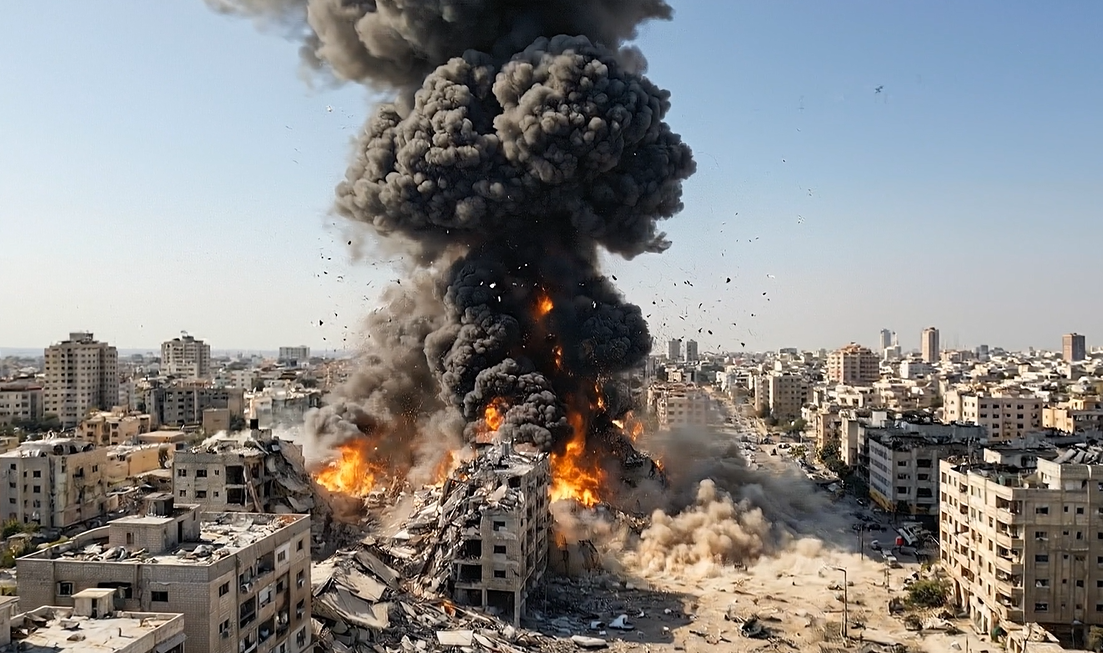
Tel Aviv, Israel – Iran has carried out one of its most destructive attacks to date, as a powerful Khorramshahr-4 ballistic missile struck central Israel, turning parts of Tel Aviv into a scene of chaos, fire, and widespread devastation overnight.
On March 21, 2026, Iran’s Islamic Revolutionary Guard Corps (IRGC) launched the advanced Khorramshahr-4 missile—known for its long range, heavy payload, and high precision. Despite Israel’s sophisticated, multi-layered air defense systems, the missile broke through and hit a critical area in the heart of the city. The impact unleashed massive explosions that shook residential neighborhoods, commercial buildings, and key infrastructure.
Witnesses described a night of terror: damaged and partially collapsed buildings, overturned and burning vehicles, and thick plumes of black smoke rising across the skyline. After the initial strike, secondary fires erupted as the warhead detonated, sending shockwaves throughout the area. Emergency responders have been stretched thin, while hospitals are treating dozens of people injured by blast effects and flying debris.
Iranian state media has praised the attack as a “historic milestone,” claiming the Khorramshahr-4 demonstrated its ability to evade interception and strike directly at Israel’s economic and military centers. IRGC officials warned that even more severe attacks could follow.
Although Israel deployed its Iron Dome, David’s Sling, and Arrow defense systems, the missile’s speed and destructive capability allowed it to bypass these defenses. The incident highlights potential vulnerabilities, especially after weeks of sustained attacks.
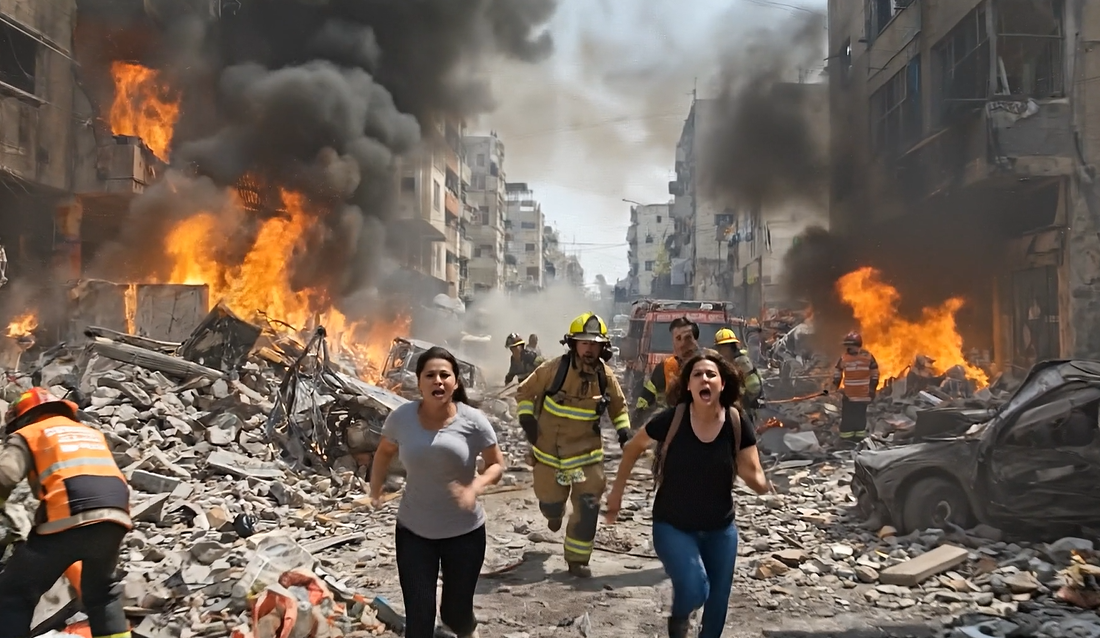
Prime Minister Benjamin Netanyahu condemned the strike as “barbaric terrorism targeting civilians” and vowed a swift and forceful response. Israeli air forces have already begun retaliatory strikes against Iranian-linked targets.
This escalation signals a dangerous turning point. Iran’s use of one of its most advanced missiles raises serious concerns about future attacks of even greater intensity.
As fires continue to burn across Tel Aviv and rescue teams work through the night, one thing is becoming increasingly clear: the conflict has entered a far more destructive and dangerous phase.