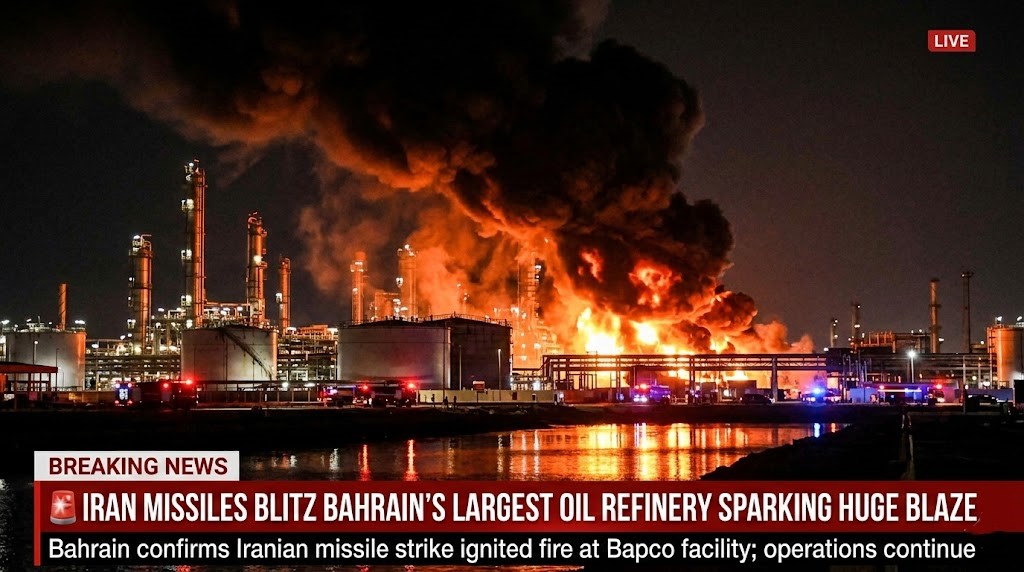
Overnight, tensions in the Gulf region intensified sharply following reports that Iran carried out a missile attack targeting the Bapco oil refinery in Bahrain. The strike illuminated the night sky with flames and raised serious concerns about a widening conflict that could significantly impact global energy stability.
According to eyewitness accounts and early video footage, powerful explosions rocked the refinery, sending thick columns of smoke high into the air. The Bapco facility is one of Bahrain’s most vital النفط processing centers, making it a strategic asset not only for the country but for the broader regional energy network. The incident highlights a troubling shift: critical infrastructure is increasingly becoming a direct target in geopolitical confrontations, particularly amid the ongoing tensions involving the United States, Iran, and Israel.
This attack comes at an already fragile moment for the Gulf’s energy sector. Key maritime routes such as the Strait of Hormuz have been under mounting pressure due to previous incidents involving drones, missile strikes, and naval confrontations. These disruptions have already affected shipping lanes and oil production. Experts warn that further attacks on major facilities like Bapco could push oil prices higher and destabilize energy markets worldwide. For example, even minor interruptions in Gulf oil supply have historically led to noticeable price fluctuations, underscoring the region’s outsized influence on global energy.
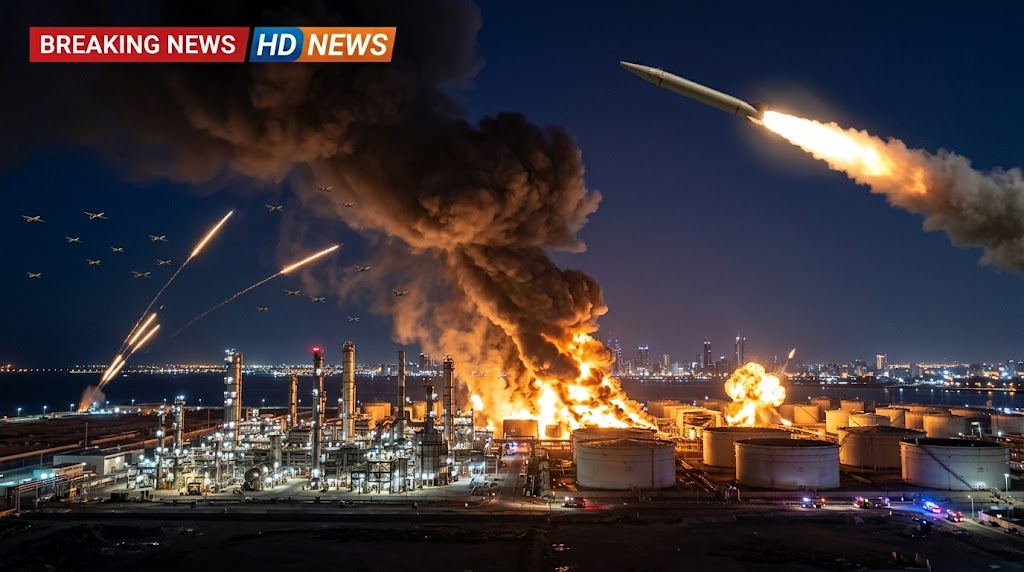
In response to the strike, Bahraini authorities quickly initiated emergency procedures. Firefighting teams were deployed to contain the damage, while security forces worked to secure the surrounding area. Allied military forces, including those from the United States, reportedly increased their state of readiness, with naval and air units closely monitoring the situation to prevent additional attacks. At the same time, analysts are evaluating the broader consequences, including potential disruptions to supply chains, risks to civilian populations, and the overall impact on regional security.
The incident also reflects a deeper strategic transformation. Energy infrastructure—once primarily viewed as an economic resource—is now increasingly treated as a tactical objective in modern conflict. Targeting refineries, pipelines, and shipping routes can weaken an opponent’s economy while creating ripple effects far beyond the immediate المنطقة. This shift raises critical questions about how nations will protect essential assets in an era where economic and military interests are deeply intertwined.
From a global perspective, the implications are significant. Energy security is a cornerstone of economic stability, and any threat to major النفط-producing regions can have cascading effects across industries, from transportation to manufacturing. For instance, a sustained disruption in Gulf oil exports could lead to increased fuel costs, inflationary pressures, and strained international relations as countries compete for limited resources.
Ultimately, this latest development signals a more dangerous phase in the unfolding situation. The use of missiles against high-value energy targets suggests that the conflict is escalating beyond symbolic or limited engagements. Instead, it points toward a scenario where infrastructure disruption becomes a primary tool of pressure. If such actions continue, the consequences could extend far beyond the region, influencing global markets, diplomatic alignments, and long-term energy strategies.
In short, the events of the night serve as a stark reminder of how quickly regional tensions can evolve into broader crises. With vital energy assets now directly in the line of fire, the risk of widespread economic and political repercussions has grown considerably.