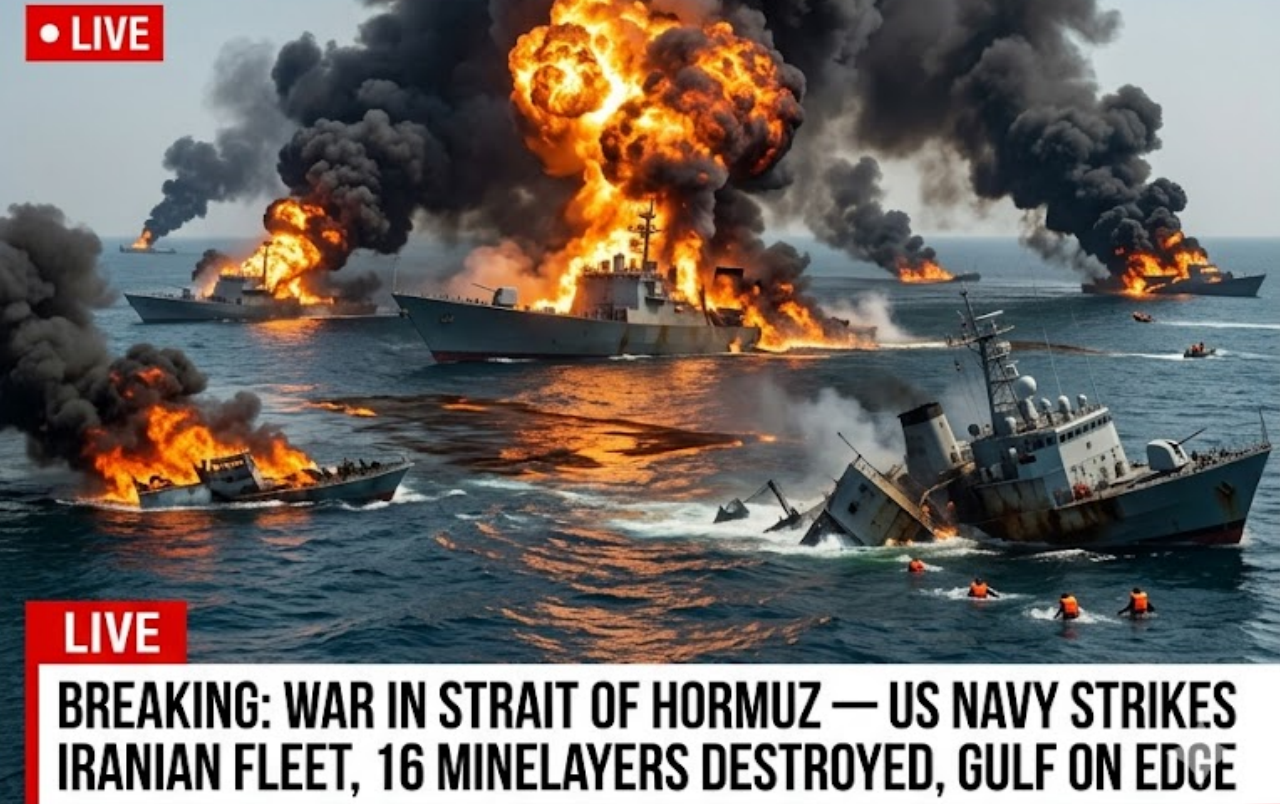
The **Strait of Hormuz — a narrow chokepoint responsible for nearly one‑fifth of global crude oil and liquefied natural gas shipments — has become a central battlefield in the escalating U.S.–Iran war, with American naval forces launching decisive strikes against elements of the Iranian fleet aimed at preventing a full maritime blockade. In a significant action reported by U.S. military officials, American forces said they destroyed up to 16 Iranian vessels believed to be mine‑laying ships in and around the strategic strait, dramatically heightening tensions in the Gulf.
U.S. Central Command and naval sources emphasized that the targeted vessels were specifically those suspected of planting naval mines — explosive devices that could easily close the Strait of Hormuz by denying safe passage to commercial tankers and cargo ships. Tehran’s apparent intent to deploy mines in the waterway triggered warnings from Washington that any attempt to disrupt freedom of navigation would meet with “severe military consequences.”
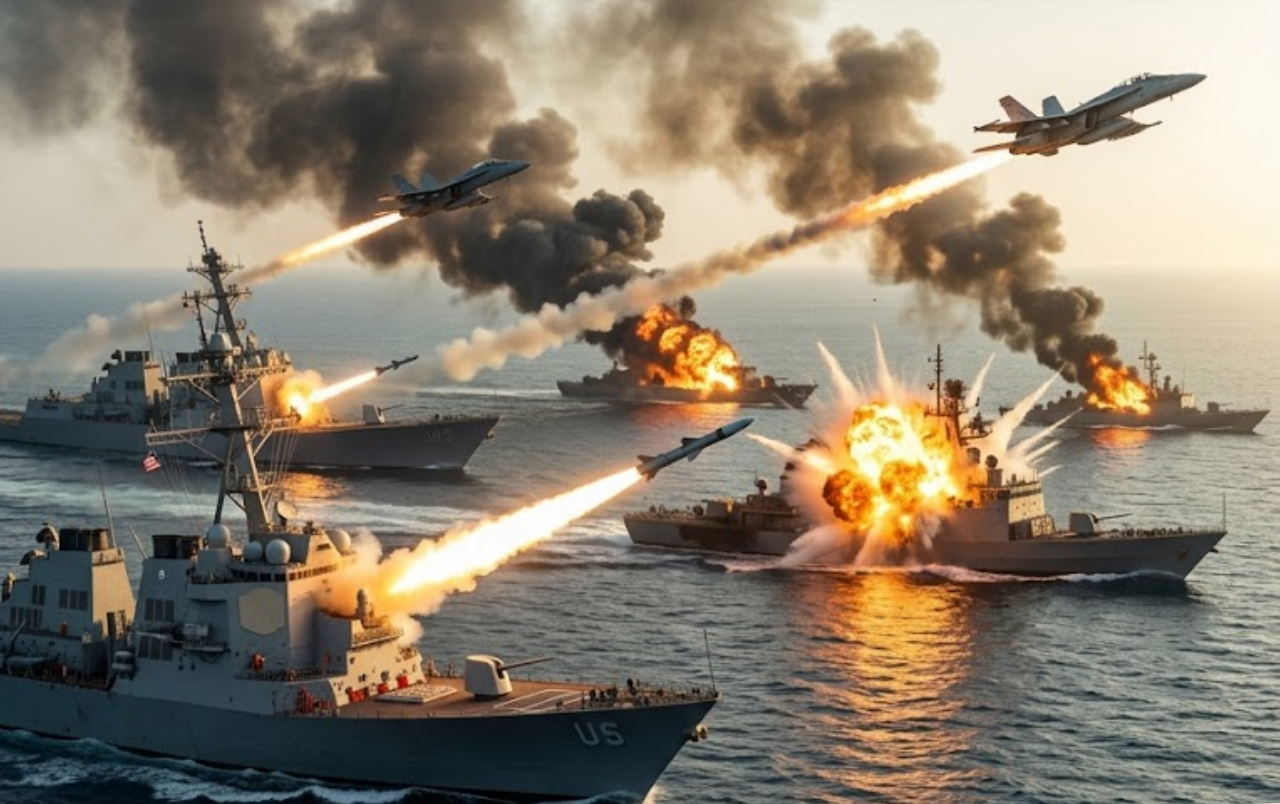
The destruction of these 16 minelayers — reportedly carried out using missiles and naval gunfire — was described by Pentagon briefings as part of an action to protect global energy supply routes and prevent Iran from enforcing a de facto blockade of one of the world’s most important maritime arteries. The U.S. strikes came amid reports that Iran had begun mining operations and warning that vessels attempting to transit without permission would be considered legitimate targets.
Global markets reacted instantly to news of the heightened naval engagement. Oil prices surged as markets digested the possibility that shipping disruptions could deepen or extend indefinitely, particularly if Iranian forces responded with further attacks on shipping or naval targets in the Gulf. Traders and analysts warned that even brief interruptions in transit through the strait can have outsized effects on energy prices and supply chains worldwide.
Regionally, Gulf states expressed alarm at the intensifying confrontation, with some calling for urgent diplomatic engagement to avoid a full‑scale naval crisis. Commercial shipping companies began rerouting vessels around the southern tip of Africa to avoid the risk of attacks, a move that increases transit times and freight costs substantially.
The destruction of Iran’s mine‑laying capability — at least on the scale of these reported 16 vessels — is unlikely by itself to restore normal traffic through the strait. Analysts note that Iran retains numerous small craft and coastal assets capable of deploying mines or harassing shipping. Nevertheless, the U.S. action represents a significant escalation in the maritime dimension of the conflict, effectively signaling that Washington is prepared to use naval force to counter Iranian efforts to assert control over the waterway.
As the Gulf remains on edge, with energy markets sensitive and regional navies on heightened alert, the world watches the strategic Strait of Hormuz — long a symbol of global interdependence — teetering closer to open maritime conflict. The risk of miscalculation remains high, and diplomatic efforts to defuse the crisis have yet to gain traction as hostilities continue unabated.