The situation in the Middle East is becoming increasingly tense, with signs of escalation evident on multiple fronts. In response to ongoing hostilities and Iran’s continued retaliation, the United States has significantly expanded its military footprint across the region. Forces are now positioned in a way that places Iran under pressure from several directions, involving land, air, and naval capabilities.
In recent weeks, Washington has reinforced its presence with a substantial deployment of troops and military equipment. Thousands of personnel, including Marines and elite airborne units such as those from the 82nd Airborne Division, have been mobilized. Reports suggest that additional forces—potentially up to 10,000 combat troops—are being considered as part of contingency planning for a possible ground operation. This scale of preparation indicates that the U.S. is not only aiming to deter further conflict but is also preparing for the possibility of deeper military engagement if the situation deteriorates.
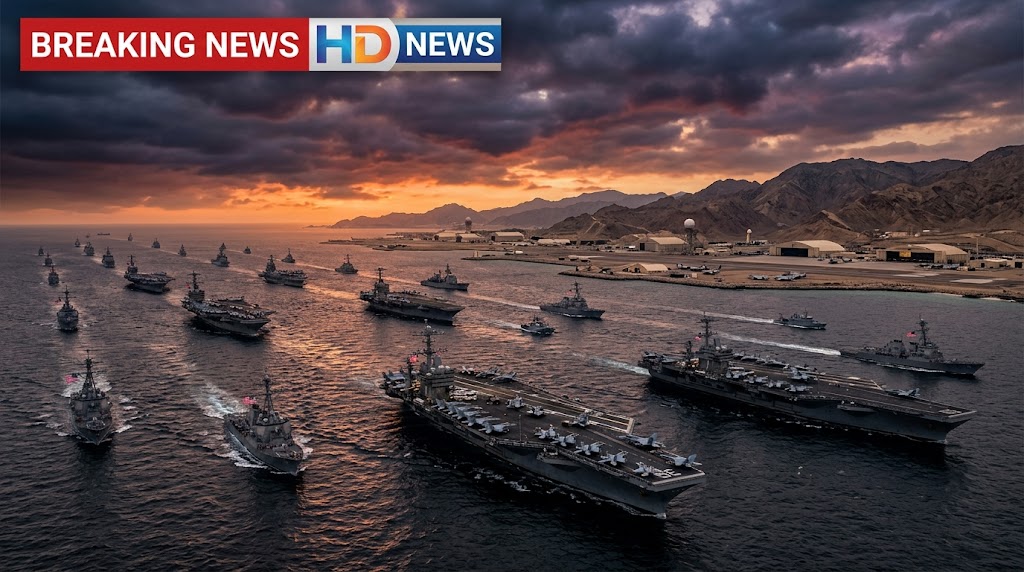
At sea, the U.S. Navy has taken up strategic positions around Iran. Aircraft carrier strike groups and accompanying warships are actively operating in critical waterways, particularly the Strait of Hormuz and the northern Arabian Sea. These locations are vital for global energy transportation, making them a focal point of military activity. The naval presence serves multiple purposes: safeguarding shipping routes, monitoring Iranian movements, and providing missile defense and rapid-response capabilities. By maintaining a strong maritime perimeter, the U.S. aims to prevent further escalation while ensuring control over key chokepoints.
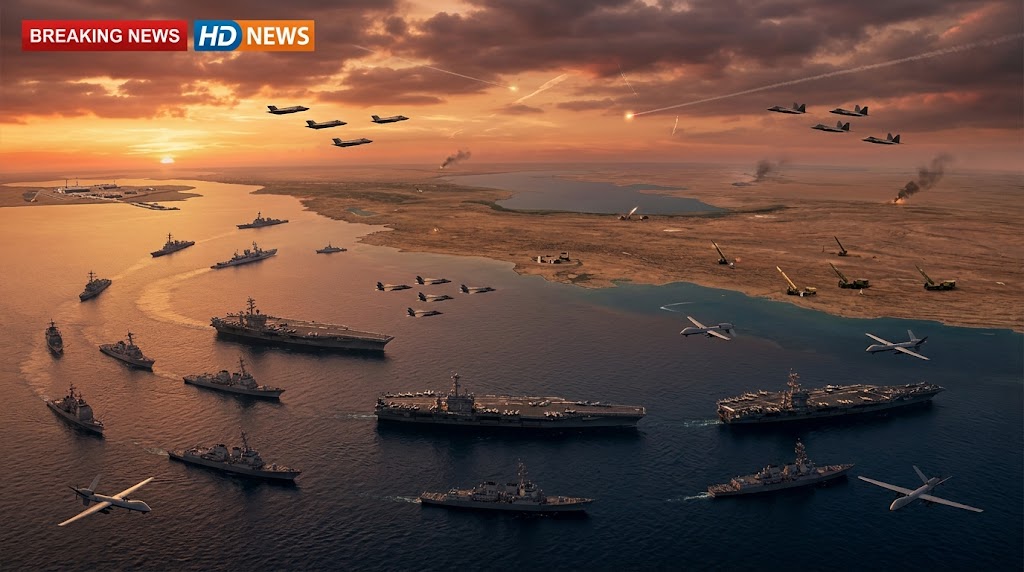
On land, American military bases across the Gulf region have become central hubs of activity. Countries such as Qatar, Bahrain, Kuwait, and Iraq host large numbers of U.S. personnel, along with advanced systems including combat aircraft, missile defense units, and command infrastructure. These bases play a crucial role in supporting operations and maintaining readiness. However, they have also become targets. Iranian missiles and drones have already struck some of these installations, highlighting the increasing risk of direct confrontation and the vulnerability of even well-defended positions.
This military buildup is not an isolated development but part of a broader strategic framework. It aligns with a larger campaign involving coordinated U.S. and Israeli actions against Iranian military infrastructure. These operations have included airstrikes deep داخل Iranian territory and significant attacks on facilities linked to missile production, drone operations, and naval capabilities. Despite these efforts, Iran has continued to respond with its own strikes, launching missiles and drones toward U.S. positions and allied nations. This ongoing exchange underscores the volatile and unpredictable nature of the conflict.
What makes the current situation particularly concerning is its multi-dimensional nature. The conflict is no longer confined to a single domain; it spans airspace, land bases, and critical maritime routes. Each of these arenas presents its own risks, and together they create a highly complex security environment. For example, any disruption in the Strait of Hormuz could have immediate global economic consequences, given its importance to oil shipments.
The scale of U.S. force concentration in the region is notable. It represents one of the most significant military deployments in the Middle East in decades. Such a buildup sends a strong signal of deterrence but also raises the stakes, as even minor incidents could escalate into larger confrontations.
At the same time, diplomatic efforts continue behind the scenes. While military positioning dominates headlines, negotiations and backchannel communications are ongoing in an attempt to prevent further escalation. The coexistence of diplomacy and military readiness reflects the delicate balance both sides are trying to maintain.
Overall, the situation remains highly fluid. Developments can shift rapidly, and the interplay between military actions and diplomatic initiatives will likely determine the trajectory of the conflict in the coming weeks.