
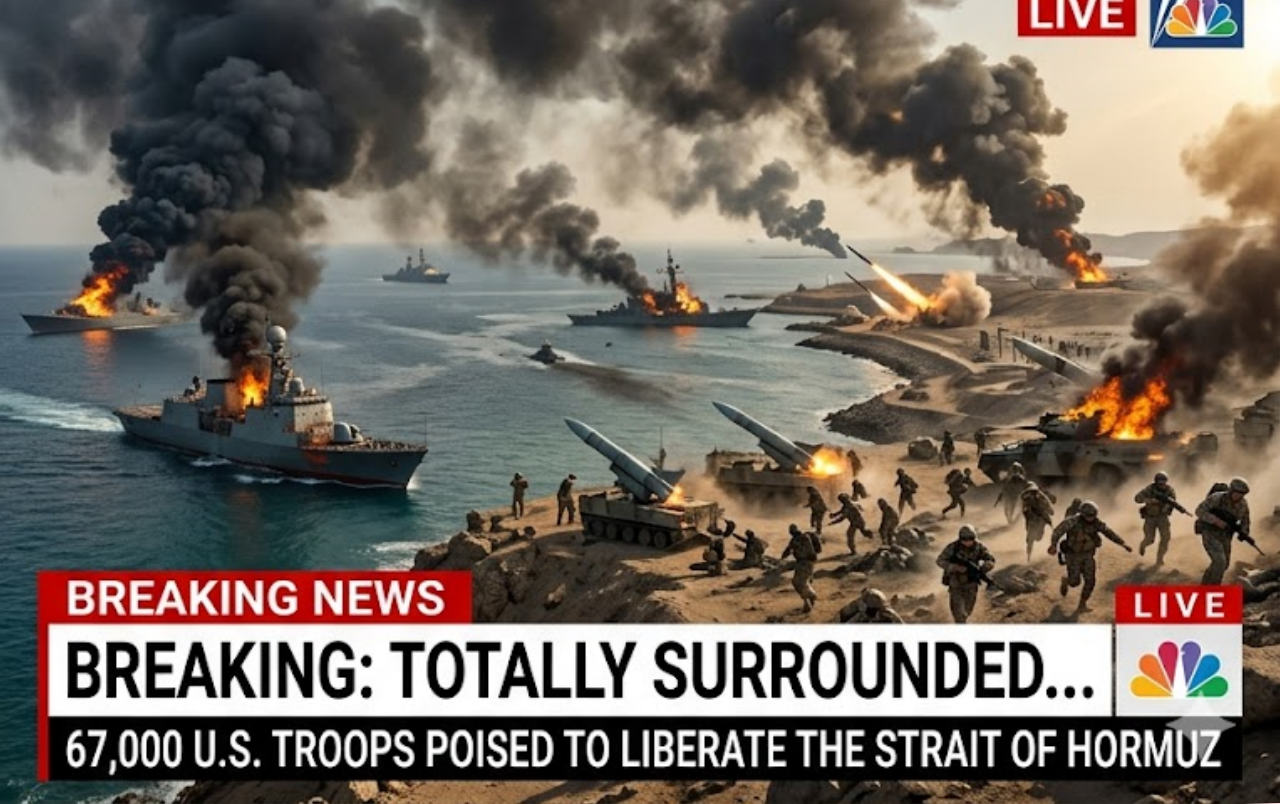
The Strait of Hormuz has become the most dangerous flashpoint on Earth.
A narrow stretch of water—just tens of kilometers wide—now holds the key to nearly a fifth of the world’s oil supply. And right now, it’s under pressure like never before.
But claims of “67,000 U.S. troops surrounding Iran” and preparing to “liberate” the strait?
That’s where reality and hype begin to separate.
Here’s what’s actually happening.
The United States has been rapidly increasing its military presence in the region, deploying thousands of troops, warships, and aircraft as tensions with Iran escalate.
Some forces—like Marines and airborne units—are being positioned for rapid-response operations, including potential missions to secure key نقاط such as islands near the Strait of Hormuz.
But experts are clear:
This is not a full-scale invasion force.
Current deployments are in the thousands—not tens of thousands, and are designed to give Washington “options,” not to launch an immediate ground war.
In fact, officials have repeatedly stated that U.S. objectives in the conflict can be achieved without deploying large-scale ground troops into Iran.
So why all the movement?
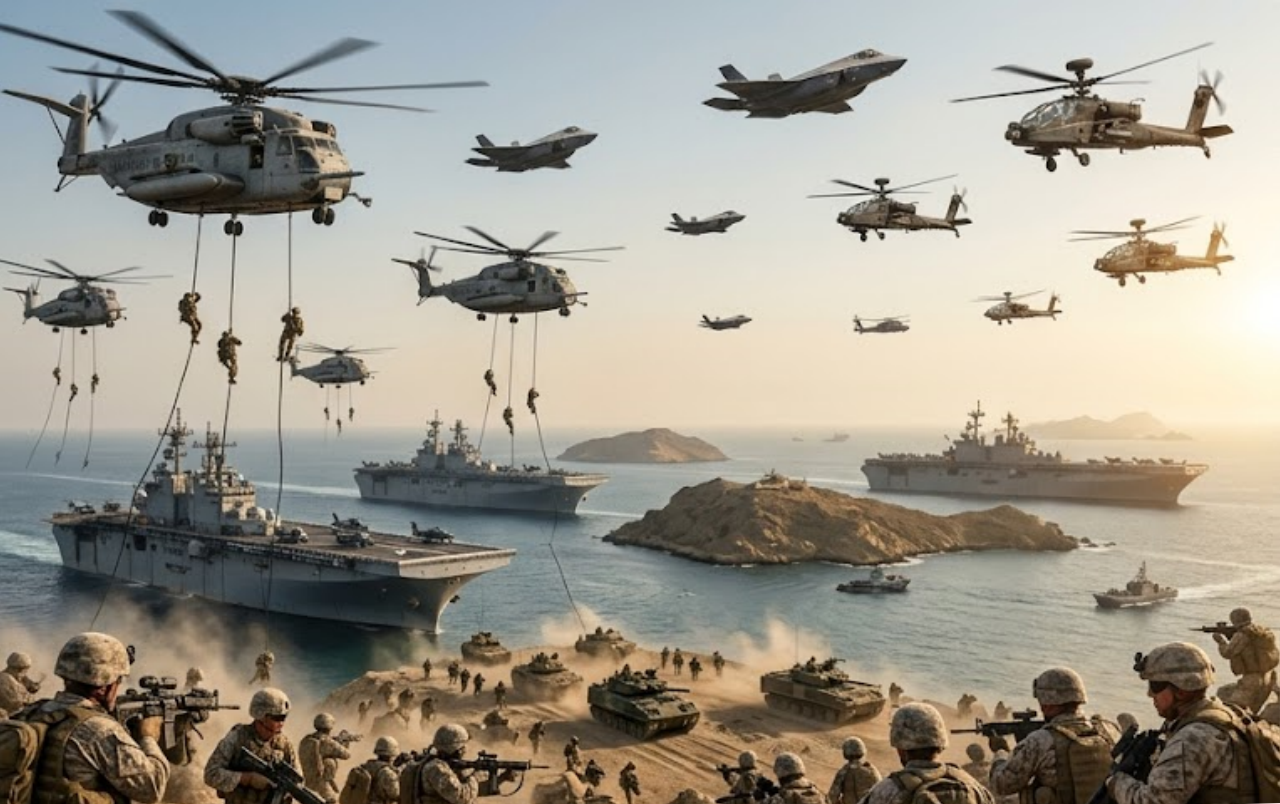
Because the Strait of Hormuz is critical.
Iran has effectively disrupted shipping through the waterway—using missiles, drones, naval mines, and fast attack boats to threaten vessels passing through.
And that gives Tehran a powerful advantage.
From fortified islands and coastal positions, Iran can monitor and potentially strike ships moving through the strait—turning it into a chokepoint that can impact the entire global economy.
That’s why the U.S. is preparing.
Possible scenarios being considered include:
- Escorting ships through the strait
- Destroying Iranian missile and naval threats
- Seizing strategic islands to reopen shipping routes
But every option carries serious risks.
A ground operation—even a limited one—could trigger massive retaliation from Iran, including missile strikes on U.S. forces and allies across the region.
And controlling the strait militarily?
Far from easy.
Iran has thousands of naval mines, drone swarms, and coastal missile systems—making any sustained operation extremely dangerous.
So is Iran “totally surrounded”?
Not quite.
The U.S. is building pressure.
It is positioning forces.
It is preparing for escalation if needed.
But there is no confirmed deployment of 67,000 troops, and no imminent large-scale ground invasion underway.
Still, the situation is volatile.
Because if the Strait of Hormuz remains blocked—and diplomacy fails—the next step may not be more positioning.
It may be action.
And if that happens, this narrow strip of water could become the center of a conflict that reshapes the global order.