At 6:17 a.m., the message was clear.
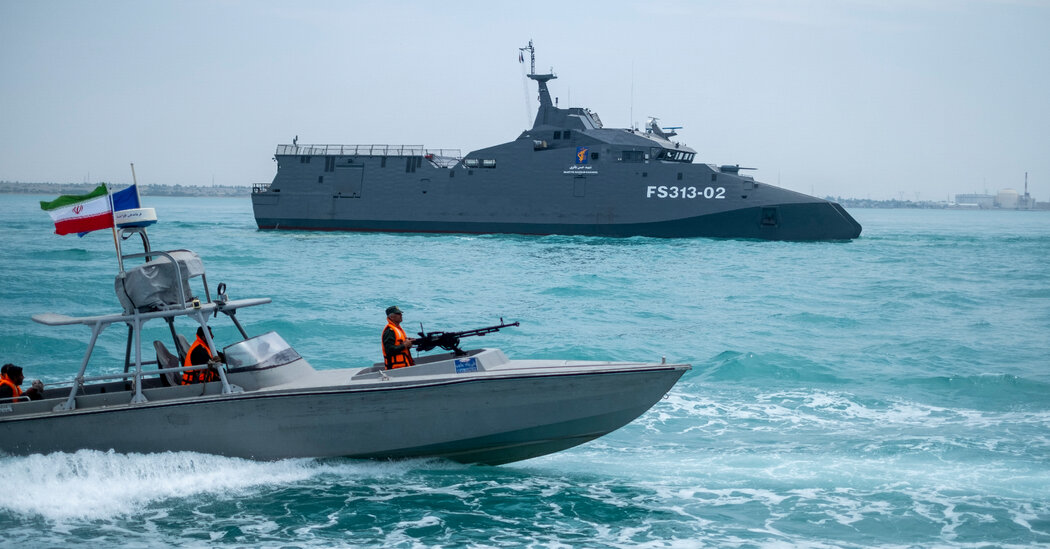
The Strait of Hormuz—one of the most critical waterways on Earth—was effectively shut down.
Iran’s Revolutionary Guard had already warned the world: no ships linked to the U.S., Israel, or their allies would pass. Within days, missile strikes, drone attacks, and naval threats turned the narrow passage into a danger zone. Tankers stopped moving. Hundreds of vessels anchored offshore. Nearly 20% of the world’s oil flow was suddenly at risk.
This wasn’t just a military move.
It was economic warfare.
Shipping traffic collapsed. Oil prices surged past $100 per barrel. Global markets reacted instantly. And thousands of sailors found themselves trapped in one of the most dangerous choke points on the planet.
For a moment, it looked like Iran had the upper hand.
Then the U.S. responded.
Not with a single strike—but with a campaign.
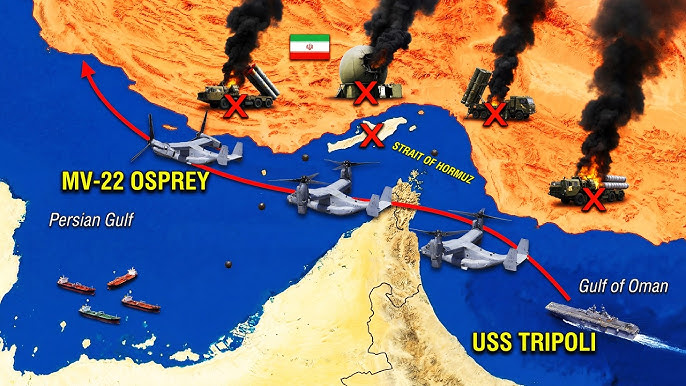
Within days of the closure, the United States launched a coordinated military effort to reopen the strait, targeting the very systems Iran was using to control it. Warplanes, drones, and naval forces began striking:
- Iranian naval vessels
- Coastal missile batteries
- Drone launch sites
- Mine-laying operations
This marked the beginning of a broader operation aimed at restoring freedom of navigation.
Behind the scenes, the strategy was clear:
Don’t just defend ships.
Destroy the threat.
U.S. officials confirmed that strikes hit underground storage sites and coastal missile systems, degrading Iran’s ability to target vessels moving through the Gulf.
At the same time, naval forces repositioned.
Carrier strike groups moved closer.
Destroyers prepared for interception missions.
Marines and rapid-response units were deployed to nearby مناطق.
The goal wasn’t just to reopen the strait—it was to take control of the battlespace.
But it wasn’t easy.
The Strait of Hormuz is narrow, crowded, and heavily contested. Iran has spent years preparing for exactly this scenario—using mines, fast attack boats, drones, and missile systems to make any U.S. operation costly and dangerous.
Even now, the situation remains unstable.
Iran continues to threaten ships.
Some vessels are still stranded.
Global powers are scrambling to find diplomatic solutions.
So what really happened at “6:17 A.M.”?
Iran didn’t just close a waterway.
It triggered one of the most dangerous naval confrontations in modern history.
And the U.S. Navy didn’t just react.
It launched a full-scale effort to break the blockade—one strike, one ship, one corridor at a time.
Because whoever controls the Strait of Hormuz…
Controls the flow of global energy.
And right now, that battle is still unfolding.