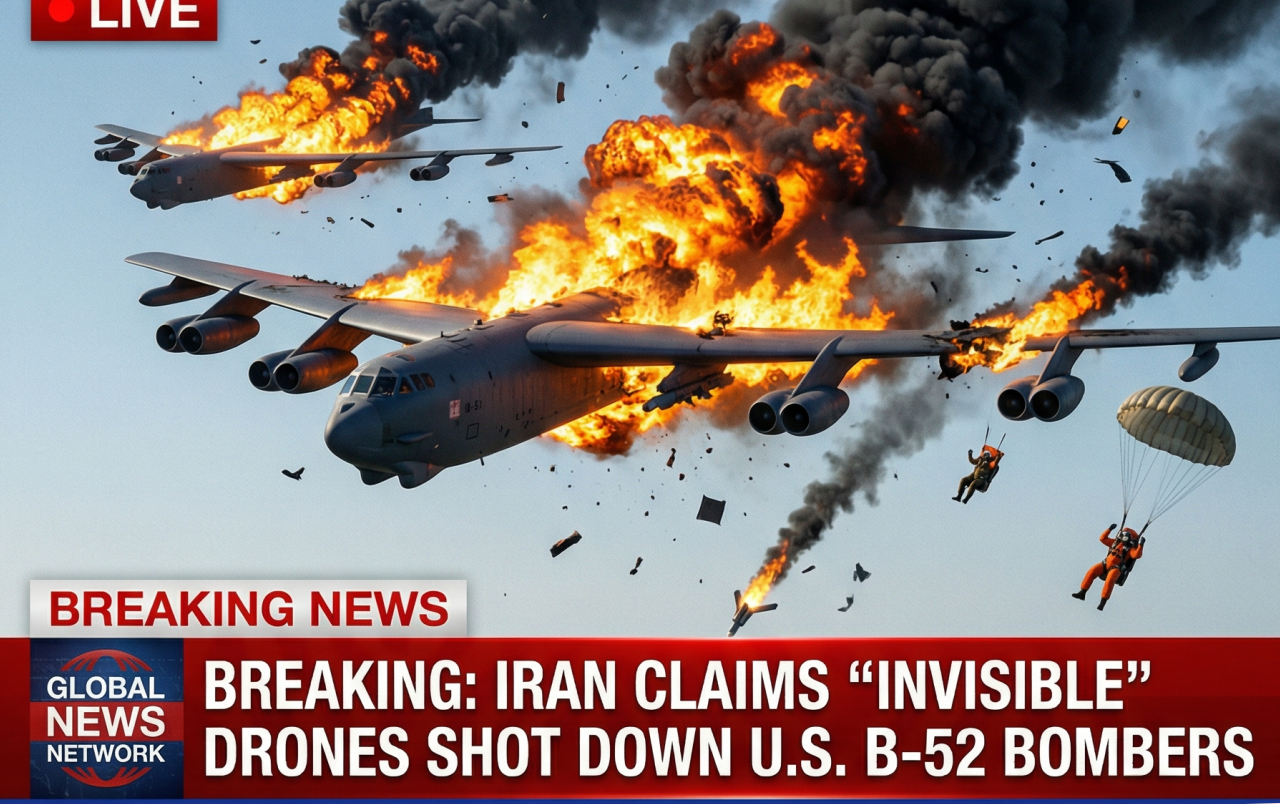
In a claim that has quickly ignited skepticism among defense analysts and global security observers, Iranian state-linked narratives are circulating reports that so-called “invisible” drones were capable of shooting down U.S. B-52 bombers—an assertion widely viewed as a strategic propaganda move rather than a credible military breakthrough. The headline-grabbing statement plays directly into ongoing information warfare, where perception can be as powerful as reality, especially amid heightened geopolitical tensions in the Middle East. From a technical standpoint, the idea of stealth drones with advanced detection evasion is not entirely fictional—many nations, including the United States and China, are actively developing low-observable UAV technologies—but the leap to successfully intercept and destroy heavily defended, long-range strategic bombers like the B-52 raises serious doubts. Military experts emphasize that the B-52, while not stealth itself, operates within layered defense systems, often supported by electronic warfare, fighter escorts, and long-range surveillance, making it an extremely difficult target.
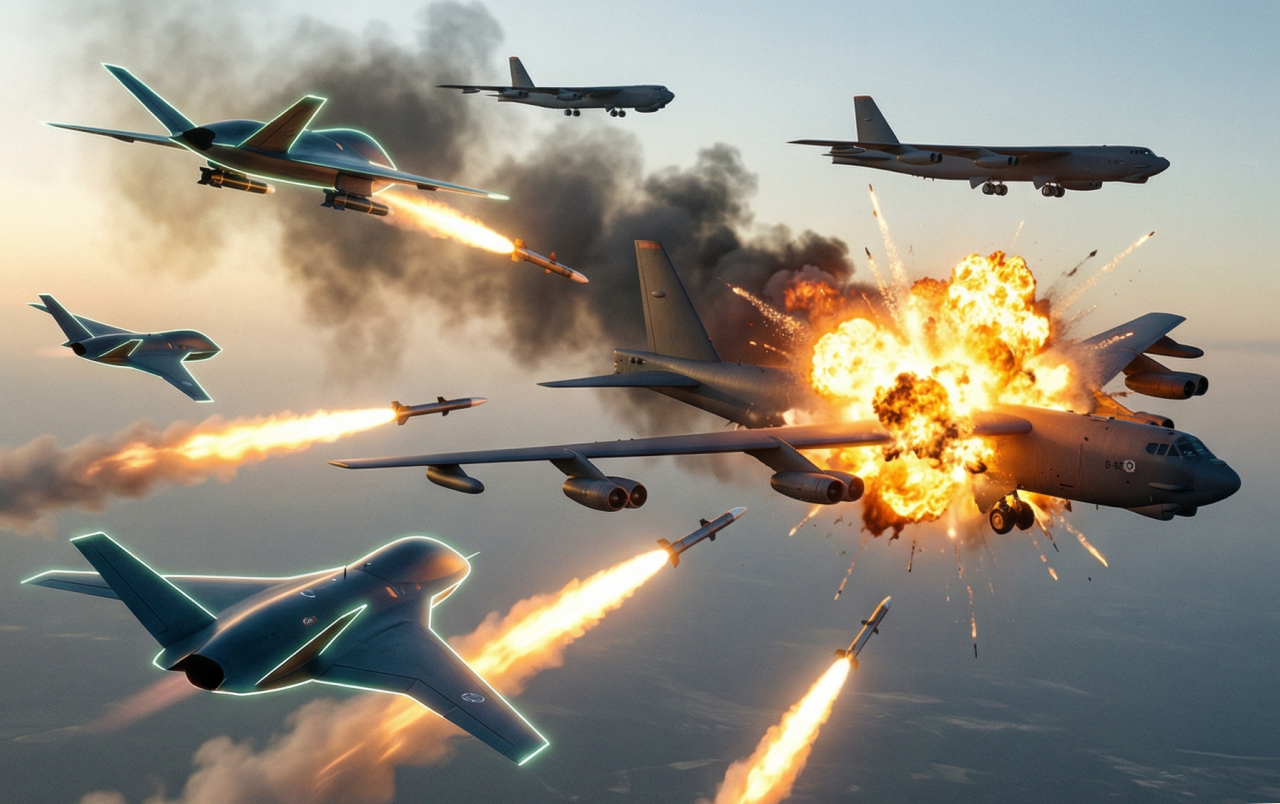
Furthermore, no verifiable satellite data, radar evidence, or credible third-party confirmation has emerged to support Iran’s claim, reinforcing the likelihood that this narrative is designed to project strength, deter adversaries, and influence both domestic and international audiences. In the broader context of modern warfare and defense communication, such statements align with known tactics of psychological operations (PSYOPs), where exaggeration or misinformation can shape public perception and strategic calculations. For readers trying to understand the reality behind headlines like “Iran invisible drones vs U.S. B-52 bombers,” it’s essential to rely on verified defense analysis, cross-checked intelligence reporting, and historical patterns of military capability rather than sensational claims. Ultimately, while drone technology continues to evolve rapidly and plays an increasingly central role in asymmetric warfare, extraordinary claims require equally strong evidence—something notably absent in this case, underscoring the importance of critical evaluation in today’s complex information landscape.