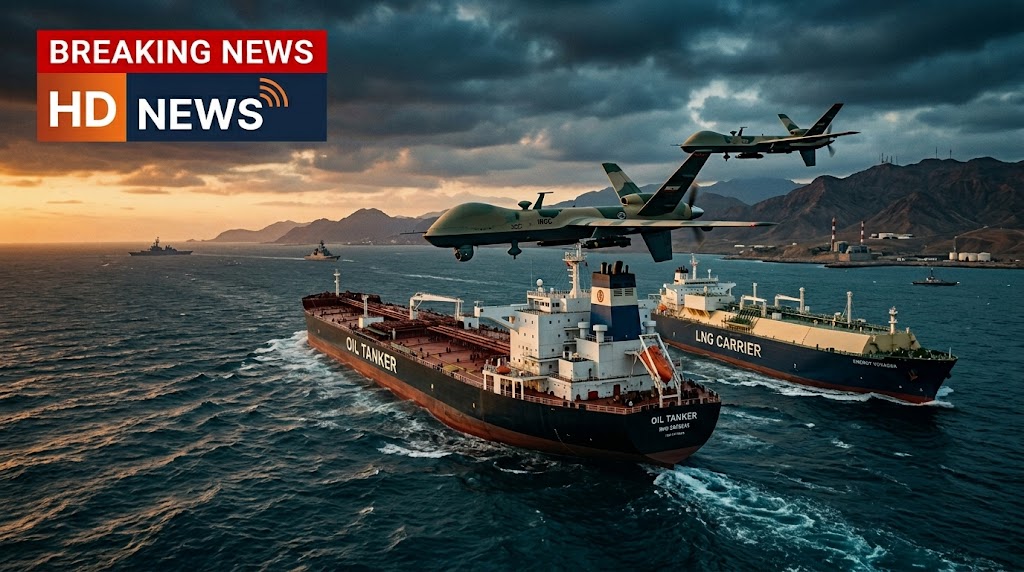
Tensions in the Strait of Hormuz remain dangerously high as Iranian unmanned aerial vehicles (UAVs) have significantly increased surveillance activity over commercial shipping, particularly oil tankers and liquefied natural gas (LNG) carriers. The escalation comes at a time when maritime traffic is only beginning to recover from recent disruptions, raising fresh concerns about security and the risk of miscalculation in one of the world’s most critical waterways.
According to regional security sources, multiple UAVs have been observed conducting persistent overflights of vessels transiting the narrow strait. These drones are believed to be equipped with advanced imaging systems capable of tracking ship movements, identifying cargo types, and relaying real-time data to command centers. While officials have not confirmed any direct attacks linked to the current wave of drone activity, the intensity and frequency of the surveillance have alarmed both military forces and commercial operators.
The presence of Iranian UAVs above key shipping lanes adds a new layer of complexity to an already fragile security environment. In recent weeks, the region has witnessed missile launches, naval incidents, and mine-clearing operations, all contributing to a heightened sense of vulnerability. The increased drone activity is widely interpreted as a show of force, signaling both capability and intent to monitor—and potentially influence—maritime traffic through the strait.
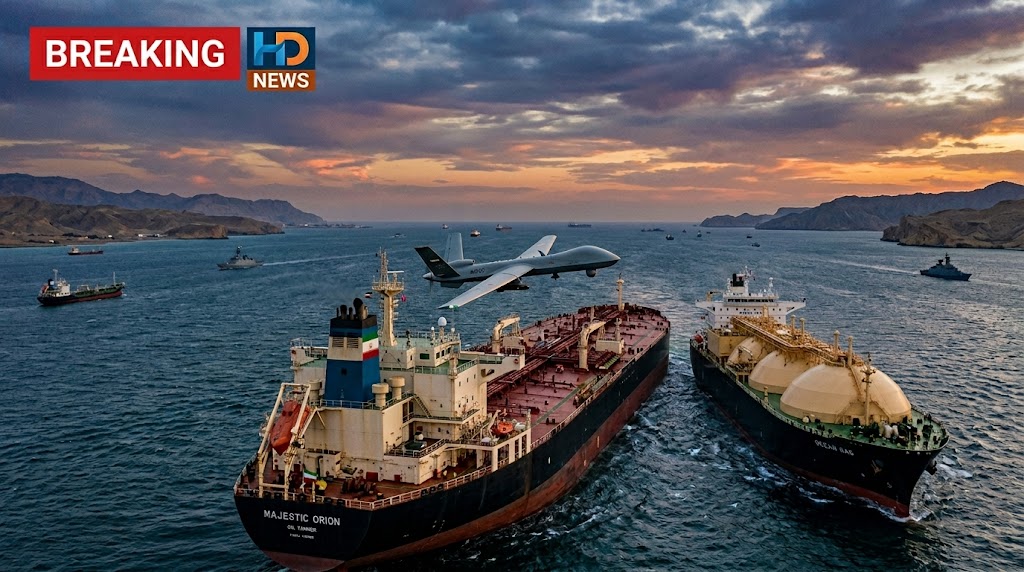
Shipping companies have responded with heightened caution. Crews are being instructed to maintain strict communication protocols and report any unusual aerial activity immediately. Some operators have adjusted transit schedules or chosen to travel in convoys under naval escort, reflecting the growing unease within the industry. The psychological impact of constant drone presence, particularly in such a confined and strategically vital area, is also becoming a significant concern.
Military forces in the region are closely monitoring the situation. Naval vessels equipped with air defense systems are on alert, while surveillance networks are working to track UAV flight patterns and assess potential угроз. Officials emphasize that while reconnaissance flights do not necessarily constitute an attack, they can quickly escalate tensions if misinterpreted or if a drone is perceived as a direct threat.
The Strait of Hormuz handles a substantial share of global energy exports, making any disruption a matter of international consequence. Markets are already reacting to the renewed uncertainty, with energy prices showing signs of volatility amid fears that surveillance could precede more aggressive действия.
Diplomatic efforts continue in parallel, with calls for restraint and adherence to international maritime norms. However, the gap between political dialogue and on-the-ground realities remains evident. The skies above Hormuz are now as contested as the waters below, underscoring the evolving nature of modern conflict where surveillance, signaling, and deterrence intersect.
As Iranian drones continue to shadow commercial vessels, the message is clear: even without direct confrontation, the balance of security in Hormuz remains precarious, and the margin for error is dangerously thin.