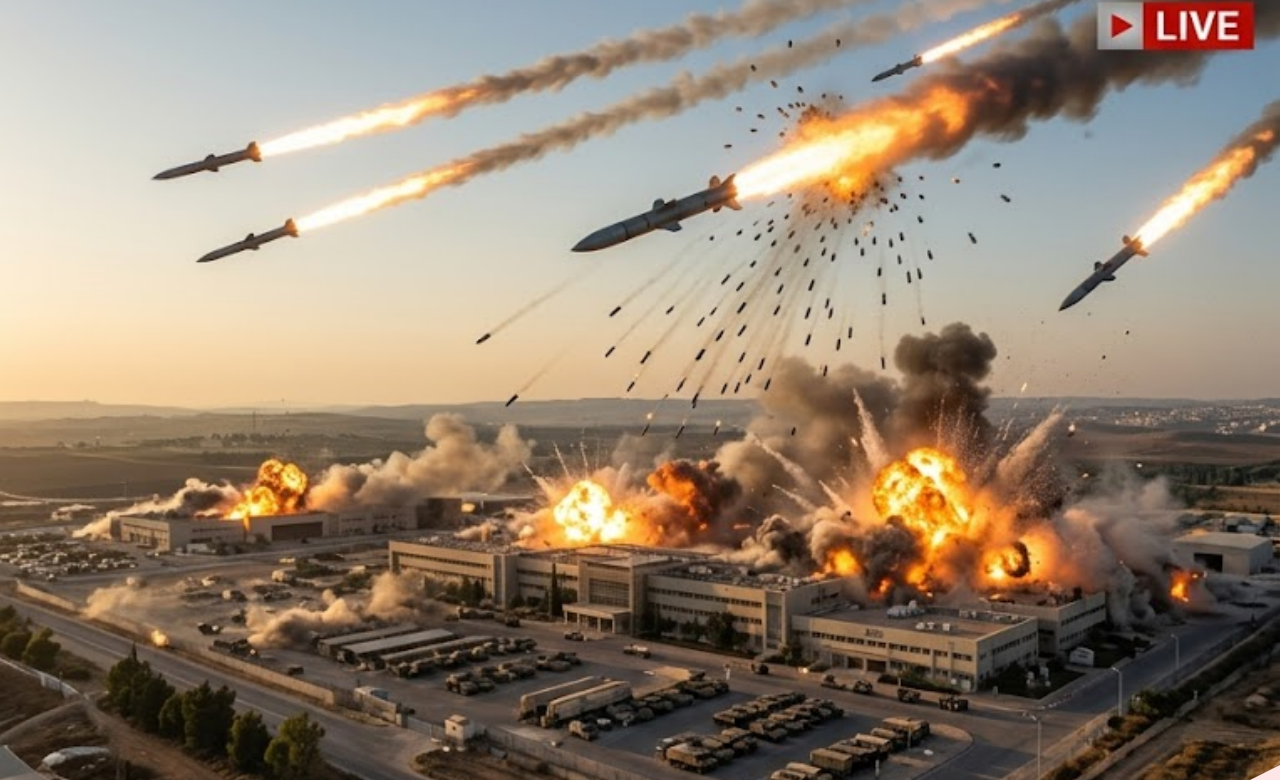
In a significant and highly controversial development, Iran has carried out a direct missile strike targeting Israel’s primary military hub—the Kirya complex located in central Tel Aviv. According to early reports, multiple waves of ballistic missiles, some reportedly fitted with cluster-type payloads, struck the area within a short timeframe, damaging key command facilities, intelligence units, and logistical infrastructure.
Israel’s air defense systems managed to intercept a portion of the incoming missiles. However, several projectiles evaded interception, dispersing numerous smaller explosive submunitions across the compound and its surroundings. Emergency response teams are now working urgently to secure the area, dispose of unexploded devices, and provide medical assistance to the wounded. Preliminary information indicates casualties among both military personnel and support staff.
Iranian state media quickly acknowledged responsibility for the strike, describing it as a calculated retaliation for recent joint U.S.-Israeli operations. These included the use of B-2 Spirit bombers in an attack on Bandar Abbas port, as well as earlier strikes on Iran’s underground tank manufacturing facilities. Tehran characterized the operation as a successful hit on what it called Israel’s central command structure.
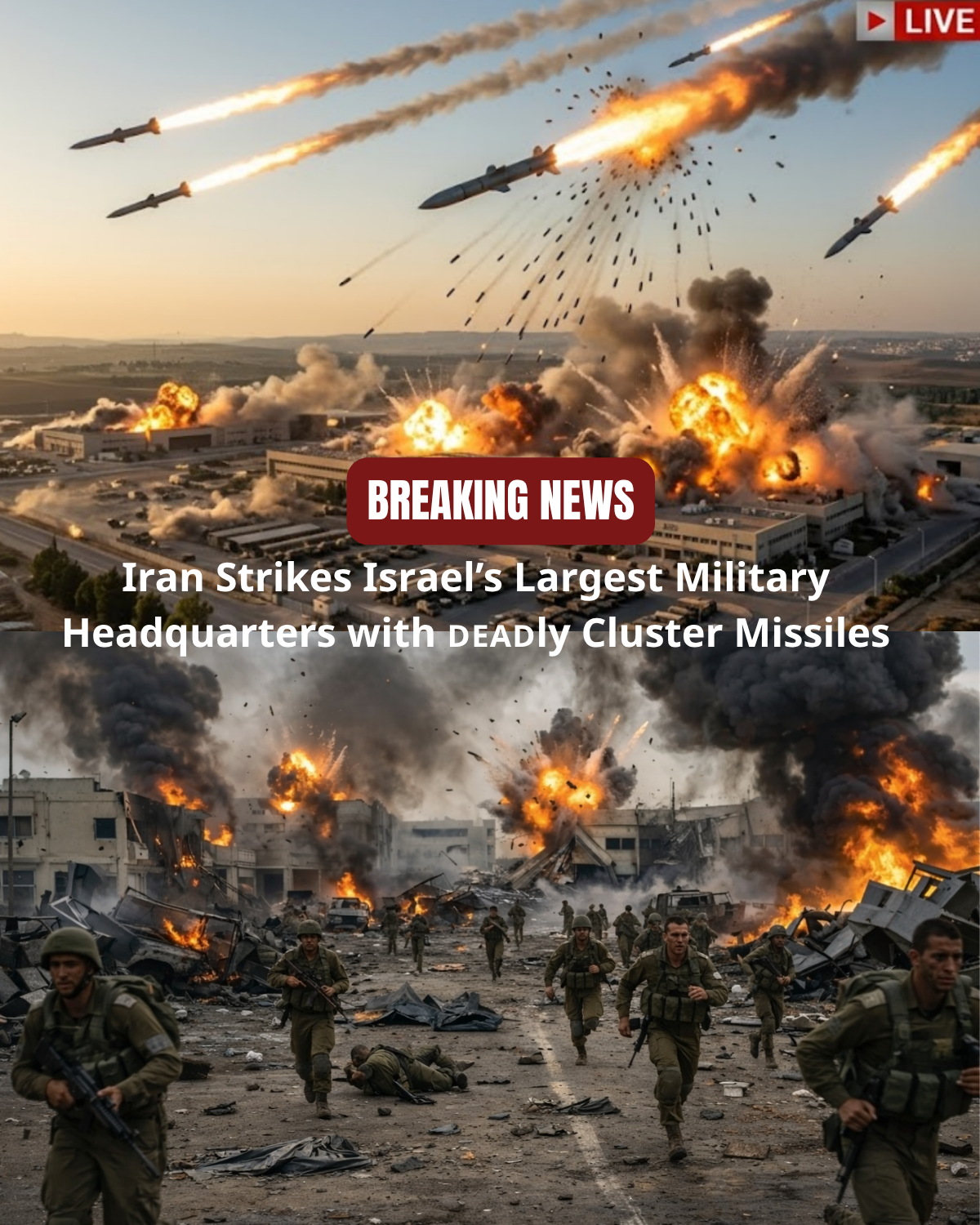
This incident signals a sharp escalation in the ongoing conflict. What began with missile exchanges following U.S. and Israeli strikes on Iranian nuclear-related sites in late February has now intensified, with Iran directly targeting a central military command location inside Israel. The reported use of cluster-style munitions—especially in a densely populated urban environment—has raised serious concerns about long-term risks to civilians, particularly due to unexploded remnants that can remain hazardous for years.
Israeli authorities have condemned the attack, calling it a severe breach of established red lines and warning of a swift and forceful response. Meanwhile, U.S. Central Command reiterated its strong support for Israel, emphasizing that continued aggression from Iran would trigger even more decisive countermeasures.
The strike underscores the growing intensity of the conflict and highlights the risks associated with advanced missile capabilities in volatile regions. It also reflects a shift toward more direct confrontation, bringing military operations closer to key population and command centers.
The situation remains fluid, with developments unfolding rapidly. Additional details are expected as casualty figures are verified and Israel prepares its next steps.