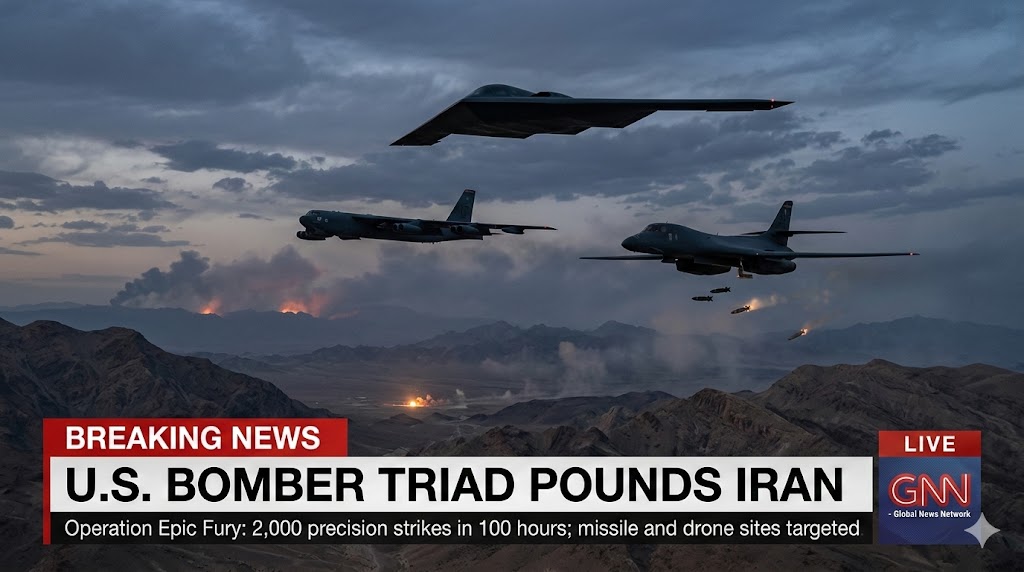
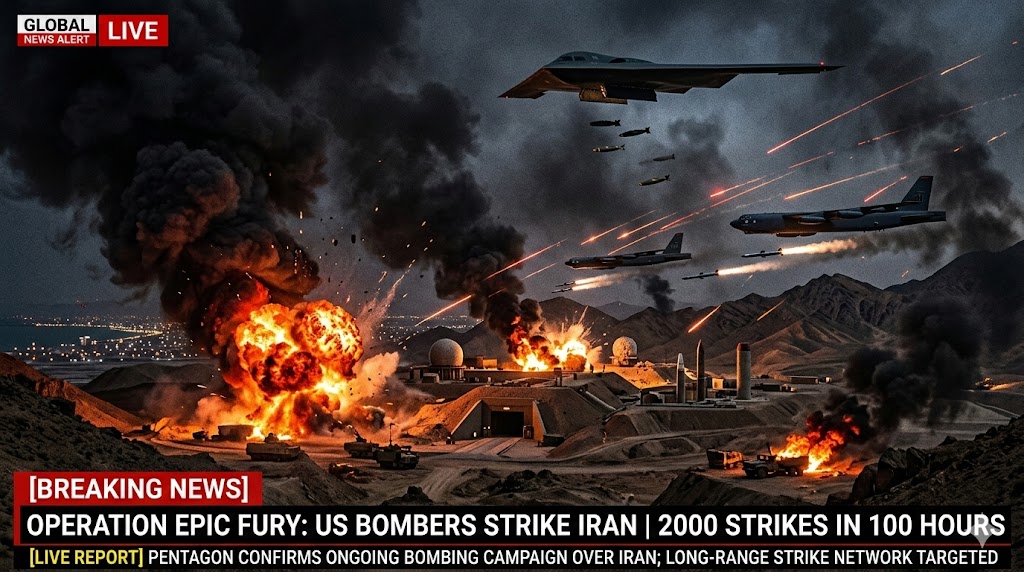
In a striking demonstration of air dominance, the United States Air Force reportedly carried out around 2,000 highly targeted strikes across Iran within a span of just 100 hours. This large-scale operation, dubbed Operation Epic Fury, showcases the combined strength of three key bomber platforms: the B-52 Stratofortress, the B-2 Spirit, and the B-1B Lancer. Together, they executed one of the most concentrated aerial campaigns seen in recent decades.
A Powerful Bomber Triad at Work
Each aircraft played a distinct and critical role in the operation. The B-52 Stratofortress focused on launching long-range cruise missiles and delivering conventional payloads, enabling strikes from safer distances while still hitting strategic infrastructure such as missile systems and military facilities.
Meanwhile, the B-2 Spirit stealth bombers were tasked with penetrating heavily fortified airspace. Their low-observable design allowed them to reach deeply buried or well-protected targets—such as underground bunkers—using specialized munitions designed to break through hardened defenses.
Complementing these efforts, the B-1B Lancer carried out high-capacity bombing runs. Its missions targeted logistical networks, weapons storage sites, and command centers, disrupting the operational backbone of the opposing forces.
Unprecedented Precision and Coordination
Military analysts highlight that hitting approximately 2,000 targets in just over four days reflects an extraordinary level of coordination. This scale of action required seamless integration of intelligence, surveillance, and strike capabilities. Reported targets ranged from ballistic missile installations and drone manufacturing facilities to naval resources and command systems, indicating a comprehensive approach to weakening multiple layers of defense.
Broader Strategic Impact
Operation Epic Fury illustrates the United States’ capacity to project military force far into contested territory with speed and accuracy. Beyond the immediate tactical effects, the campaign significantly alters the regional balance by rapidly diminishing the adversary’s operational capabilities. It also sends a clear signal to Iran and neighboring regions about the reach and readiness of U.S. forces.
Implications for the Conflict and Beyond
The intensity and pace of the strikes suggest that Iran’s ability to mount an effective counter-response may be limited. This raises important questions about how the conflict might evolve and what ripple effects it could have on global stability, including potential impacts on energy markets and international security dynamics.
Redefining Modern Air Warfare
Ultimately, Operation Epic Fury sets a new benchmark for how modern air campaigns can be conducted. By combining stealth technology, precision-guided weapons, and synchronized multi-platform operations, it demonstrates how strategic bombers can reshape an entire battlefield in a matter of days—leaving opponents struggling to respond or adapt in real time.