
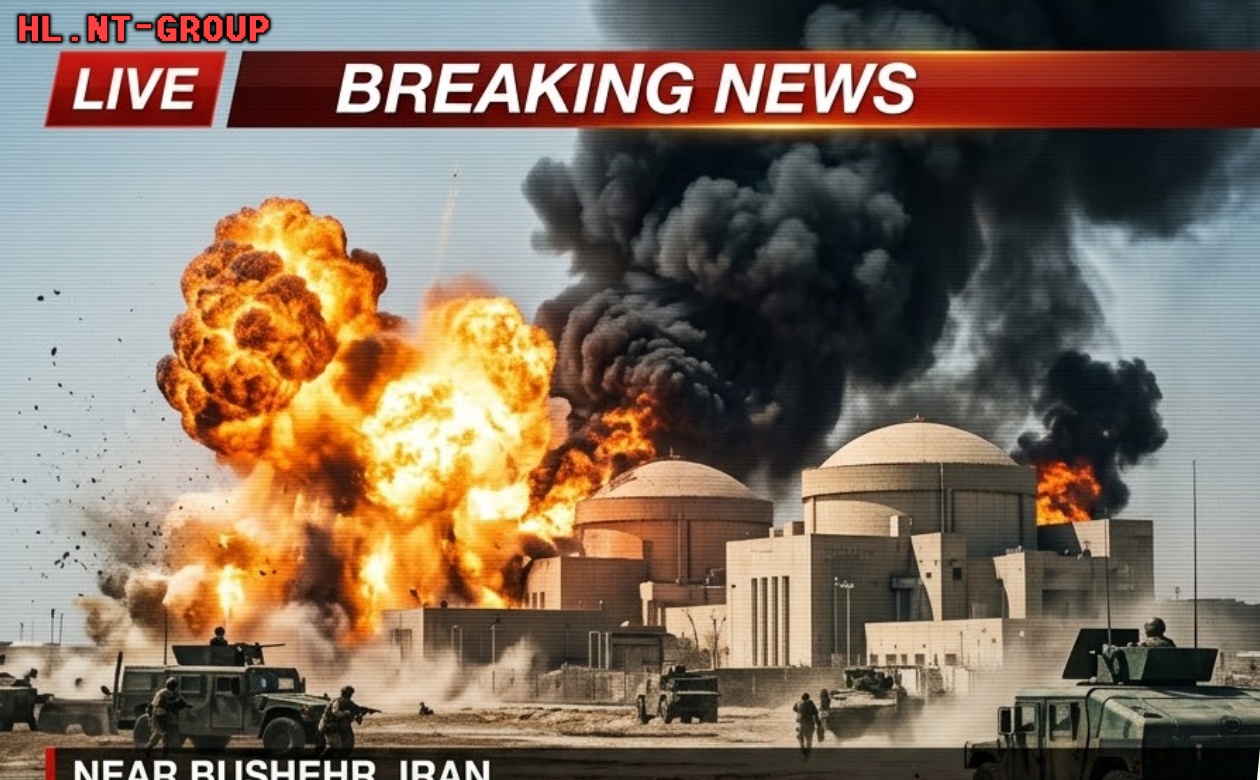
Massive fireballs lighting up the skies near Iran’s Bushehr nuclear power plant have triggered global चिंता and intensified fears of a potential nuclear disaster, as Tehran issues stark warnings about the خطر of “radioactive contamination.” The incident marks one of the most alarming escalations in the ongoing conflict, with explosions reported dangerously close to Iran’s only operational nuclear facility—an installation long considered highly sensitive due to its ذخيرة of nuclear material and its proximity to the Persian Gulf.
According to international monitoring agencies, projectiles and airstrikes have repeatedly struck areas surrounding the Bushehr plant, with at least one explosion occurring just meters from the facility’s perimeter. The قوة of these blasts produced visible fireballs and shockwaves strong enough to damage nearby structures and cause casualties among security personnel. While initial assessments indicate that the reactor itself remains intact, the sheer closeness of the impacts has raised serious concerns among nuclear safety experts and global watchdogs.
Tehran has responded with urgent warnings, emphasizing that continued military activity near such a critical site could lead to catastrophic consequences. Iranian officials have formally alerted the United Nations, stating that these strikes expose not only Iran but the entire region to a “serious risk of radioactive contamination” with long-term environmental and human health implications. The fear is not unfounded—nuclear facilities rely on complex cooling and containment systems, and even indirect damage to supporting infrastructure could trigger overheating, system failure, or radiation leaks.
Experts caution that while no radiation release has been detected so far, the situation remains extremely volatile. Modern nuclear plants are designed with multiple safety layers, but they are not built to withstand sustained military attacks in active war zones. A direct hit—or even disruption of power lines and cooling mechanisms—could result in scenarios مشابه to past nuclear crises, where radioactive materials escape into the atmosphere and surrounding المياه.
The خطر extends far beyond Iran’s borders. Bushehr’s coastal location means any radioactive contamination could spread through Gulf waters, threatening marine ecosystems, desalination systems, and drinking water supplies for millions across neighboring countries. This regional vulnerability amplifies the global stakes, transforming a localized military strike into a potential environmental catastrophe with international repercussions.
Ultimately, the sight of huge fireballs near the Bushehr nuclear plant is more than just a dramatic moment in an escalating conflict—it is a warning signal to the world. As tensions rise and military operations continue, the margin for error grows dangerously thin. Whether restraint prevails or further escalation occurs will determine if these घटनाएँ remain a near-miss—or become the بداية of a nuclear crisis with consequences that could last for decades.