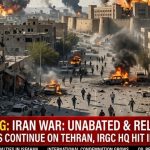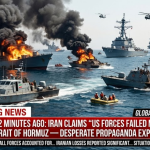
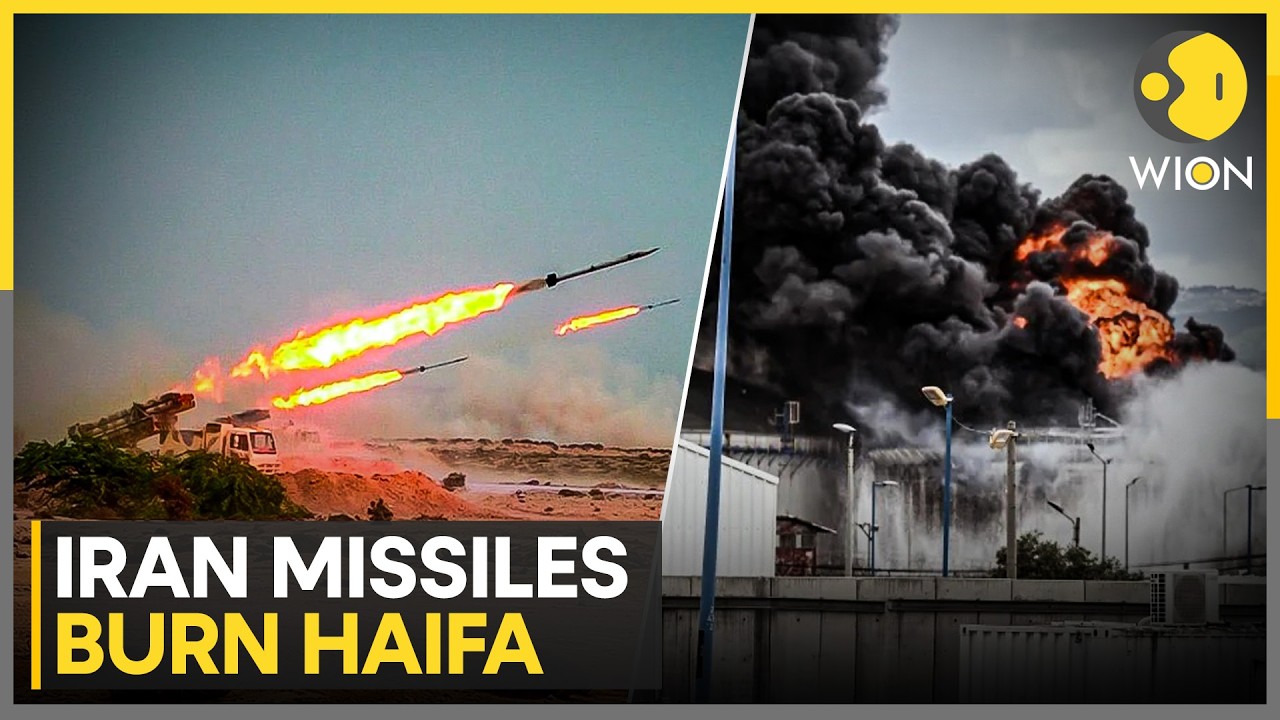
The night sky over Haifa turned into a battlefield.
Sirens wailed across northern Israel as waves of incoming missiles cut through the darkness. Within moments, explosions erupted near one of the country’s most critical energy hubs—the Bazan oil refinery, sending flames and thick black smoke rising high above the city.
This wasn’t just another strike.
This was a direct hit on Israel’s energy قلب.
According to reports, Iranian missiles—some launched directly, others possibly from allied forces in Lebanon—targeted strategic infrastructure across northern Israel. The Haifa refinery, a cornerstone of Israel’s fuel supply, was among the most significant targets.
Within minutes of impact, fires broke out inside the complex. Emergency crews rushed to contain the blaze as towering smoke clouds spread across the skyline. Witnesses described the ground shaking from the force of the explosions, with shockwaves felt across nearby مناطق.
But the real significance wasn’t just the fire.
It was what the target represented.
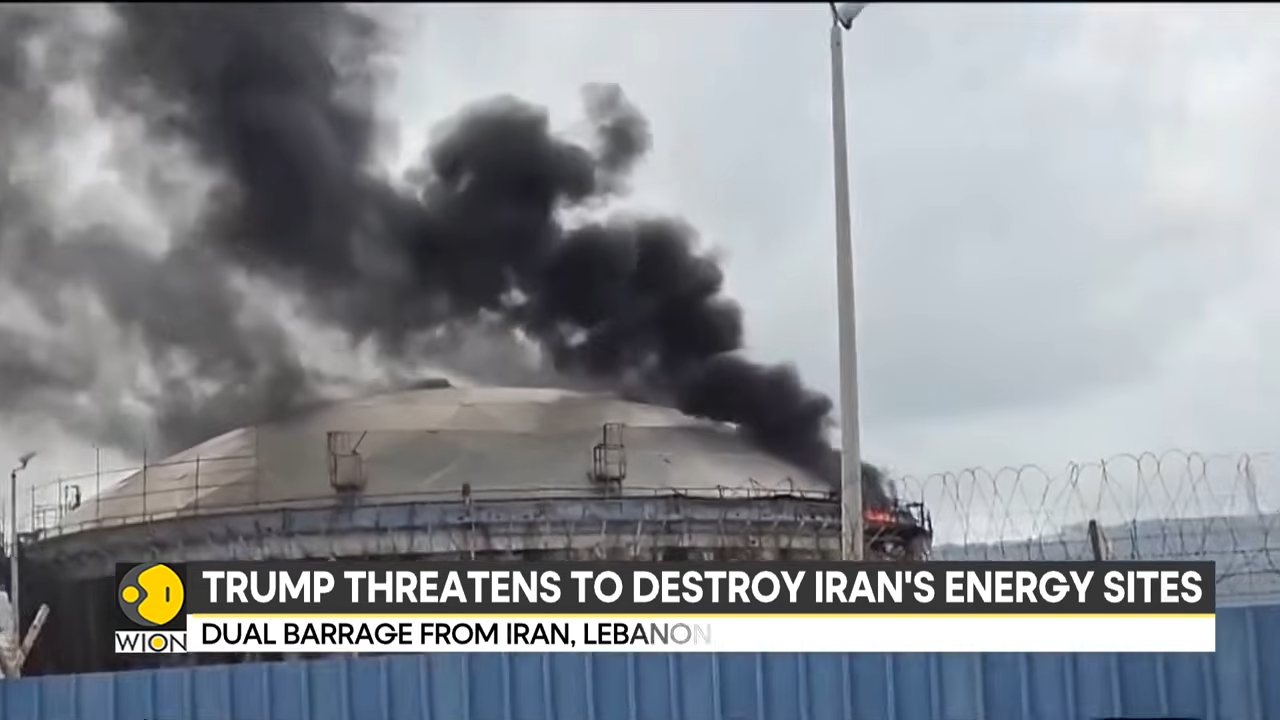
The Haifa refinery processes a major share of Israel’s oil—fueling everything from civilian transport to military operations. Striking it sends a powerful message: this war is no longer limited to military bases. It has expanded into an energy war, where oil, infrastructure, and economic stability are now primary targets.
And this wasn’t the first time.
The facility had already been hit earlier in the conflict—sometimes by direct strikes, other times by missile debris—causing damage and temporary power disruptions. But this latest attack marked a dangerous escalation, with visible fires and renewed impact on critical systems.
For a few tense hours, uncertainty spread.
Was it a direct hit? Intercepted debris? A coordinated multi-front attack?
Even officials initially struggled to confirm the exact cause of the fire, highlighting just how chaotic and complex the battlefield has become.
Meanwhile, Israel’s air defenses were pushed into overdrive, intercepting incoming threats while preparing for retaliation. Because in this conflict, every strike is followed by another.
And the consequences go far beyond Haifa.
Energy markets are already reacting. Oil prices have surged amid fears that continued attacks on refineries and shipping routes could disrupt global supply.
Military analysts warn that targeting energy infrastructure is one of the most dangerous escalations possible. It doesn’t just damage facilities—it destabilizes economies, impacts civilians, and increases pressure on governments to respond with even greater force.
And that’s exactly what may come next.
Israel has already carried out deep strikes inside Iran, targeting missile factories and military complexes. Iran, in turn, is showing it can hit back—hard—at critical Israeli infrastructure.
The cycle is tightening.
The risks are growing.
Because when oil hubs burn, it’s no longer just about territory or tactics.
It’s about control of energy… control of economies… and ultimately, control of the future of the war.
And right now, that future is being written in fire over Haifa.