
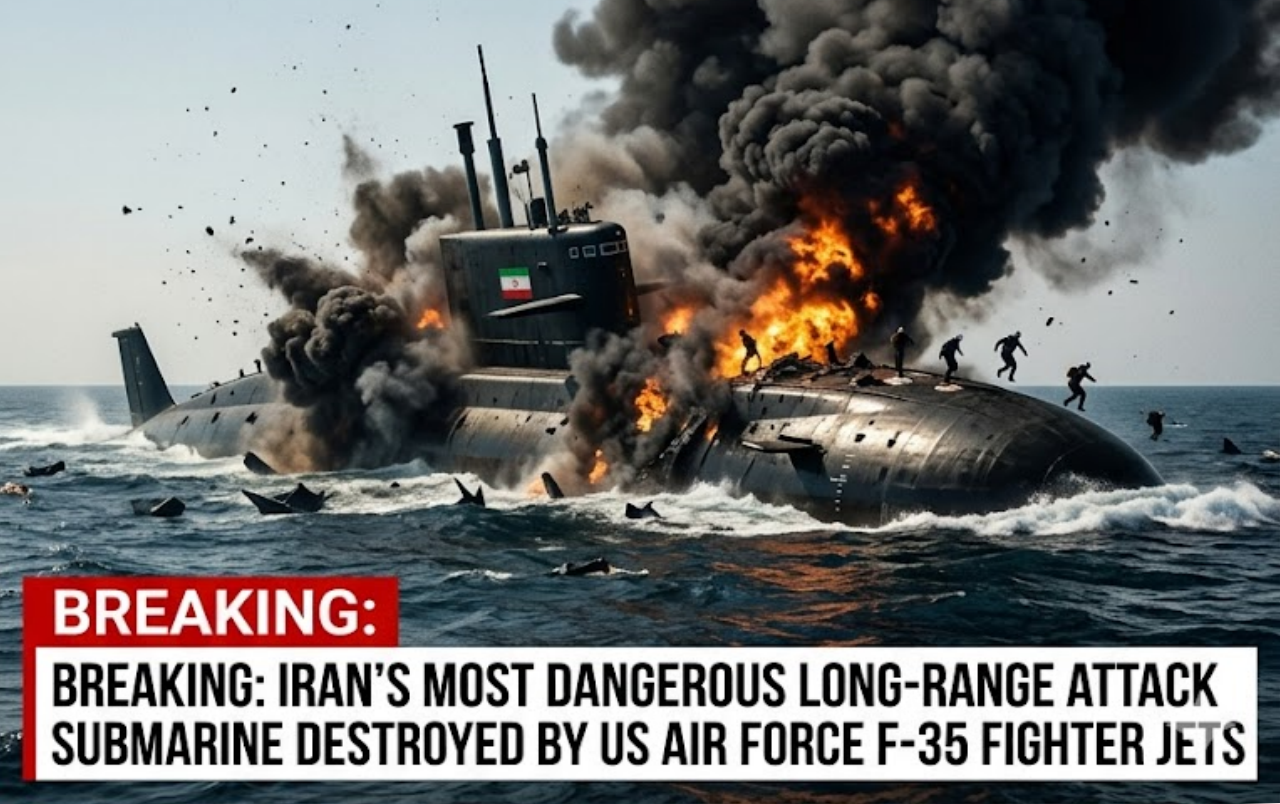
In a dramatic escalation of the ongoing conflict in the Middle East, reports have emerged that one of Iran’s most advanced long-range attack submarines has been destroyed in a precision strike carried out by U.S. Air Force F-35 stealth fighter jets. The operation, reportedly executed with high coordination and technological superiority, marks a significant blow to Iran’s naval capabilities in the strategically vital Persian Gulf region.
According to defense sources, the targeted submarine was believed to be among Iran’s most sophisticated undersea platforms, designed for extended-range operations and capable of launching both torpedoes and cruise missiles. Its destruction represents not only a tactical victory but also a strategic shift in maritime dominance, particularly in and around the Strait of Hormuz—a critical chokepoint for global energy transportation.
The F-35 Lightning II, known for its stealth characteristics and advanced sensor fusion, played a central role in the strike. Operating in contested airspace, the jets reportedly utilized real-time intelligence and precision-guided munitions to identify and neutralize the submarine while it was either surfaced or operating near a coastal facility. Military analysts emphasize that targeting a submarine—traditionally one of the most elusive assets in naval warfare—demonstrates a high level of surveillance integration and strike accuracy.
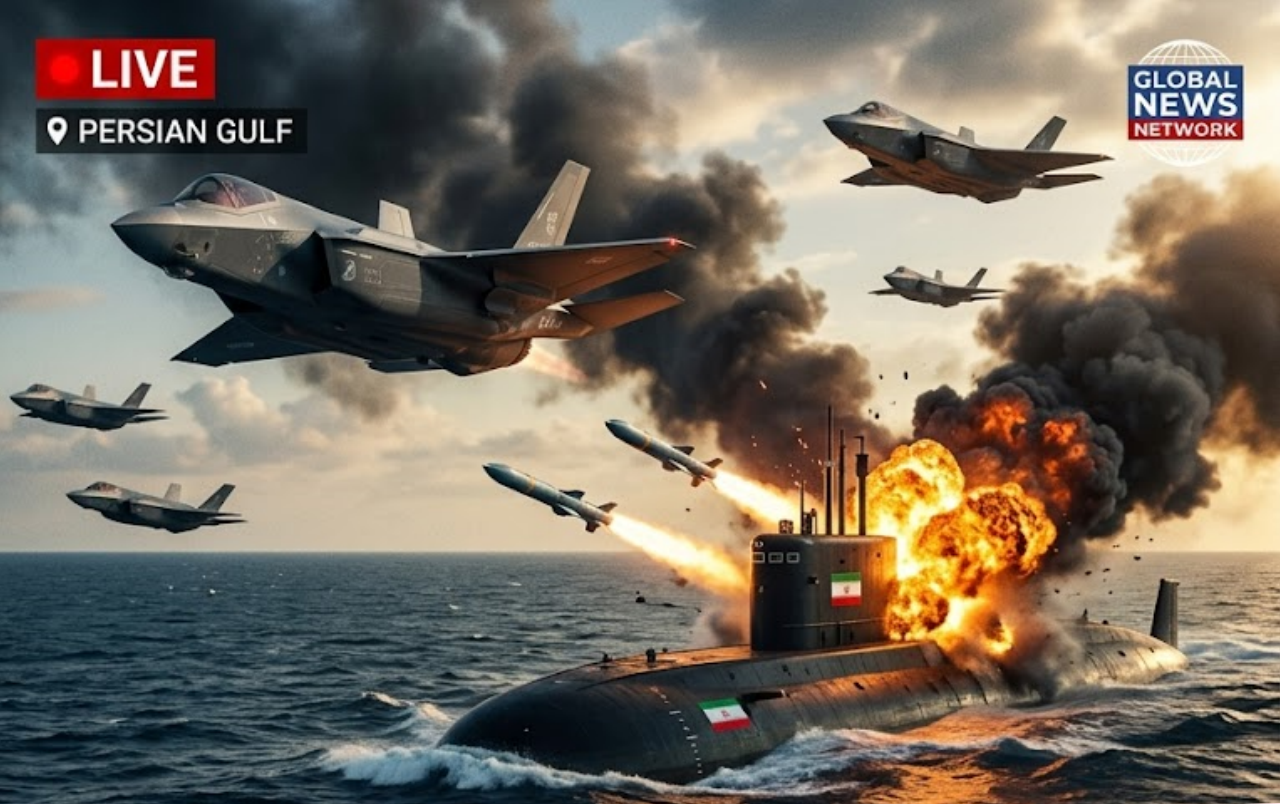
While full operational details remain classified, earlier reports indicate that U.S. forces have already inflicted heavy losses on Iran’s naval infrastructure. In one major campaign, American forces claimed to have destroyed multiple warships and at least one submarine as part of broader efforts to weaken Iran’s ability to threaten maritime traffic. These developments suggest that the latest strike may be part of an ongoing campaign to dismantle Iran’s military capabilities across multiple domains.
The destruction of a long-range submarine could significantly limit Iran’s capacity to project power beyond its immediate coastline. Such submarines are often used for deterrence, covert surveillance, and surprise attacks, making them valuable assets in asymmetric warfare. Their loss may force Iran to rely more heavily on smaller, less capable naval units and missile systems.
However, the situation remains highly volatile. Iran has previously demonstrated resilience and the ability to retaliate through unconventional means, including drone strikes and missile attacks. Additionally, conflicting reports and information warfare have complicated the narrative, with both sides seeking to control public perception of battlefield outcomes.
As tensions continue to rise, the reported destruction of this submarine underscores the evolving nature of modern warfare—where airpower, intelligence, and precision technology converge to reshape traditional naval engagements. Whether this strike will deter further escalation or provoke a stronger response from Iran remains uncertain, but its impact on regional security dynamics is already being closely watched by the international community.