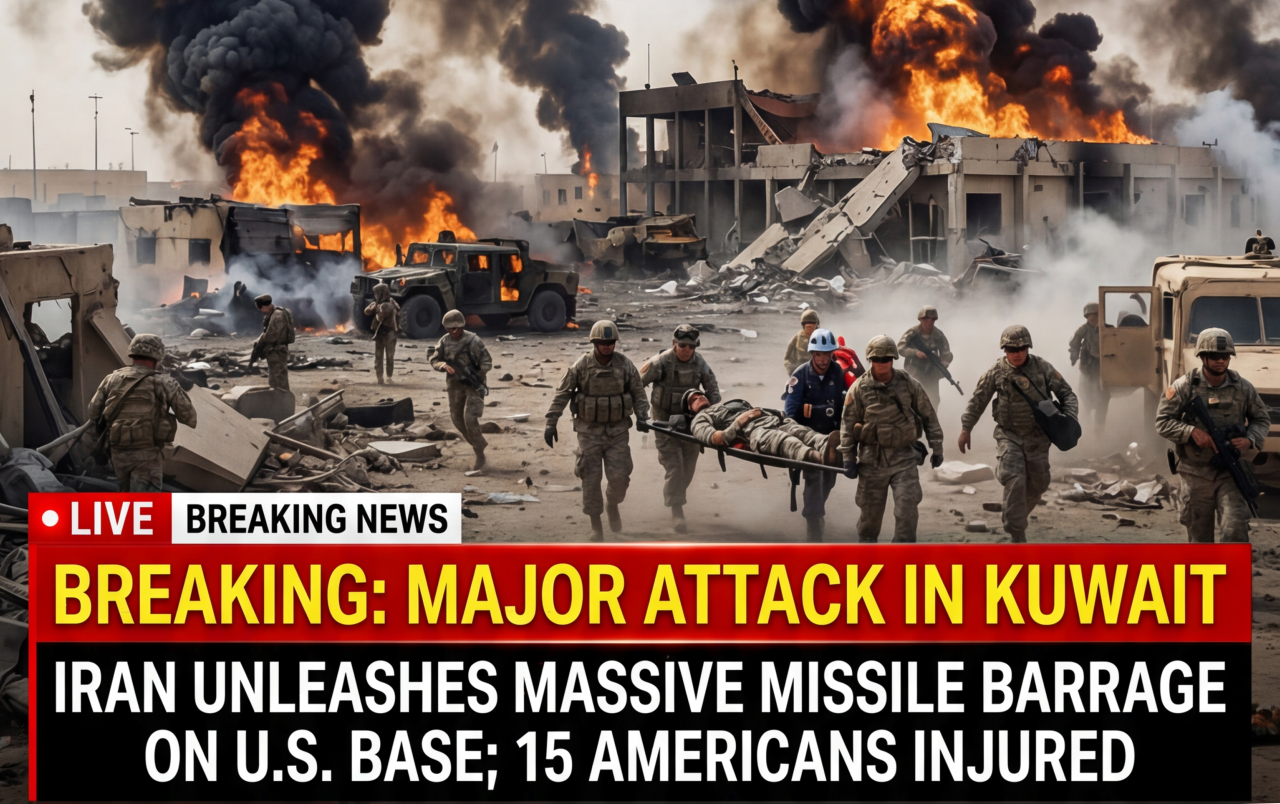
In a significant escalation of the ongoing U.S.–Iran conflict, Iranian forces launched a massive aerial assault on a key American military installation in Kuwait, injuring at least 15 U.S. service members in one of the most direct strikes on American forces in the region to date. According to U.S. officials and multiple international news reports, the attack occurred overnight when Iranian drones and missiles targeted the Ali Al Salem Air Base, a strategic hub for U.S. military operations in West Asia.
The strike marks a dramatic shift in Tehran’s tactics, intensifying efforts to directly challenge U.S. forces stationed in the Gulf. The missiles and unmanned aerial vehicles breached Kuwaiti and U.S. air defenses, hitting parts of the base where logistical and operational units are located. While many incoming threats were intercepted, several penetrated protective shields, resulting in injuries to personnel on the ground. Most of the 15 wounded Americans were reported to have non‑life‑threatening injuries and have since been treated and returned to duty, according to U.S. military sources.
This attack comes amid weeks of escalating regional violence since the United States and Israel launched a combined offensive against Iranian targets earlier in the conflict. Tehran has responded with mounting strikes on allied territories across the Gulf, including missile and drone attacks in Saudi Arabia, Iraq, Jordan and against other American military installations, heightening fears of a broader regional war.
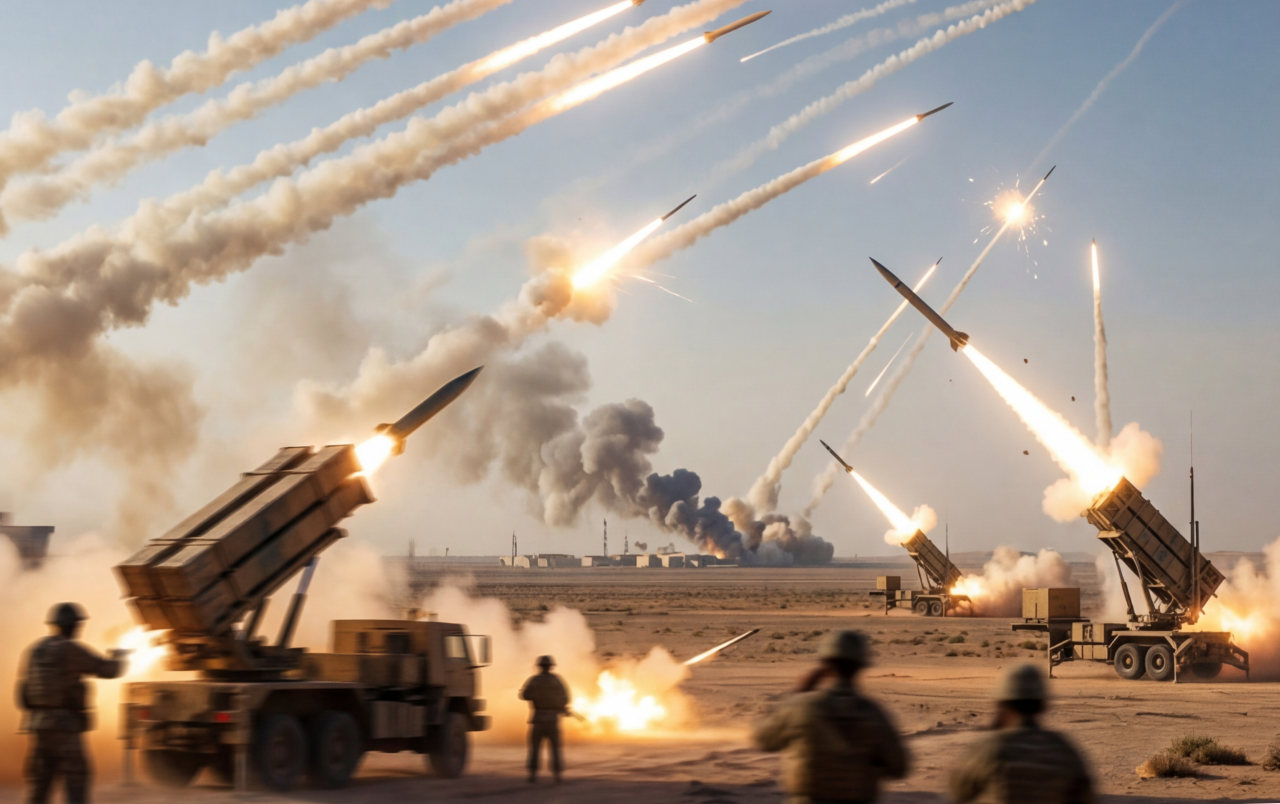
Experts say that Iran’s decision to target a major U.S. base in Kuwait significantly raises the stakes. Ali Al Salem Air Base houses critical command and control assets, refueling squadrons, and serves as a launch point for regional operations. Injuries inflicted on American troops there underline how the war’s front lines have expanded beyond Iranian and Israeli borders into neighboring Gulf states hosting U.S. forces.
The incident has also put additional pressure on diplomatic efforts to end the conflict, with world leaders urging restraint even as military actions intensify. Kuwait, a key U.S. partner, has condemned strikes on its territory, and global markets have responded to rising instability with renewed volatility in energy prices. The Strait of Hormuz, already restricted by earlier hostilities, remains a critical chokepoint for global oil supplies, adding economic dimension to the diplomatic and military crisis.
In Washington, senior defense officials have characterized the attack as a blatant escalation that underscores Tehran’s growing willingness to target American forces directly. Pentagon spokespersons report ongoing assessments of the damage and injuries, emphasizing that defensive systems mitigated what could have been a far deadlier strike. U.S. political leaders continue to weigh responses ranging from reinforced defensive deployments to renewed diplomatic pressure on Iran and its allies.
As tensions remain high and casualties mount, the attack on Ali Al Salem Air Base may represent a turning point — one that could reshape U.S. military strategy in the Middle East and significantly influence the trajectory of the wider conflict.