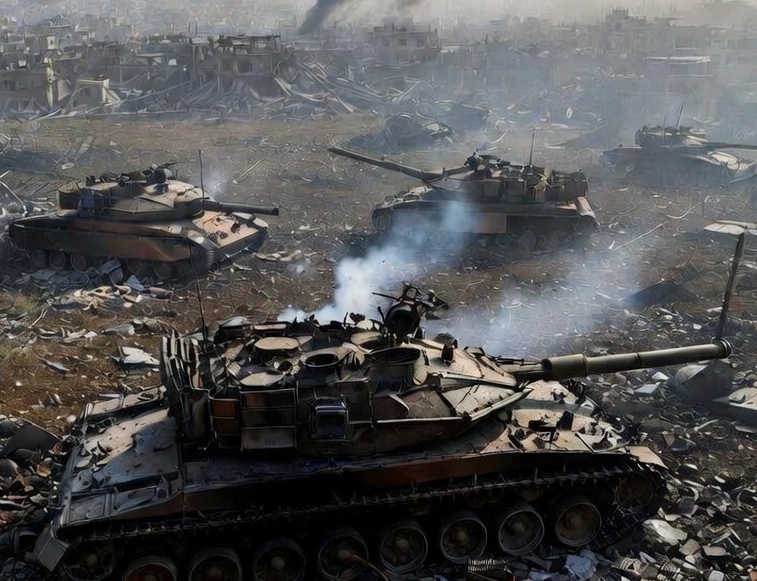
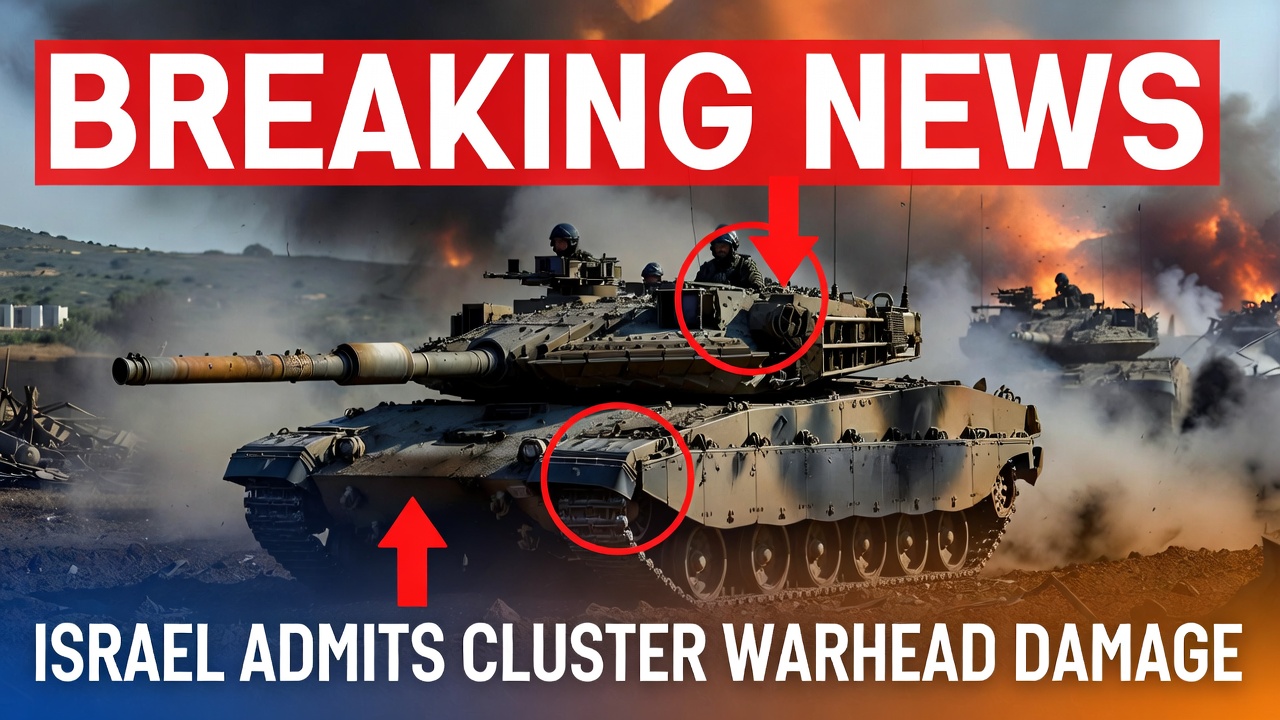
Israel has recently confirmed that some of its armored vehicles were damaged during clashes near the Lebanon border, as tensions with Hezbollah continue to rise. This acknowledgment is notable, as it highlights the effectiveness of cluster-style munitions against even modern military equipment—something rarely discussed publicly by Israeli officials.
Early reports suggest the damage occurred during coordinated engagements in southern Lebanon, where Israeli ground forces were active in contested areas. According to military sources, several vehicles were affected by scattered explosive fragments, leading to surface damage and reduced mobility. Despite this, most crews reportedly remained able to operate, though the incident underscores the increasing challenges armored units face in complex and unpredictable environments.
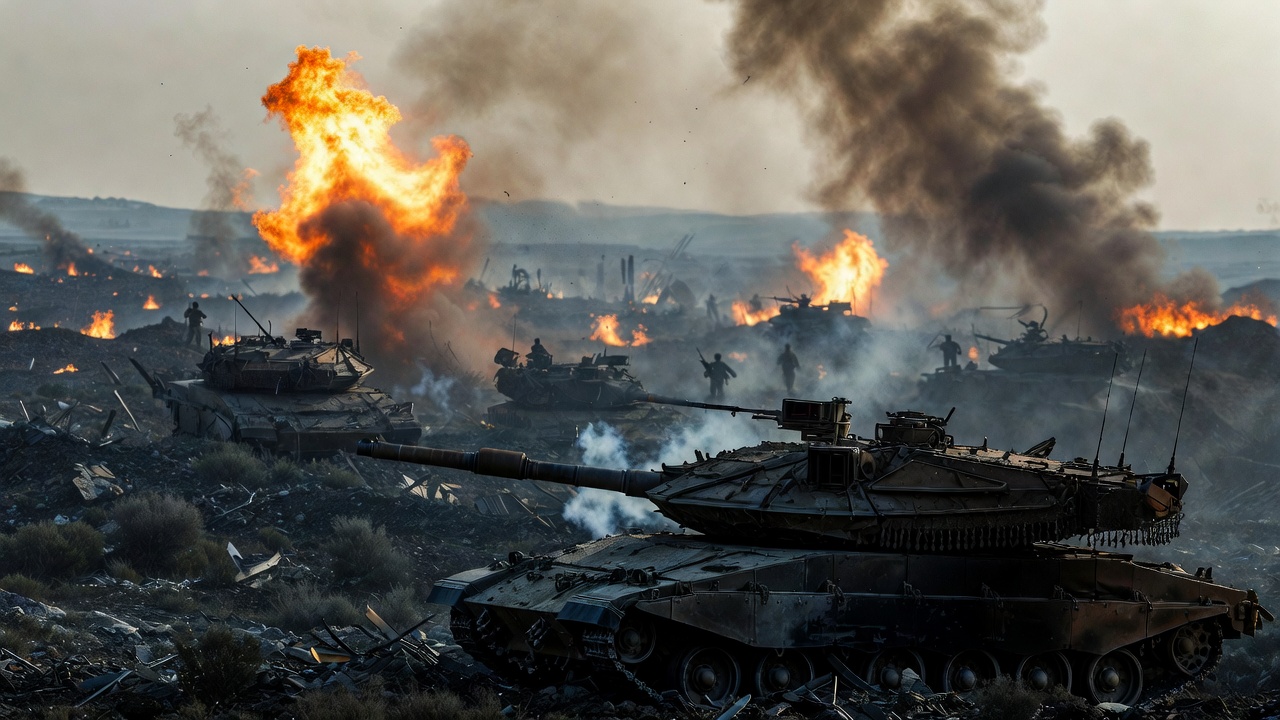
At the same time, Hezbollah has claimed it inflicted heavier losses, stating that up to eight Israeli tanks were destroyed during the same period. The group described these actions as part of a broader defensive approach, combining advanced anti-armor methods with precision-guided weaponry. However, these claims have not been independently confirmed, and Israel has not verified the scale of losses reported.
Experts point out that conflicting accounts like these are common in active conflict zones, where both sides often shape narratives to support their strategic messaging. Verifying such claims is particularly difficult due to limited access to frontline areas and ongoing security restrictions.
Overall, the situation reflects the fragile and highly volatile nature of the Israel–Lebanon border. Even relatively small-scale clashes carry the risk of escalating into wider conflict. International observers are watching closely, calling for restraint as diplomatic efforts continue in hopes of preventing further escalation. The next few days will likely be crucial in determining whether tensions ease or intensify further.