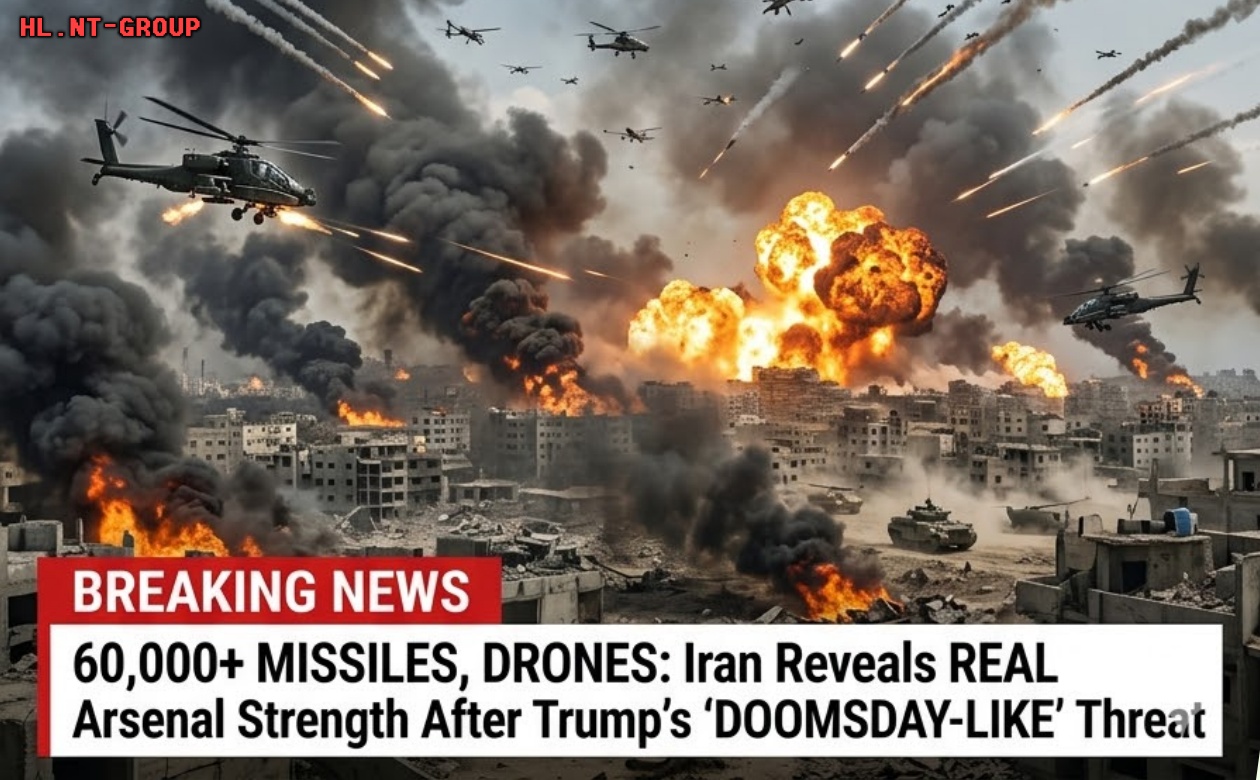
Tensions between the United States and Iran have escalated dramatically following what many observers describe as a “doomsday-like” warning from former President Donald Trump. His rhetoric—reportedly including threats to devastate Iran’s infrastructure—has triggered not only global concern but also a forceful response from Tehran, which is now emphasizing the true scale of its military capabilities.
Recent disclosures and intelligence assessments suggest that Iran’s arsenal remains far more substantial than previously claimed by U.S. officials. While Trump has repeatedly argued that Iran’s missile and drone capabilities were “decimated,” emerging data paints a very different picture. In fact, Iran has reportedly communicated to mediators that it still possesses tens of thousands of weapons, including an estimated 15,000 missiles and 45,000 drones—figures that, even if somewhat exaggerated, highlight the sheer scale of its stockpile.
Independent intelligence findings appear to support the broader claim that Iran’s capabilities remain intact. Reports indicate that only about one-third of Iran’s missile arsenal has been definitively destroyed, with another portion damaged or hidden in underground facilities. This leaves a significant number of weapons still operational or recoverable. Moreover, thousands of drones are believed to remain active, allowing Iran to sustain long-term asymmetric warfare strategies.
A key factor behind Iran’s resilience is its extensive use of underground tunnel networks and mobile launch systems. These concealed infrastructures make it extremely difficult for U.S. and allied forces to fully eliminate missile stockpiles. Even after weeks of intensive airstrikes targeting launch sites and production facilities, Iran has continued to launch intermittent attacks, demonstrating that its offensive capacity is far from neutralized.
Trump’s aggressive stance, including threats widely criticized as potentially violating international law, appears to have had the opposite of its intended effect. Instead of deterring Iran, it has prompted Tehran to double down on projecting strength. By revealing or emphasizing its large arsenal, Iran is signaling that any large-scale attack could trigger a massive and prolonged retaliation across the region.
Military analysts warn that the real danger lies not just in the total number of missiles or drones, but in how they are used. Even a small percentage of successful strikes could disrupt critical shipping lanes like the Strait of Hormuz, damage energy infrastructure, and destabilize global markets. This asymmetrical threat means that Iran does not need to achieve total battlefield dominance to have a significant strategic impact.
Ultimately, the narrative of “60,000+ missiles and drones” serves both as a warning and a psychological tool. Whether entirely accurate or partially inflated, it underscores a crucial reality: Iran retains a formidable and flexible arsenal. As tensions continue to rise, the gap between political rhetoric and battlefield reality may prove to be one of the most dangerous factors shaping the conflict’s next phase.