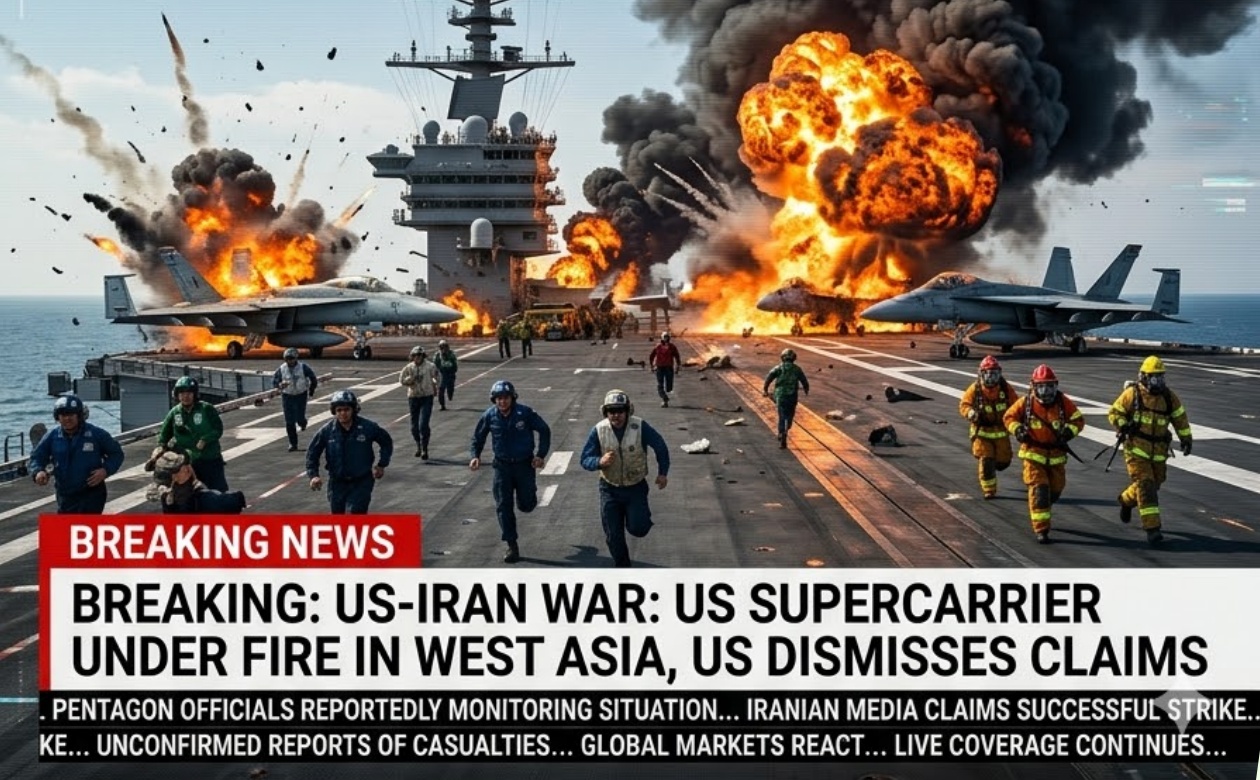
In a fast-moving and highly volatile situation, dramatic claims have surfaced suggesting that a U.S. Navy supercarrier operating in West Asia has come under direct attack. The reports, spreading rapidly across social media and regional outlets, describe missiles or drones targeting one of America’s most powerful naval assets—raising fears of a major escalation at sea.
But just as quickly as the claims appeared, U.S. officials have moved to shut them down.
According to early statements from Washington, there is no confirmed evidence that any U.S. supercarrier has been successfully struck. Defense sources have dismissed the reports as exaggerated or part of a broader information war, emphasizing that all major naval assets remain fully operational.
Still, the fact that such claims are gaining traction highlights just how tense—and unpredictable—the situation has become.
The United States currently maintains a massive naval presence in the region, with multiple carrier strike groups deployed across key ռազմ theaters. The return of the USS Gerald R. Ford, the world’s largest and most advanced aircraft carrier, alongside other carriers like the USS Abraham Lincoln, signals a clear show of force. These floating ռազմական hubs are not just symbols of power—they are central to U.S. air operations, capable of launching sustained strikes deep into contested territory.
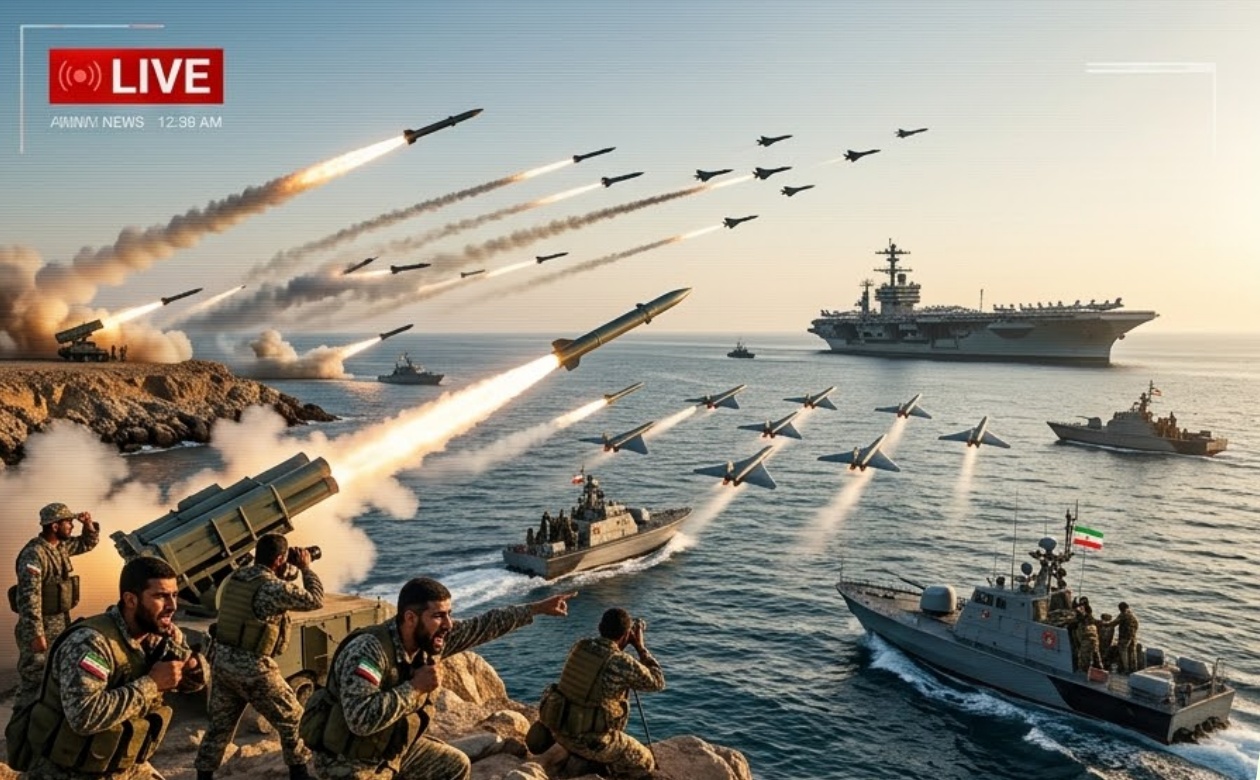
At the same time, Iran has demonstrated increasing القدرة to challenge U.S. assets. Recent confirmed incidents include the downing of American aircraft and ongoing missile and drone attacks across the region. Even after weeks of intense strikes, Iran still retains a significant portion of its missile capabilities, allowing it to continue applying pressure.
This creates the perfect environment for conflicting narratives.
On one side, Iranian-linked sources may claim successful strikes on high-value targets like aircraft carriers—an enormous psychological victory if believed. On the other, the U.S. has strong incentives to deny or downplay any damage to maintain strategic confidence and deterrence.
Military analysts note that hitting a U.S. supercarrier is extremely difficult. These vessels are protected by layered الدفاع systems, including guided-missile destroyers, advanced radar, and air defense networks designed to intercept incoming threats long before they reach the ship. Any successful strike would be historic—and nearly impossible to hide for long.
Yet, the الحرب is no longer just physical—it’s informational.
In today’s battlefield, perception can shape reality. Claims of a supercarrier “under fire” can influence markets, shift public opinion, and test political reactions—even if the facts remain unclear.
Meanwhile, real fighting continues to intensify. Iranian forces have already targeted U.S. aircraft and regional infrastructure, while Washington signals no intention of slowing down operations. Each new incident—real or rumored—adds another layer of uncertainty.
So what’s the truth?
As of now:
- No confirmed supercarrier strike
- No verified damage to U.S. naval assets
- Strong denial from U.S. officials
But in a conflict where missiles fly and narratives collide, the line between reality and rumor is becoming harder to see.
And that may be exactly the point.