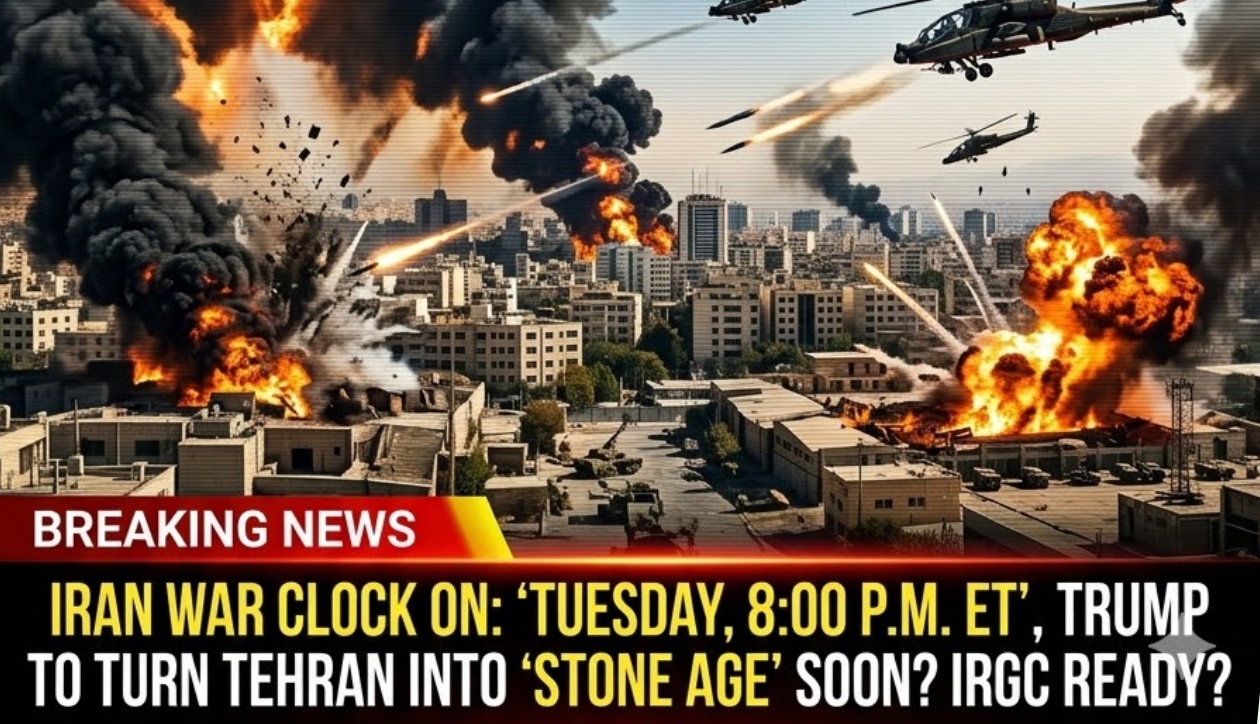
Tensions in the escalating U.S.–Iran conflict have reached a critical point, with a specific moment now dominating global attention: Tuesday, 8:00 P.M. Eastern Time. The timestamp, publicly posted by former U.S. President Donald Trump, is widely interpreted as a potential trigger point for a major military escalation if Iran fails to meet Washington’s demands.
This “war clock” framing has intensified fears of imminent action. Trump’s warning is tied directly to Iran’s alleged blockade of the Strait of Hormuz—a strategic النفط chokepoint through which nearly 20% of the world’s oil supply passes. The message is clear: reopen the passage or face severe consequences. Behind the scenes, military assets are already in motion, and the region is bracing for what could be a decisive phase of the conflict.
Adding fuel to the situation is Trump’s own rhetoric. In recent statements, he suggested that U.S. forces could strike Iran with overwhelming force, even using the phrase “bring them back to the stone ages” to describe potential outcomes of upcoming operations. This language signals not just pressure, but a willingness to escalate rapidly if diplomatic efforts collapse.
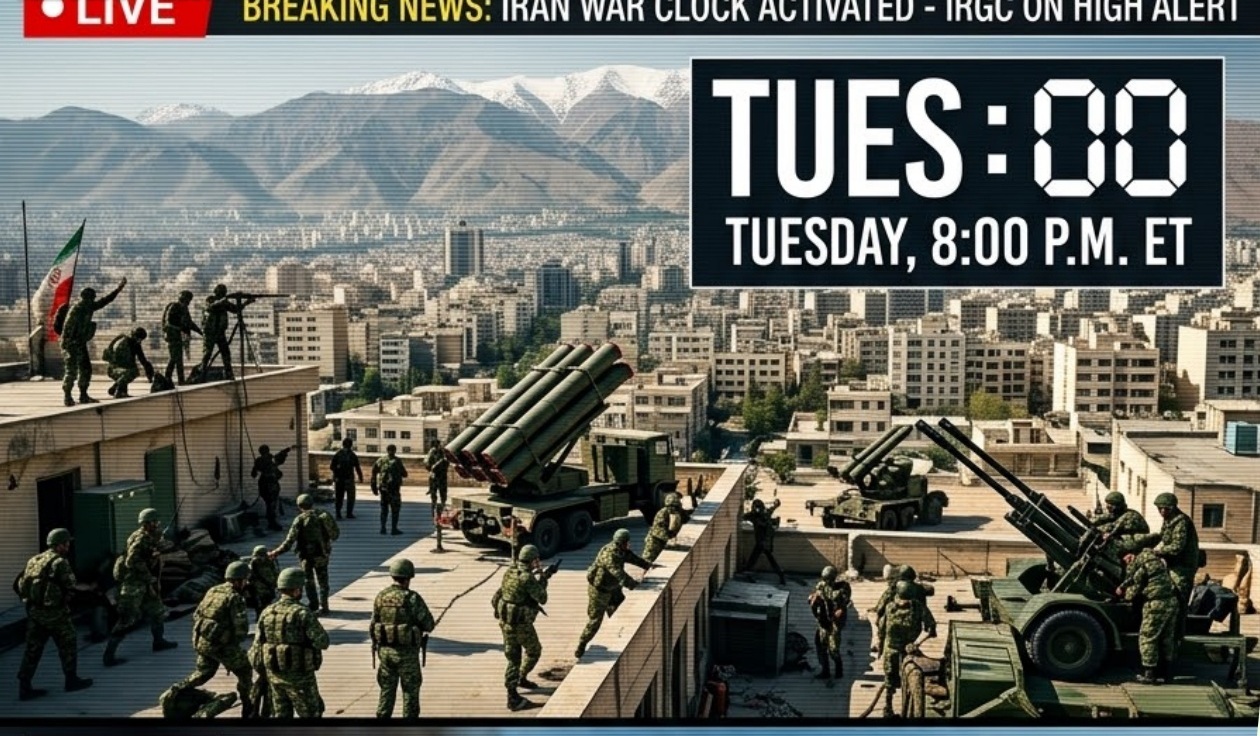
At the center of Iran’s response is the Islamic Revolutionary Guard Corps (IRGC), the country’s elite military force responsible for both conventional and asymmetric warfare. While Tehran has not officially confirmed specific countermeasures tied to the deadline, Iranian officials have repeatedly warned that any large-scale U.S. attack would trigger widespread retaliation across the region. Missile systems, drones, and proxy networks remain key components of Iran’s deterrence strategy.
Recent developments suggest the situation is already entering a dangerous cycle. Iranian strikes on regional energy infrastructure and shipping routes have disrupted global markets, while U.S. and allied forces continue targeted operations inside Iranian territory. Meanwhile, diplomatic signals remain mixed—talks are reportedly ongoing, yet the language from both sides continues to harden.
The idea of a precise “countdown to war” is not just symbolic—it reflects a real shift in how modern conflicts are communicated. By announcing an exact time, Trump has effectively created a psychological deadline, increasing pressure not only on Iran but also on global markets and political allies. Whether this moment leads to negotiation or escalation remains uncertain.
As Tuesday approaches, the key question is no longer whether tensions are high—but whether they are about to break. If no agreement is reached, the world could witness a rapid escalation with consequences far beyond the region. And if Iran’s IRGC is indeed “ready,” as many analysts suggest, the response may be just as swift—and far more unpredictable—than expected.