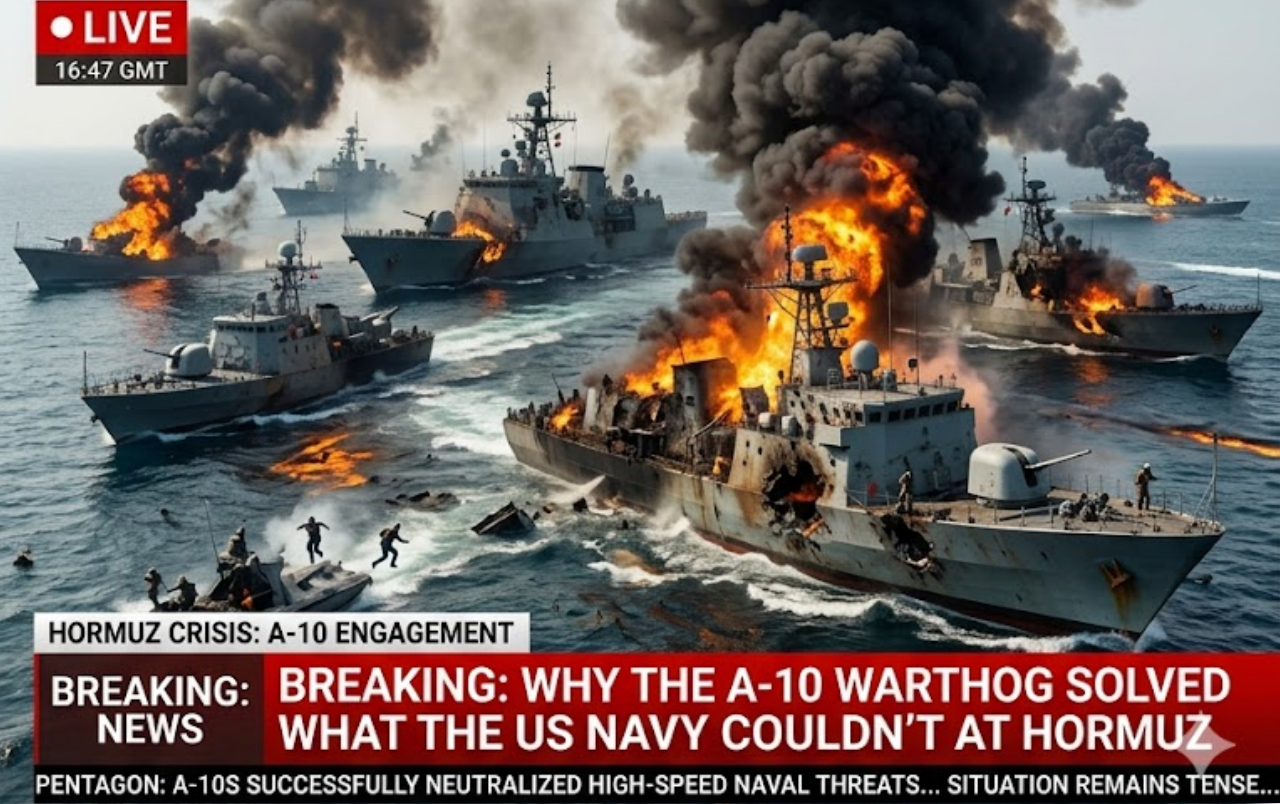
It wasn’t the destroyers.
It wasn’t the carriers.
It wasn’t even the advanced missile systems.
In one of the most intense phases of the Strait of Hormuz crisis, the solution—at least in theory—came from an aircraft many thought was outdated:
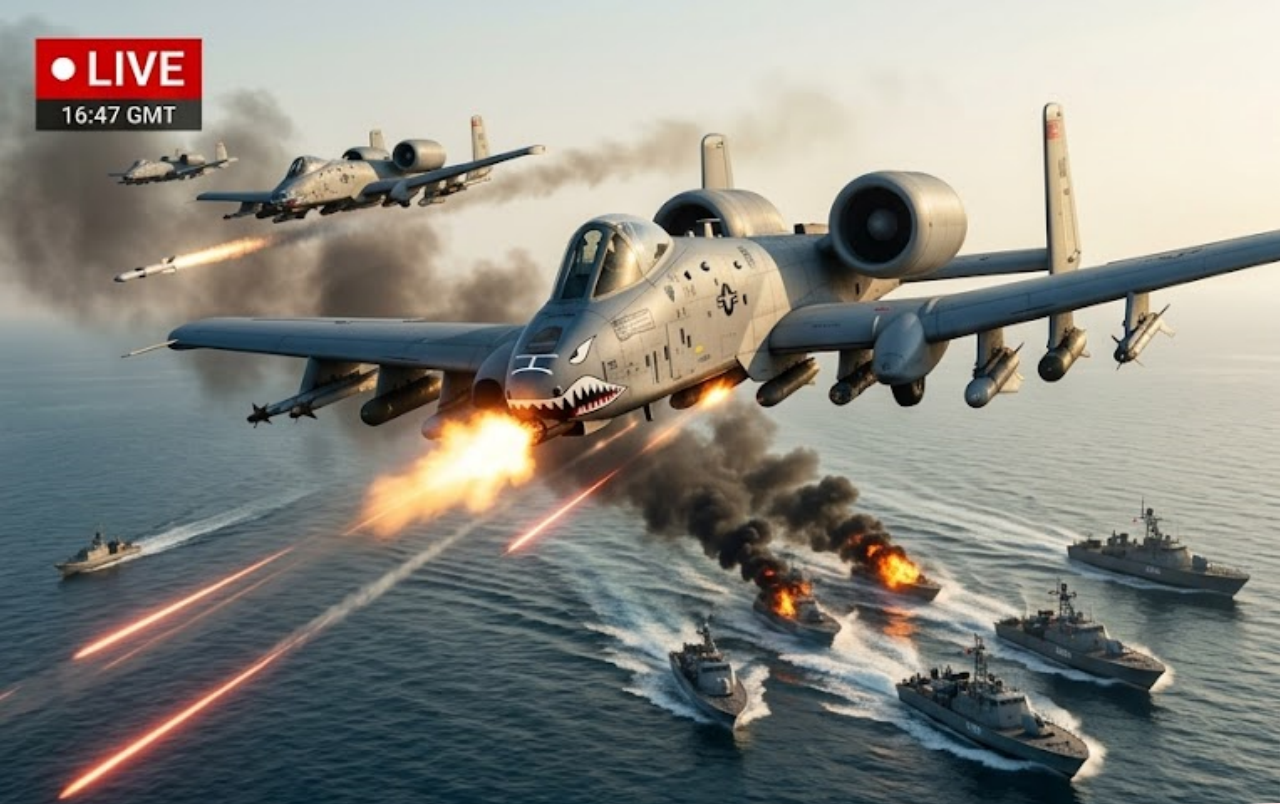
The A-10 Warthog.
Built for a different era, the A-10 was designed for close air support, not high-tech naval warfare. Slow, rugged, and heavily armored, it carries one of the most devastating weapons ever mounted on an aircraft—the GAU-8 Avenger 30mm cannon, capable of shredding armored targets in seconds.
So how could it “solve” a problem the U.S. Navy struggled with?
First, the problem.
Iran’s strategy in the Strait of Hormuz isn’t based on large warships. Instead, it relies on:
- Fast attack boats
- Mobile missile launchers
- Coastal defenses hidden in rugged terrain
- Swarm tactics that overwhelm traditional naval responses
This creates a unique challenge.
Large naval vessels are powerful—but they are also:
- Expensive to deploy against small targets
- Less effective against fast, dispersed threats
- Limited in shallow or congested waters
That’s where the A-10 concept comes in.
Flying low and slow, the Warthog excels at hunting small, moving targets. It can loiter over the battlefield, identify threats visually, and engage them with precision. Against fast boats or exposed missile teams, its cannon and guided munitions can be devastating.
In theory, A-10s could:
- Track and destroy swarming boats
- Hit mobile missile launchers before they relocate
- Provide constant overwatch in areas too risky for ships
And unlike missiles fired from ships, the A-10 can adjust in real time, responding to changing conditions on the ground—or sea.
But here’s the reality check.
There is no verified evidence that A-10 Warthogs have “solved” the Strait of Hormuz crisis or replaced the role of the U.S. Navy.
In fact, deploying A-10s in that environment would be extremely risky.
The Strait of Hormuz is heavily defended by:
- Surface-to-air missile systems
- Radar networks
- Anti-aircraft defenses
The A-10, while tough, is not stealthy—and would be vulnerable in contested airspace without strong support from other aircraft and electronic warfare systems.
So why does the idea persist?
Because it highlights something important.
Modern conflicts aren’t always solved by the most advanced or expensive systems.
Sometimes, the challenge is asymmetric—and requires tools that can adapt, stay longer, and operate closer to the fight.
The A-10 represents that philosophy.
Not dominance through distance.
But control through presence.
So while the Navy remains central to any real operation in the Strait of Hormuz…
The idea of the Warthog “solving the problem” reflects a deeper truth:
In modern warfare, the side that adapts best—not just the one with the biggest ships—often gains the edge.
And sometimes, the oldest tools still have a role to play.