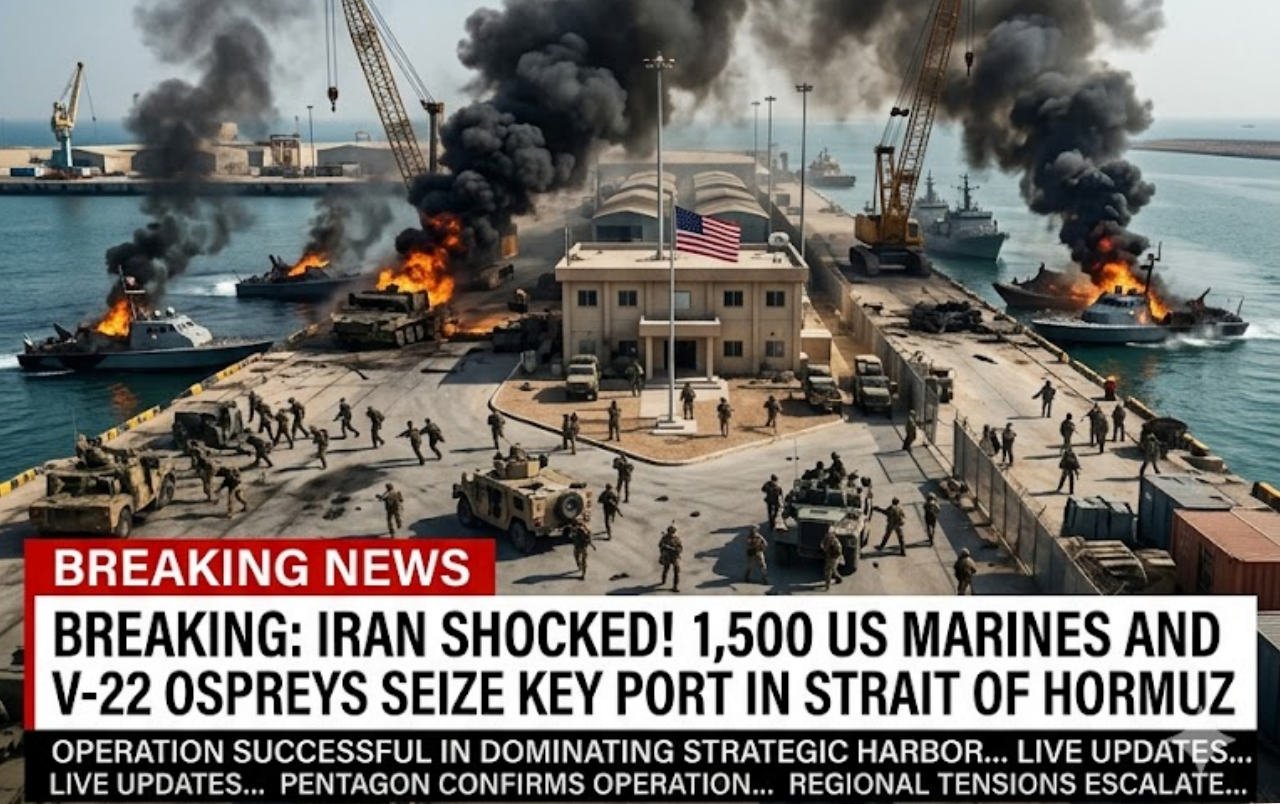
In a dramatic escalation of the Strait of Hormuz crisis, U.S. forces have reportedly executed a precision amphibious assault involving roughly 1,500 U.S. Marines inserted by V‑22 Osprey tilt‑rotor aircraft to seize control of a strategic port on the strait’s northern coast. The operation — billed by U.S. commanders as essential to forcing open one of the world’s most critical maritime chokepoints — has sent shockwaves throughout Tehran, Gulf capitals, and global energy markets.
The seizure reportedly took place after weeks of planning and buildup by the 31st Marine Expeditionary Unit (MEU) embarked aboard the USS Tripoli and other amphibious vessels dispatched to the region amid rising tensions. The Marines, supported by V‑22 Ospreys and rotary‑wing aircraft, are said to have moved swiftly to secure the port, overcoming resistance from Iranian Revolutionary Guard Corps (IRGC) forces and establishing defensive positions to support further operations aimed at reopening shipping lanes through the strait. This direct action follows the U.S. decision to project expeditionary forces into the Persian Gulf as part of broader efforts to counter Iran’s informal closure of the strait to international traffic.
Strait of Hormuz — a narrow waterway connecting the Persian Gulf to the Arabian Sea — normally facilitates about 20 percent of global crude oil exports, making its closure a major blow to international energy supplies. Since late February, after joint U.S. and allied strikes on Iranian territory triggered retaliation by Tehran’s forces, commercial shipping has all but halted as threats from mines, missiles, and drones made transit perilous. Despite extensive U.S. air and naval strikes on Iranian military targets, Iran retained leverage over the strait by threatening to attack ships and laying obstacles to safe passage, forcing Washington to consider more direct ground actions.
The reported port seizure has already had immediate geopolitical reverberations. Oil prices spiked sharply on global markets as traders reacted to news of an overt U.S. ground operation in the Gulf, while insurers raised premiums for any vessels considering passage near the contested waterway. Gulf Cooperation Council (GCC) states expressed mixed reactions: some welcomed moves that might eventually restore navigation rights, while others urged caution to avoid an outright regional war.
Iran’s leadership denounced the operation as a blatant act of aggression, asserting that U.S. Marines had violated Iranian sovereignty and warning of fierce reprisals against American forces and allied interests. Tehran’s Supreme National Security Council called the seizure “reckless” and said it would intensify missile and drone strikes against U.S. positions if the Marines did not withdraw swiftly.
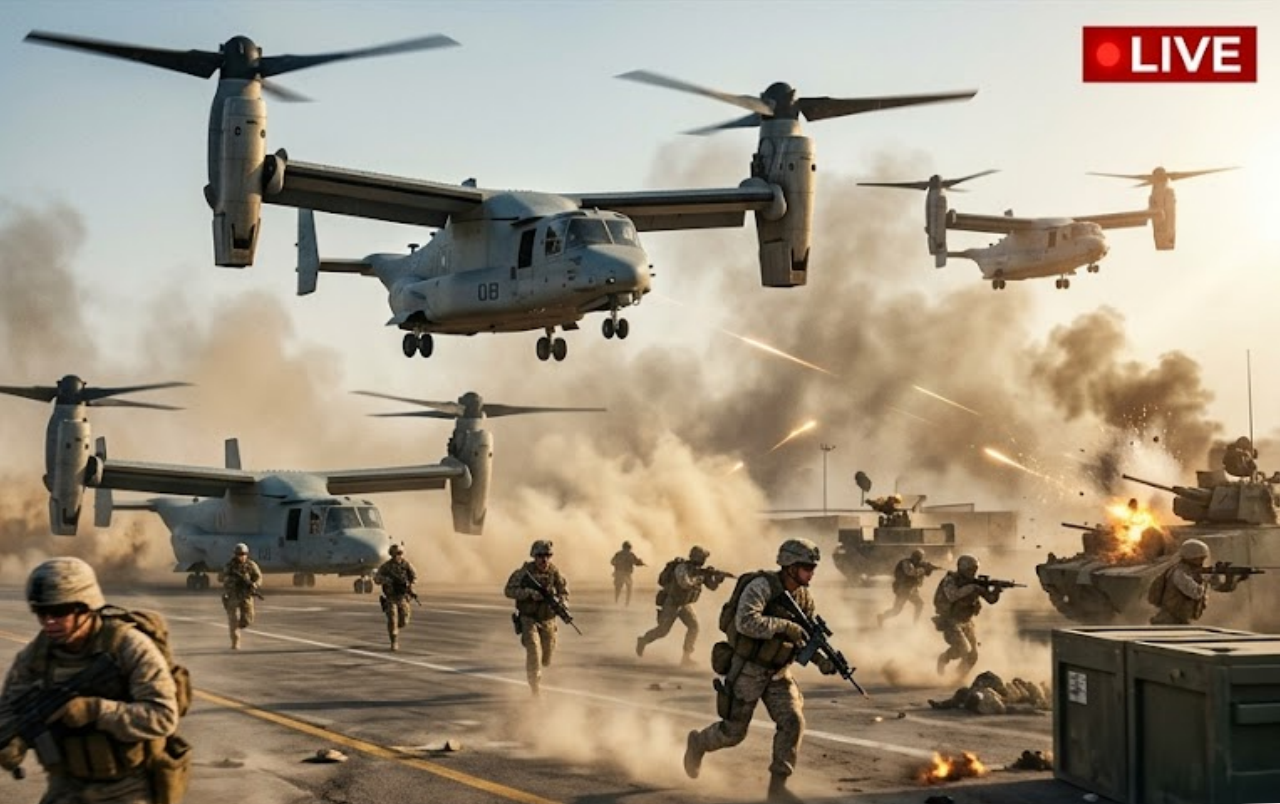
Marine Corps officials described the operation as a limited, precision raid designed to establish a secure foothold while minimizing civilian harm. V‑22 Ospreys played a central role in rapidly inserting troops and equipment, showcasing the capabilities of vertical‑lift and fixed‑wing aviation in contested littoral environments.
Analysts caution that holding the seized port will be fraught with difficulty. Iranian forces, including IRGC coastal missile batteries and fast‑attack craft, remain active, and any sustained U.S. presence could trigger further escalation. Meanwhile, diplomatic channels continue to pursue ceasefire discussions, but so far there has been no breakthrough.
As the crisis unfolds, the seizure of a key port in the Strait of Hormuz underscores how high the stakes have become — not just for Iran and the United States, but for the stability of global energy supplies and maritime security.