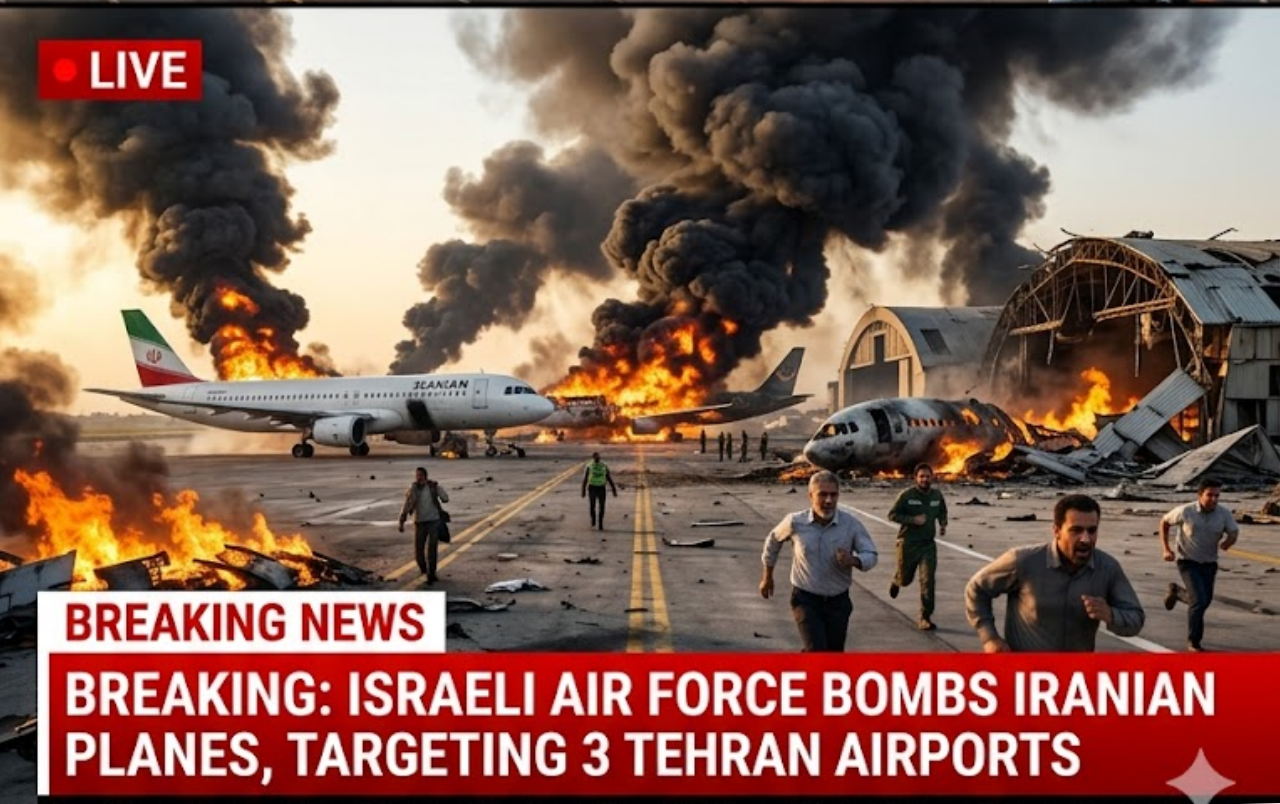
In a major escalation of the ongoing conflict, the Israeli Air Force (IAF) launched a large-scale operation targeting Iranian military aviation assets across three key airports in Tehran. According to Israeli military statements, dozens of fighter jets carried out coordinated strikes on Iranian aircraft, helicopters, and critical infrastructure at Mehrabad, Bahram, and Azmayesh airports—sites believed to be heavily used by Iran’s armed forces and the Islamic Revolutionary Guard Corps (IRGC).
The overnight assault reportedly focused on crippling Iran’s air capabilities. Israeli officials stated that the strikes hit not only parked aircraft but also runways, control towers, and facilities linked to drone production and military logistics. By targeting both the hardware and operational infrastructure, the attack appears designed to significantly reduce Iran’s ability to launch aerial missions or coordinate air defense responses in and around the العاصمة.
Mehrabad Airport, one of Tehran’s most important aviation hubs, was among the primary targets. While it functions as a civilian airport, it has long been associated with military use, particularly by the IRGC and Iran’s air force. The inclusion of Bahram and Azmayesh airports in the strike list suggests a broader strategy aimed at neutralizing multiple layers of Iran’s aviation network simultaneously, rather than focusing on a single location.
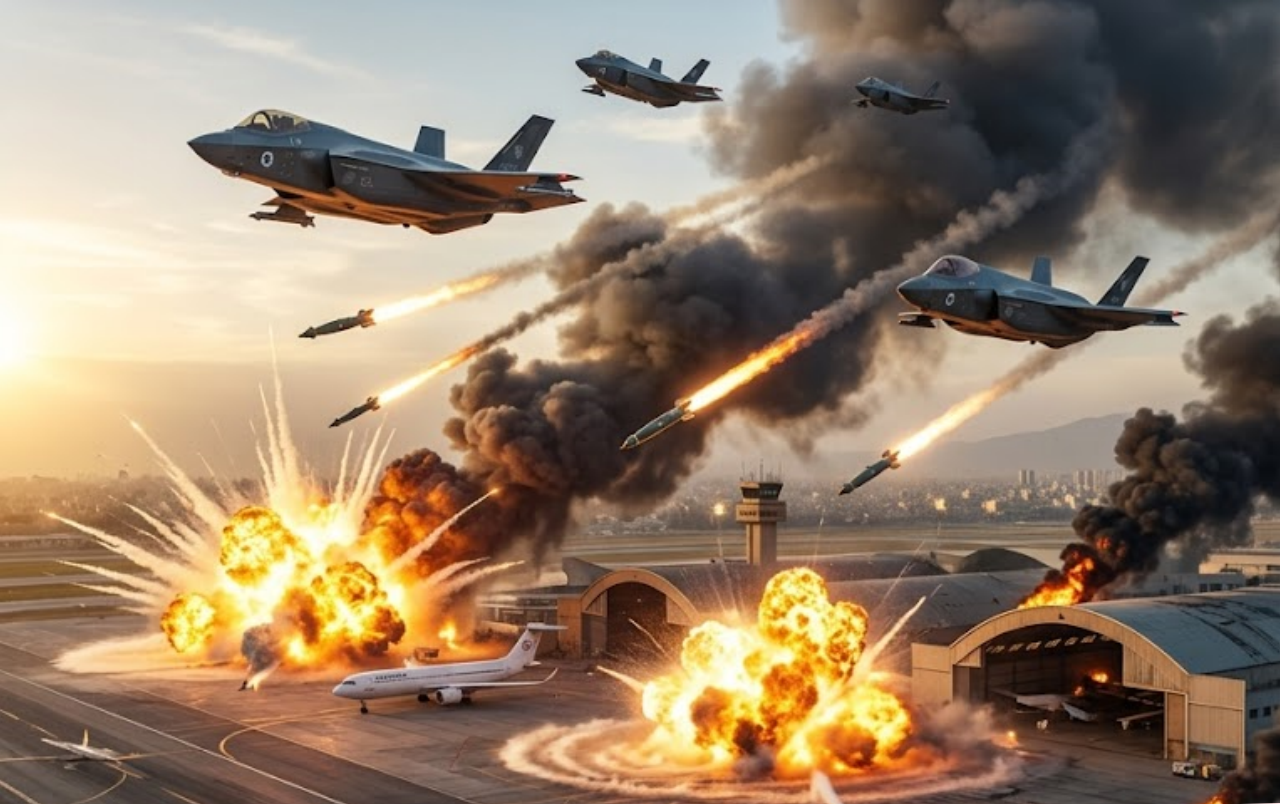
Israeli sources described the operation as part of a wider campaign to degrade Iran’s military infrastructure, especially its ability to project power through air and drone operations. In recent weeks, Israel has intensified its strikes on Iranian targets, including missile sites, defense systems, and command centers, indicating a shift toward a more aggressive and sustained aerial strategy.
However, Iranian authorities have not immediately confirmed the extent of the damage or the loss of aircraft. As with many incidents in the conflict, independent verification remains limited, and both sides continue to wage an information battle alongside military operations. Iran has previously downplayed similar attacks or claimed rapid recovery of its capabilities, raising questions about the long-term effectiveness of such strikes.
The attack on Tehran’s airports carries significant strategic implications. By directly targeting aviation assets in the capital, Israel is signaling both its reach and its willingness to strike deep داخل Iranian territory. This could further escalate tensions and provoke retaliation, particularly if Iran views the strikes as a direct threat to its core military infrastructure.
Ultimately, the bombing of Iranian planes across three Tehran airports marks another dangerous phase in an already volatile conflict. As both sides continue to exchange blows, the risk of a broader regional war grows—especially if such high-profile attacks trigger a cycle of retaliation that extends beyond military targets.