A sudden escalation has gripped northern Israel as the coastal city of Haifa came under reported attack, triggering widespread alarm and renewed fears of a broader regional conflict. Air raid sirens echoed across the city as incoming projectiles were detected, forcing residents into shelters within seconds.
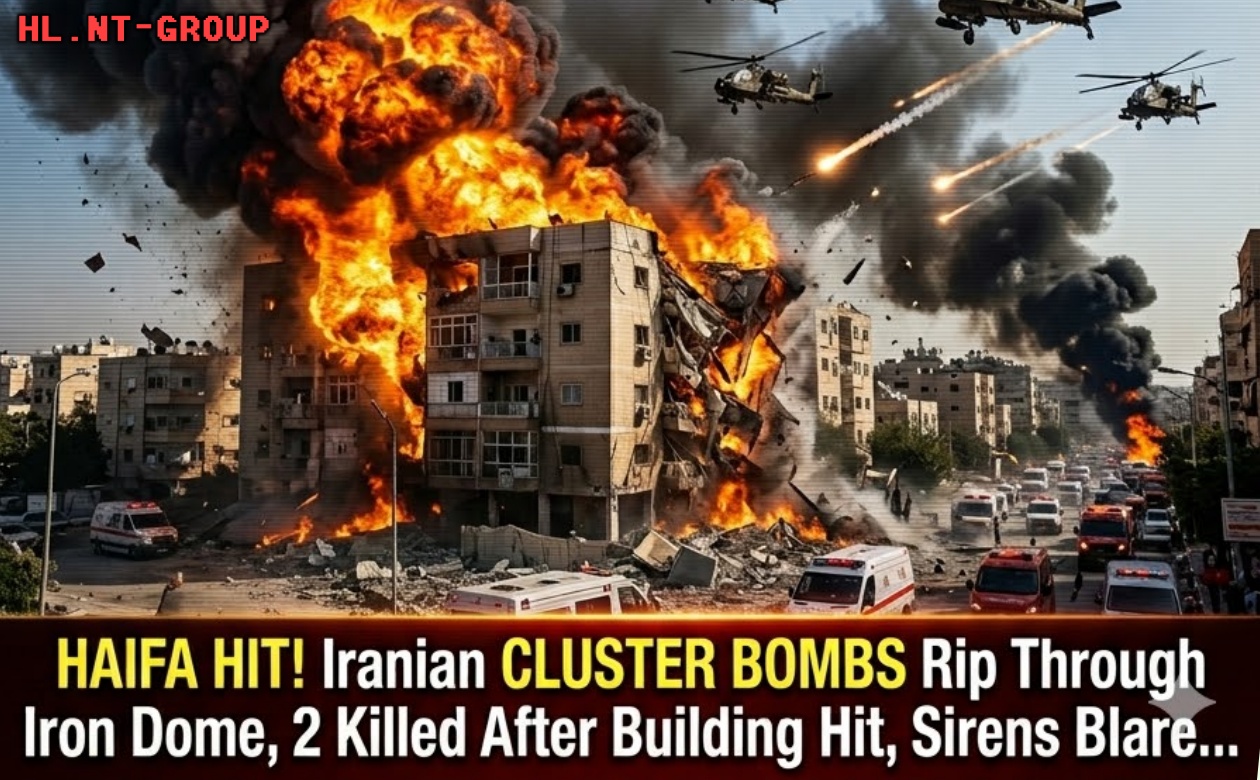
According to initial reports, multiple rockets were launched toward Haifa, with at least one striking a residential building. Early accounts indicate casualties, with two people reportedly killed and several others injured in the blast. Emergency services were quickly deployed to the scene, working to contain fires, rescue trapped civilians, and assess structural damage.
The most controversial aspect of the incident lies in claims that cluster munitions were used—an allegation that, if confirmed, would mark a significant escalation. Cluster bombs are designed to disperse multiple smaller submunitions over a wide area, increasing the risk to civilians and making interception far more difficult. However, there is no verified confirmation from official sources that such weapons were used in this attack.
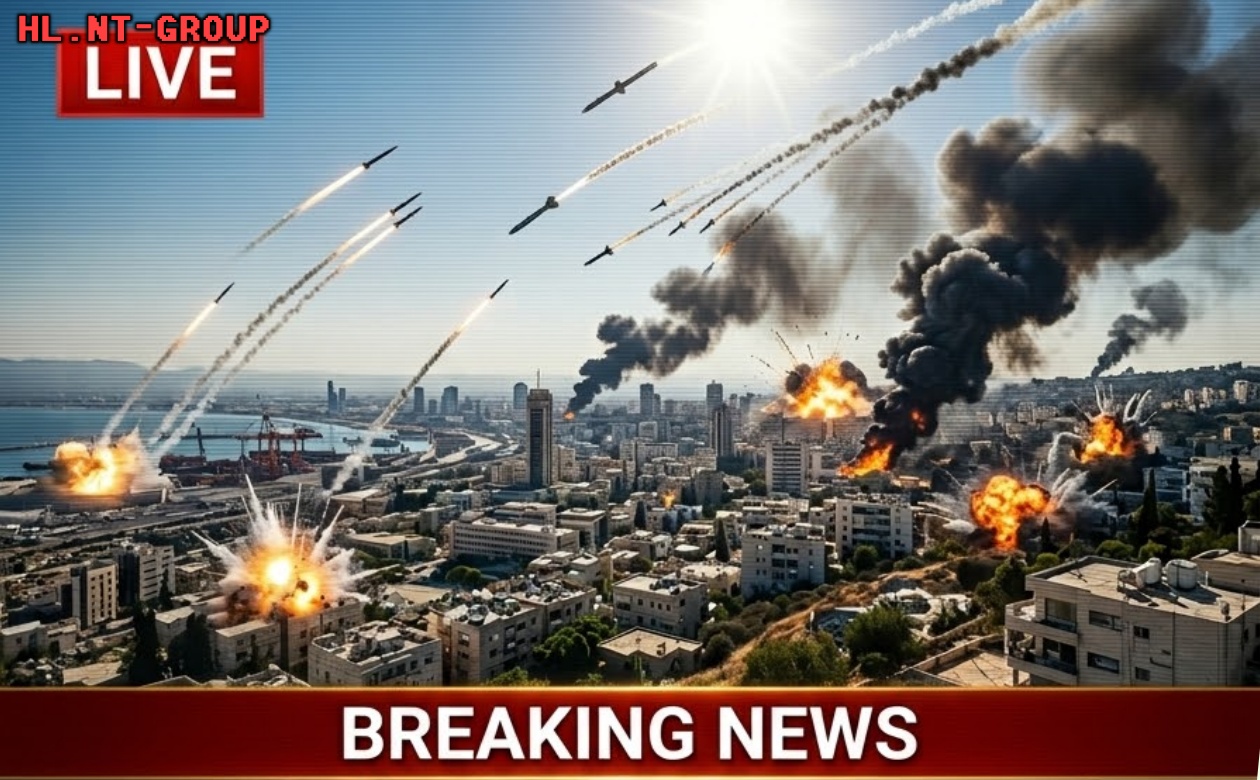
Israel’s air defense system, Iron Dome, was immediately activated in response to the incoming threats. Known for its high interception rate against short-range rockets, Iron Dome reportedly intercepted several projectiles. Still, as with any defense system, it is not impenetrable—especially when faced with multiple launches or complex attack patterns designed to overwhelm its capabilities.
Military analysts suggest that even highly advanced systems can be challenged by saturation tactics, where numerous projectiles are fired simultaneously to increase the likelihood that some will get through. Whether due to volume, trajectory, or technical limitations, at least one projectile appears to have evaded interception and caused damage on the ground.
At this stage, attribution remains unclear. While the headline points to Iran, there has been no official confirmation directly linking Tehran to the strike. In similar scenarios, attacks on northern Israel are often associated with regional proxy groups, adding another layer of complexity to the situation.
The psychological impact on civilians is immediate and severe. Sirens, explosions, and uncertainty create a climate of fear, particularly in densely populated urban areas like Haifa. Schools and businesses have been disrupted, and authorities are urging residents to remain vigilant as the threat level remains high.
As the situation develops, the focus will shift to verification—what weapons were used, who was responsible, and whether this marks the beginning of a larger escalation. For now, the incident underscores a stark reality: even the most advanced defense systems cannot guarantee complete protection in an increasingly volatile and unpredictable conflict environment.