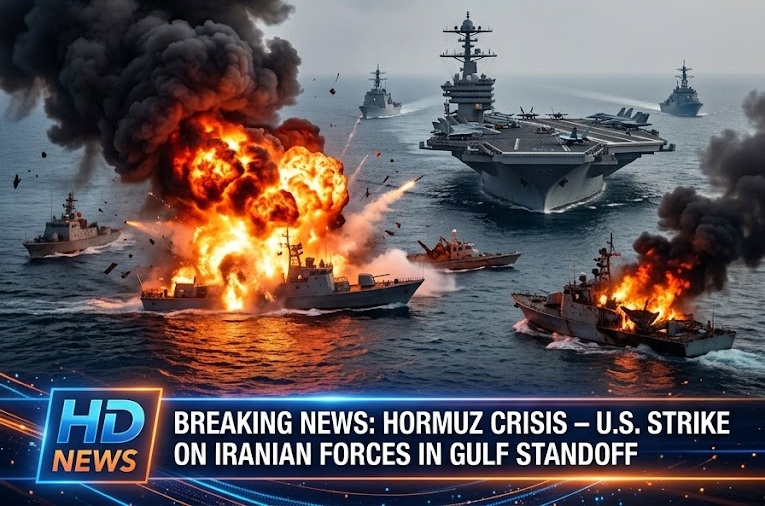
Tensions in the Strait of Hormuz have surged to a critical level as a U.S. carrier strike group operating in the region has come into close proximity with Iranian naval forces, triggering what military officials are calling a “high-risk standoff” in one of the world’s most sensitive maritime corridors. The situation has raised fears of rapid escalation, even as diplomatic channels remain technically open.
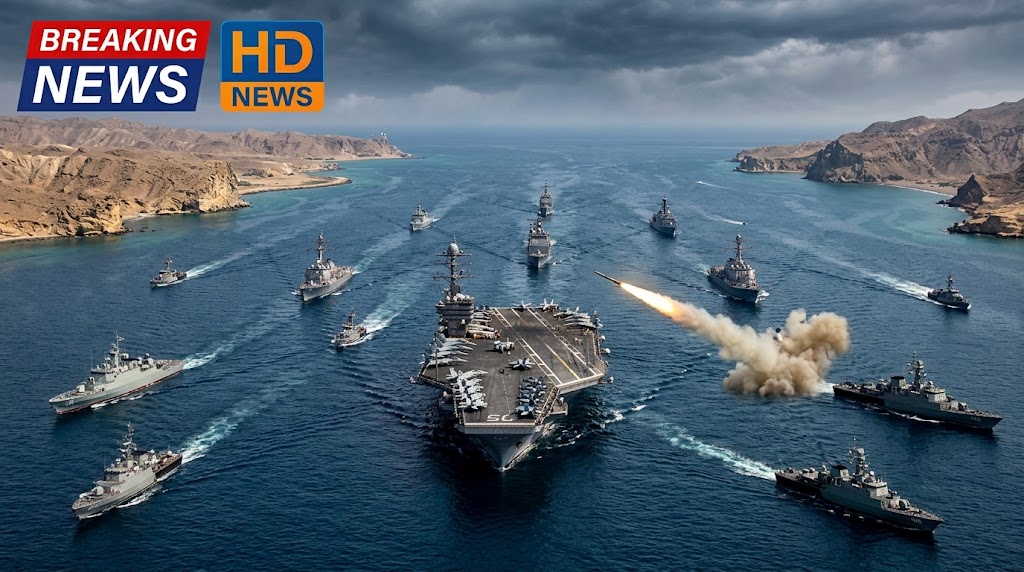
According to defense sources, the U.S. Navy carrier strike group—centered around a nuclear-powered aircraft carrier accompanied by destroyers and support vessels—has been conducting routine security operations to protect commercial shipping lanes. However, Iranian naval units, including fast-attack craft and patrol vessels, have increased their visible presence in the same operational area, leading to heightened alert levels on both sides.
Officials describe the encounter as non-combat but highly tense, with ships maintaining close but controlled distances. Aircraft from the carrier have reportedly been conducting surveillance flights overhead, while Iranian forces are believed to be monitoring movements using coastal radar and small reconnaissance drones. The overlapping operations have created what analysts call a “compressed battlespace,” where even minor miscalculations could trigger unintended escalation.
The Strait of Hormuz remains a strategic chokepoint for global energy shipments, and both sides are aware that any disruption could have immediate international consequences. Commercial vessels passing through the area have been placed under enhanced escort protocols, with some shipping companies opting to delay transit until the situation stabilizes.
Military analysts note that such encounters are not unprecedented, but the frequency and intensity of recent interactions mark a concerning shift. In previous years, similar standoffs were typically resolved through radio communication and gradual de-escalation. However, the current environment—shaped by recent missile incidents, drone surveillance activity, and fragile ceasefire arrangements—has reduced the margin for error.
The U.S. Navy has emphasized that its operations remain defensive in nature, focused on ensuring freedom of navigation and protecting commercial shipping. Iranian officials, meanwhile, have framed their naval presence as a sovereign assertion of control over territorial waters and strategic interests in the region.
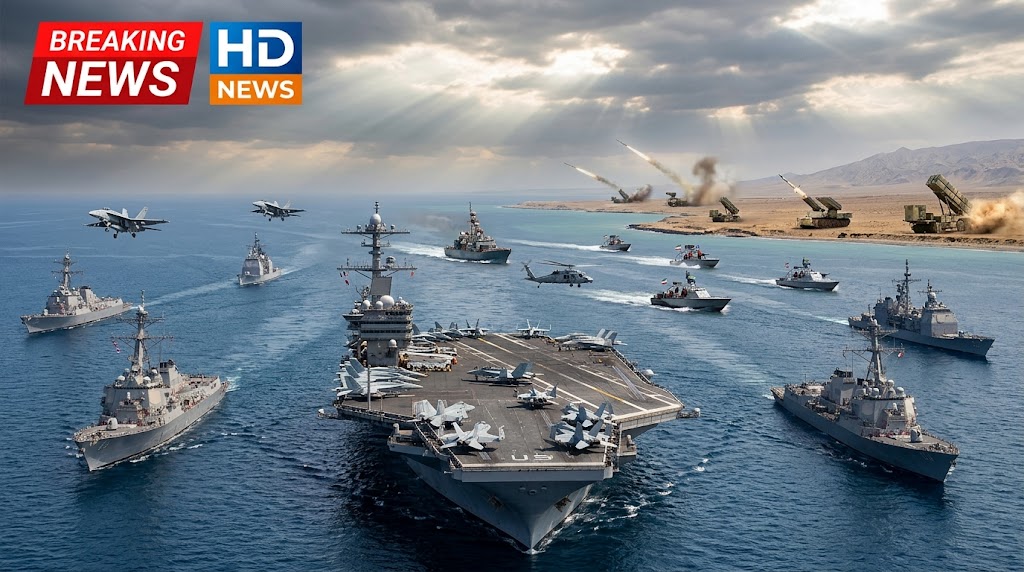
International observers are closely monitoring the situation, warning that misinterpretation of maneuvers or aggressive posturing could quickly spiral into a broader confrontation. Calls for restraint have been issued by multiple governments, urging both sides to maintain communication and avoid actions that could destabilize maritime security.
Energy markets have reacted cautiously, with traders factoring in the possibility of renewed disruptions to oil flows through the strait. Even brief interruptions in this corridor can lead to sharp price fluctuations, underscoring its importance to global supply chains.
As night falls over the Hormuz waters, the standoff continues under heavy surveillance from both sides. While no shots have been fired, the presence of two powerful naval forces in such close proximity serves as a stark reminder: in this narrow stretch of sea, stability can shift in an instant.