
In the early hours of the morning, a dramatic turn in the ongoing USA vs. Iran conflict unfolded near the Strait of Hormuz — a strategic chokepoint that controls nearly one‑fifth of global oil traffic and has effectively become the epicenter of this intensifying war. Iran’s defensive strategy around the strait has long been described by analysts as a “perfect trap” — leveraging geography, sea mines, mobile missile systems, and swarming drones to deny freedom of movement and create enormous risk for any naval or ground operation.
For Tehran, the Strait of Hormuz is not merely a stretch of water — it’s a powerful bargaining tool. By effectively closing this vital route with asymmetric threats like mines, drones, and missile strikes, Iran has managed to inflict economic and political pain far beyond its conventional military strength. Global shipping was halted, oil prices spiked, and U.S. political leadership came under intense pressure as markets trembled and strategic planning headquarters in Washington shifted into crisis mode.
Yet, while Iran believed it had crafted an insurmountable barrier at Hormuz, U.S. military planners were quietly preparing a response that would catch Tehran off guard. In recent weeks, elements of the 82nd Airborne Division — one of the Army’s elite rapid‑reaction units — have been ordered into the Middle East as part of a broader strategy to counter Iranian control of the strait and escalate pressure on Tehran. These orders included around 3,000 paratroopers from Fort Bragg, ready to deploy anywhere within hours, alongside thousands of Marines already positioned in the region.
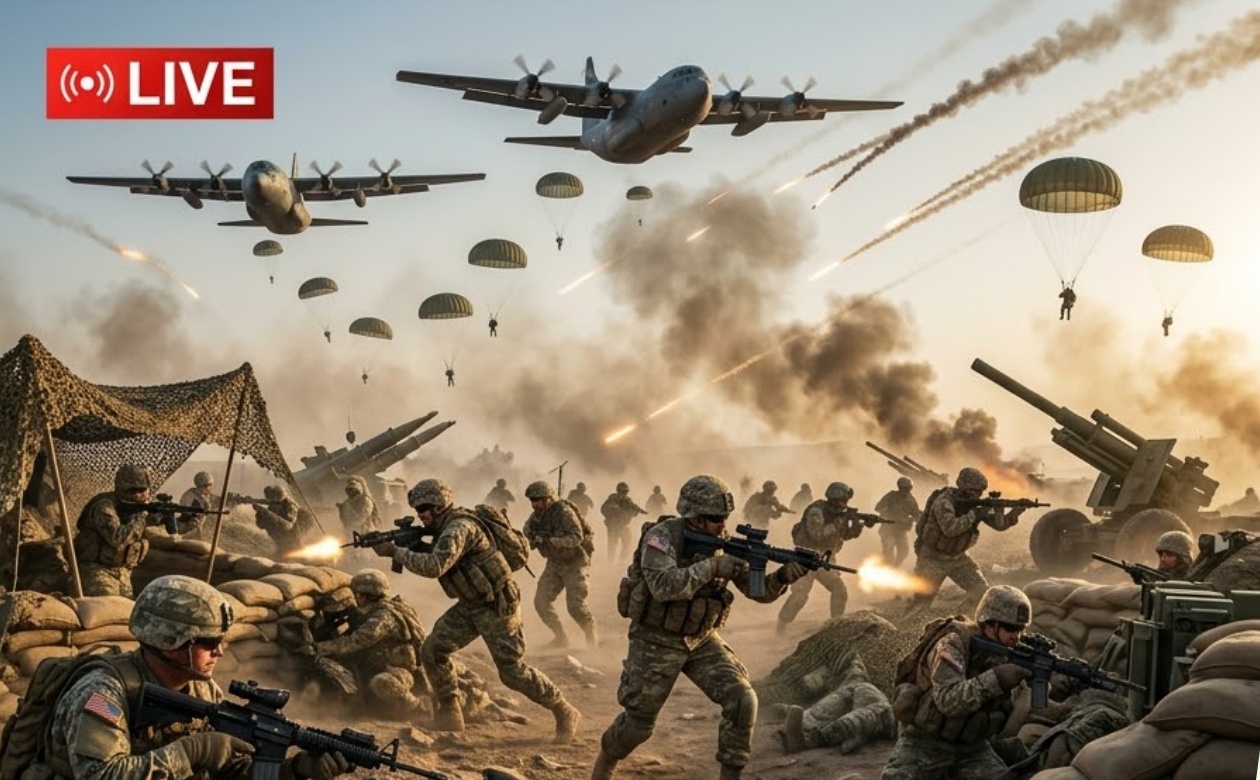
At approximately 2:17 AM local time, after weeks of careful reconnaissance and intelligence buildup, the U.S. initiated an unprecedented airborne operation designed to disrupt Iran’s layered defenses and seize crucial objective points along the southern coast. The 82nd Airborne — known for rapid insertion behind enemy lines — was dropped into key positions under the cover of darkness, moving swiftly to secure coastal terrain, disable mine deployment facilities, and establish forward operating bases that would enable further pressure to be placed on Iranian forces.
What made this move especially shocking to Tehran was not just the physical insertion of U.S. troops, but the precision and planning behind it. Rather than a full‑scale invasion, planners opted for a limited, high‑impact airborne strike designed to break Iran’s strategic leverage without igniting a full theater war immediately — a calculated gamble aimed at outmaneuvering the “perfect trap.” Marines and airborne units reportedly moved to secure chokepoints and support naval elements attempting to escort commercial shipping through the strait.
Iran’s response was swift in rhetoric if not immediate in force. State media denounced the action as an act of aggression, warning that any attempt to dismantle Iran’s hold on the strait would be met with fierce resistance from its Revolutionary Guard and associated militia networks. Still, Tehran’s asymmetric defenses, while formidable in keeping larger forces at bay, were unable to prevent the initial airborne insertion — marking a significant tactical blow to Iran’s strategy in the area.
As the dawn breaks over the Strait of Hormuz, global markets and military leaders alike are recalibrating. What seemed like Iran’s perfect defensive trap has been challenged by the bold, rapid action of the 82nd Airborne, signaling a new and even more unpredictable phase of the conflict.