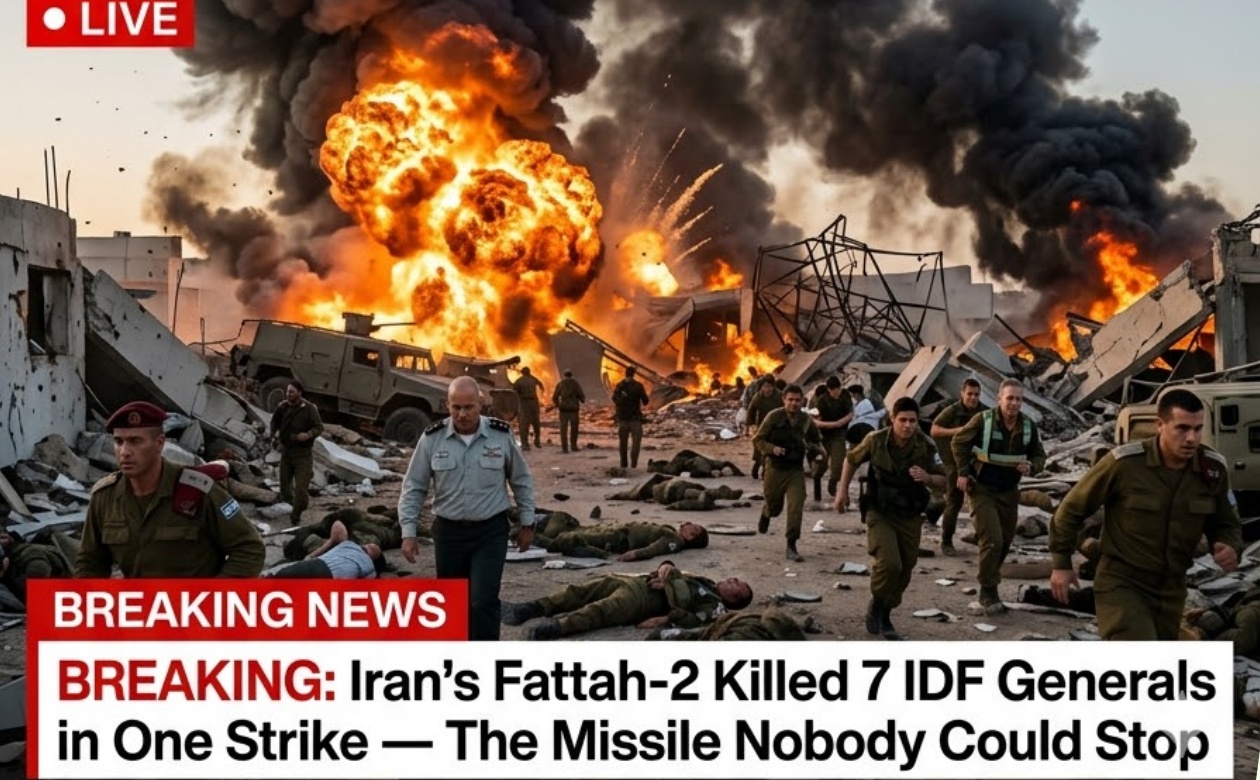
In the turbulent theater of the 2026 Iran–Israel conflict, a shadowy new chapter may have unfolded involving Iran’s Fattah‑2 hypersonic missile, a weapon Tehran claims is capable of slipping past even the most advanced air defenses. While precise details are still emerging, multiple sources — including battlefield analysts and regional media — report that a Fattah‑2 missile struck deep inside Israeli‑held territory, hitting what Iranian outlets described as a major military command center. Iranian state sources asserted that the strike eliminated seven senior Israeli officers, a claim that, while unconfirmed by Israel, has spread rapidly among regional observers.
The Fattah‑2 is Iran’s next‑generation hypersonic missile project, showcased by the Islamic Revolutionary Guard Corps as a weapon designed to defeat sophisticated defense systems with high speed, maneuverability and long range. Iran has presented the weapon as capable of reaching velocities seen only in cutting‑edge hypersonic platforms and outpacing existing interceptors.
If true, the reported strike underlines how hypersonic technology — touted by Tehran as a game‑changer — could fundamentally shift regional military dynamics. Hypersonic missiles travel at least five times the speed of sound and are extremely difficult to track and intercept, even for advanced defense systems like Israel’s Arrow or U.S.-backed Patriot batteries. Recent Western analyses have underscored ongoing debates about how, and how often, such systems can be effectively stopped once launched.
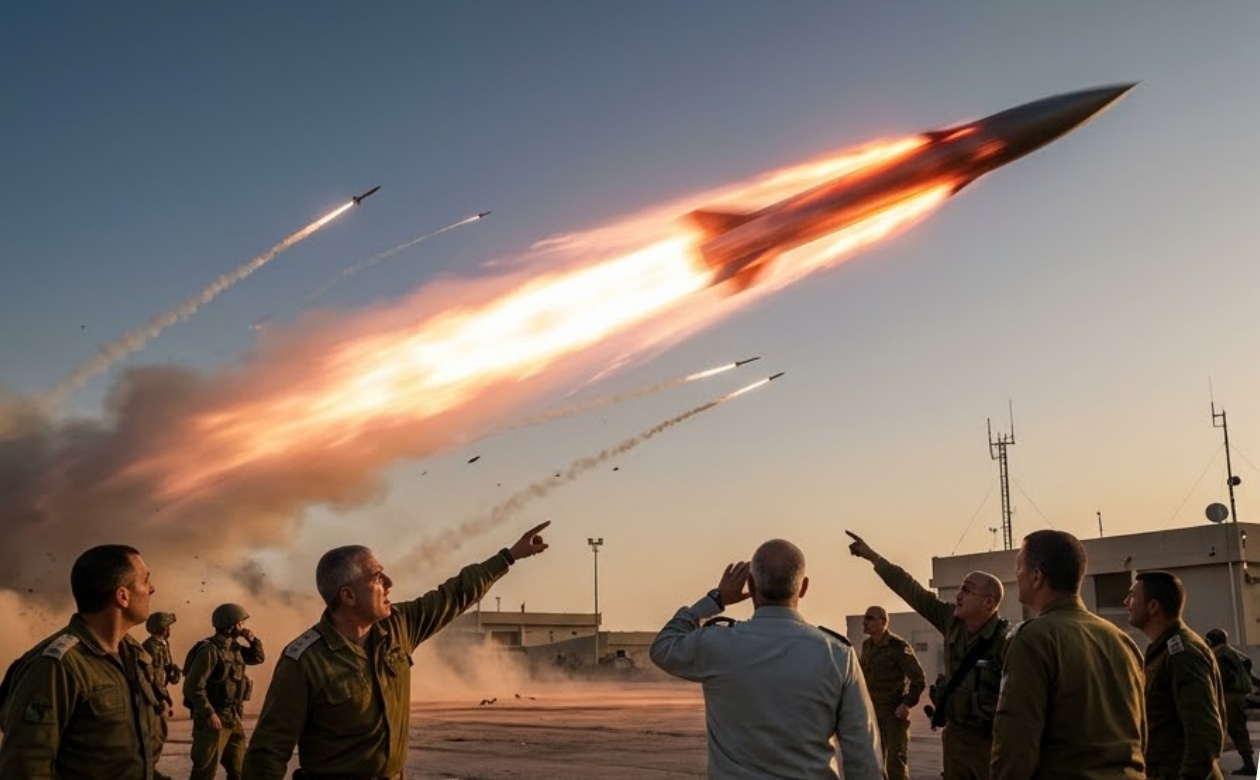
Iranian state media published footage claiming to show the Fattah‑2 launch and its impact — images that quickly circulated online and were described by hardline commentators as proof of Iran’s emerging technological edge. Tehran has presented this as a strategic breakthrough, suggesting its weapons can strike hardened and well‑defended targets that once might have been immune to attack.
From the Israeli side, official confirmation of the reported deaths of senior officers has not been issued, and defense spokespeople have historically been cautious when commenting on specific strike outcomes in real time. Israel has routinely countered Iranian missile fire with layered air defense networks and unverified claims downplaying Tehran’s technological breakthroughs. Independent verification remains elusive in the fog of war.
Whether or not all of the reported casualties — including the alleged seven senior officers — can be corroborated, the strike scenario has intensified fears that the conflict is entering a new phase driven by next‑generation weapons. Tehran’s willingness to publicly link the Fattah‑2 to battlefield impact has already triggered serious reassessments among defense planners in Jerusalem, Washington, and beyond.
Strategic analysts note that hypersonic missiles, by design, challenge existing interception frameworks worldwide, forcing rival militaries to rethink defensive doctrines. In this conflict, where air defenses are already stretched by repeated barrages, the psychological impact of a hypersonic success — real or claimed — could be as meaningful as the physical effects on the battlefield.
The continued exchange of long‑range missile strikes between Tehran and its adversaries underscores the volatile nature of the wider Iran–Israel confrontation. With each side advancing its arsenal and narratives of technological superiority, the risk remains that this war could expand into new domains and introduce capabilities that reshape military balance in the region.