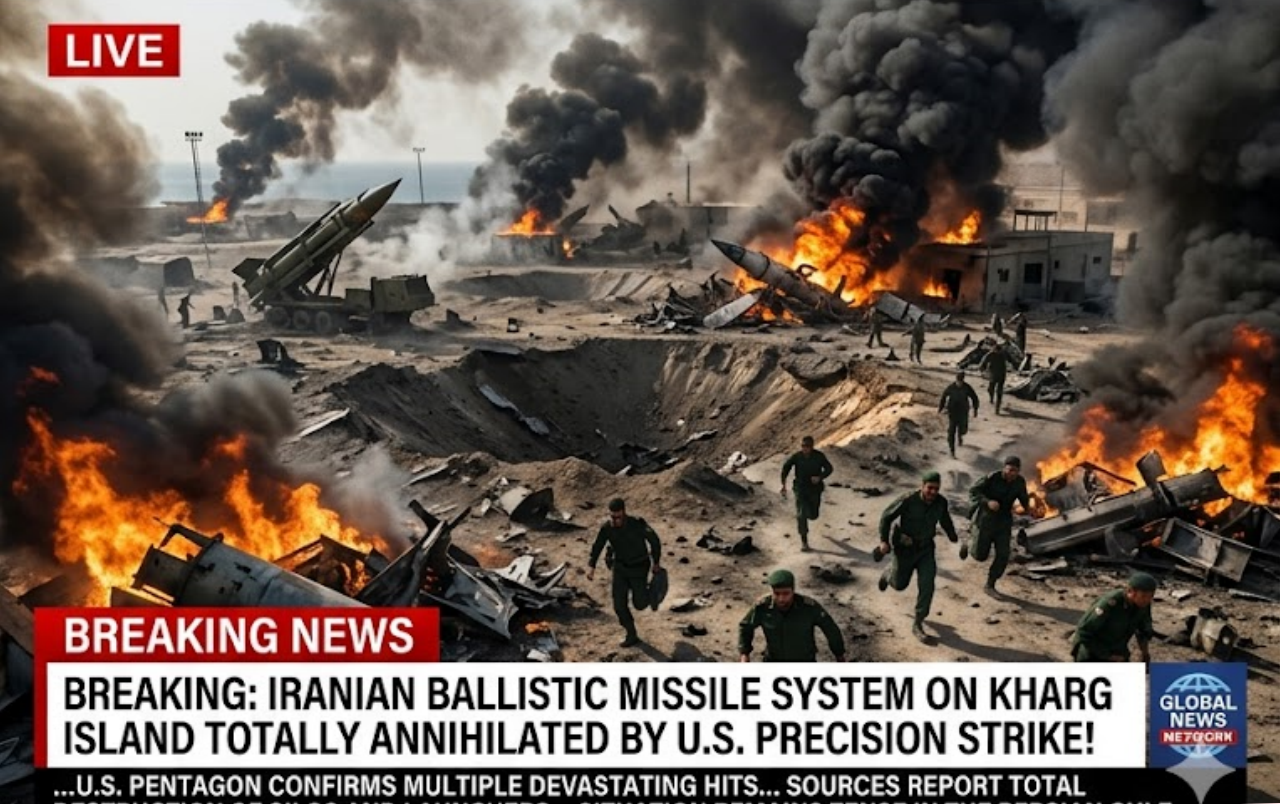
In the ongoing 2026 U.S.–Iran conflict, the strategic island of Kharg Island has become one of the most heavily targeted locations in the Persian Gulf. Recent military operations have focused on degrading Iran’s ability to threaten maritime traffic through the Strait of Hormuz, and U.S. forces have conducted large‑scale precision strikes against military infrastructure on the island in a bid to weaken Tehran’s strategic posture.
On March 13, 2026, the United States Air Force executed a major precision bombing campaign on Kharg Island, hitting more than 90 Iranian military targets in a single coordinated operation. Among the facilities struck were missile storage bunkers, naval mine depots, coastal defenses, and other strategic military positions that Iran had fortified over years of planning. U.S. Central Command described the strikes as one of the most powerful air raids in the Middle East in recent memory.
The focus of the mission was not just disruption but systematic degradation of Iran’s ballistic missile infrastructure on the island — a network that Tehran had been using to project power and threaten shipping in the Hormuz corridor. Several missile storage facilities were hit directly, rendering them inoperable and effectively neutralizing major portions of the island’s surface‑based strike capability.
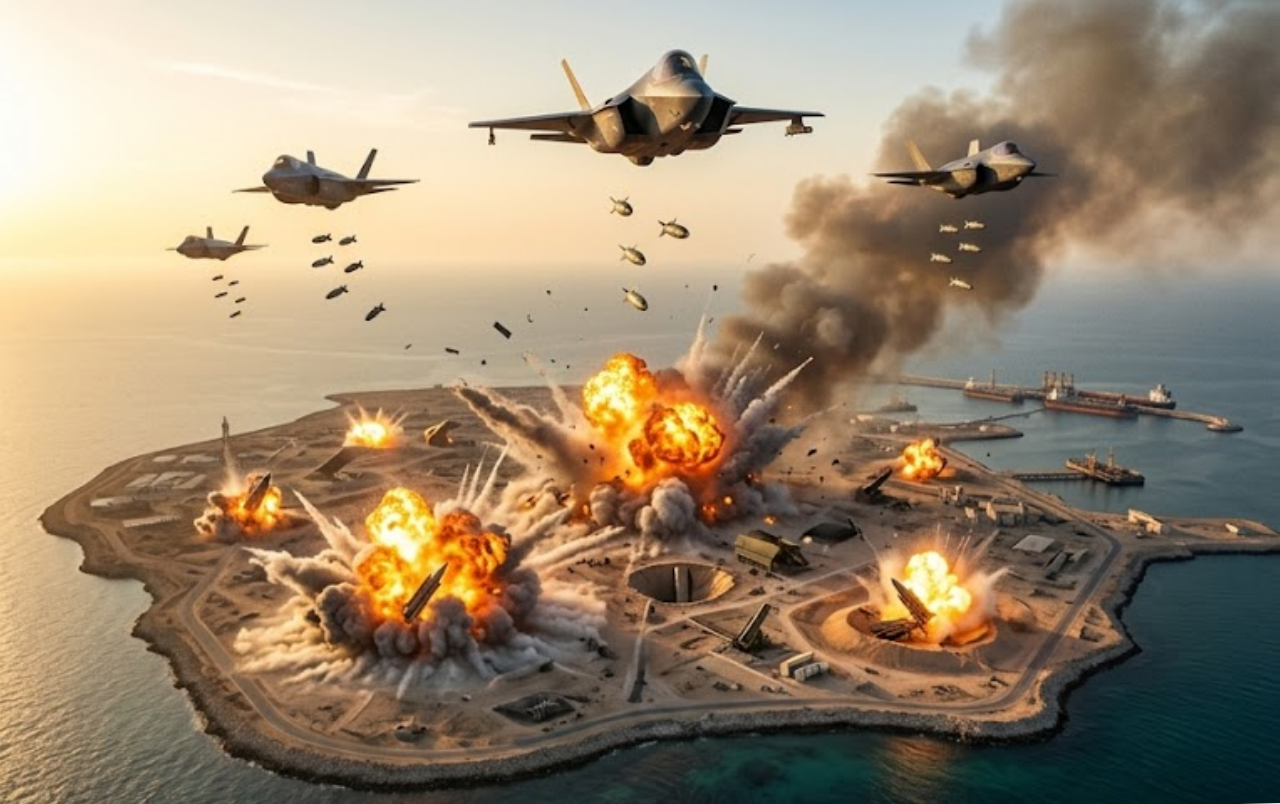
President Donald Trump publicly stated that the U.S. had “obliterated every military target on Kharg Island,” emphasizing that the campaign spared civilian oil infrastructure for now but did not rule out future strikes should Tehran continue to impede freedom of navigation. The precision nature of the mission — using advanced GPS‑guided munitions and real‑time targeting data — allowed U.S. forces to maximize damage to hardened military systems while minimizing broader collateral destruction.
Importantly, these strikes have not dismantled Iran’s entire missile arsenal, which still includes mobile launchers and hidden stockpiles dispersed across the country. Intelligence estimates suggest that only about one‑third of Iran’s ballistic missile capacities have been directly degraded despite repeated U.S. and allied efforts.
That said, the destruction of missile bunkers and associated launch infrastructure on Kharg Island represents a tactical victory for U.S. forces — undermining Iran’s ability to dominate the Strait of Hormuz and threaten international shipping lanes. The Strait remains a strategic flashpoint, and control over it could shape global oil prices and geopolitical stability for months to come.
Iranian officials, however, continue to deny claims of total military loss and have insisted that defenses on Kharg remain operational, with rapid restoration of key systems after bombardment. This highlights the information warfare aspect of the conflict, where both sides actively contest battlefield narratives.
In essence, while the Kharg Island precision strikes dealt a serious blow to missile capabilities on the island, they did not completely erase Iran’s strategic arsenal — and the broader war effort continues to unfold in a complex and highly volatile regional environment.