
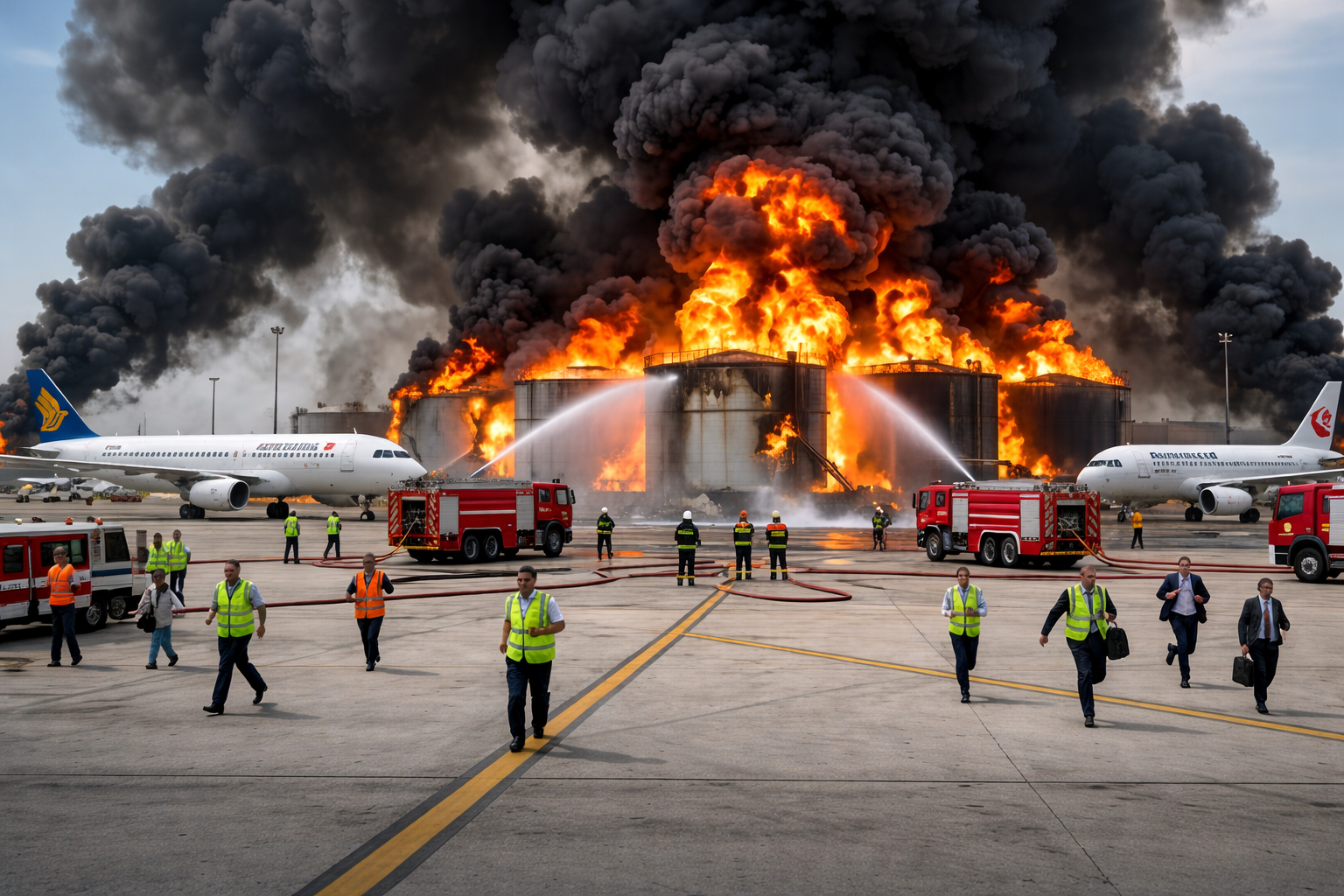
Kuwait City, Kuwait – In a striking escalation, a major fire has erupted at Kuwait International Airport after what is reported to be a targeted drone attack on a key jet fuel storage facility, plunging one of the Gulf’s busiest aviation hubs into disruption.
According to initial reports, multiple drones struck a central fuel depot, igniting a large-scale blaze that quickly spread across critical infrastructure. Thick black smoke billowed into the sky as flames intensified, visible from miles away. Emergency teams rushed to contain the fire while dealing with extreme heat and the risk of further explosions caused by ignited aviation fuel.
Sources indicate that several waves of drones were involved, with some reportedly bypassing existing air defense systems. The strike appears to have been highly focused, hitting a vital logistical نقطة within the airport’s fuel supply network. As a result, flight operations were immediately halted, with numerous aircraft diverted and thousands of passengers left stranded amid confusion and delays.
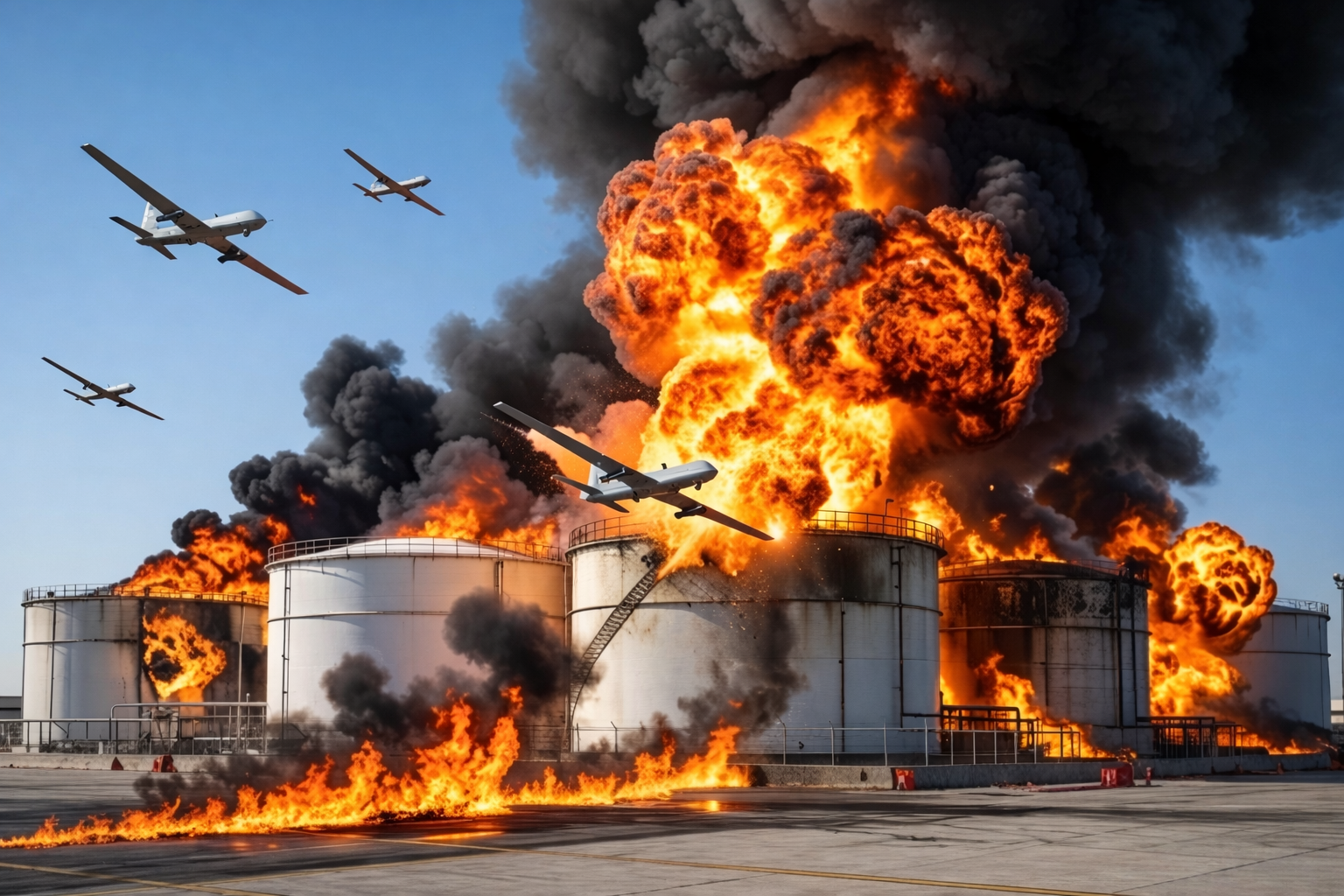
Kuwaiti officials have confirmed extensive damage to fuel storage systems that support airport operations. While there have been no reports of large-scale casualties so far, the incident is expected to have significant economic and logistical consequences, potentially affecting regional air traffic and supply chains.
The attack is being viewed as part of a broader pattern of escalating tensions in the region. Analysts note that targeting infrastructure linked to logistics and energy represents a strategic shift—aimed not just at immediate disruption, but at undermining operational stability over time.
Eyewitness accounts describe flashes in the early morning sky followed by powerful explosions, with shockwaves felt in nearby areas. Residents also reported the strong smell of burning fuel spreading through the air as emergency crews struggled to bring the situation under control.
From a strategic perspective, the incident sends a clear signal about the evolving nature of modern conflict. Even heavily protected facilities may face challenges against persistent and adaptive tactics, especially those involving unmanned systems.
As firefighting efforts continue and authorities assess the full extent of the damage, the event underscores a growing reality: infrastructure once considered secure can quickly become vulnerable in a rapidly intensifying regional conflict.