
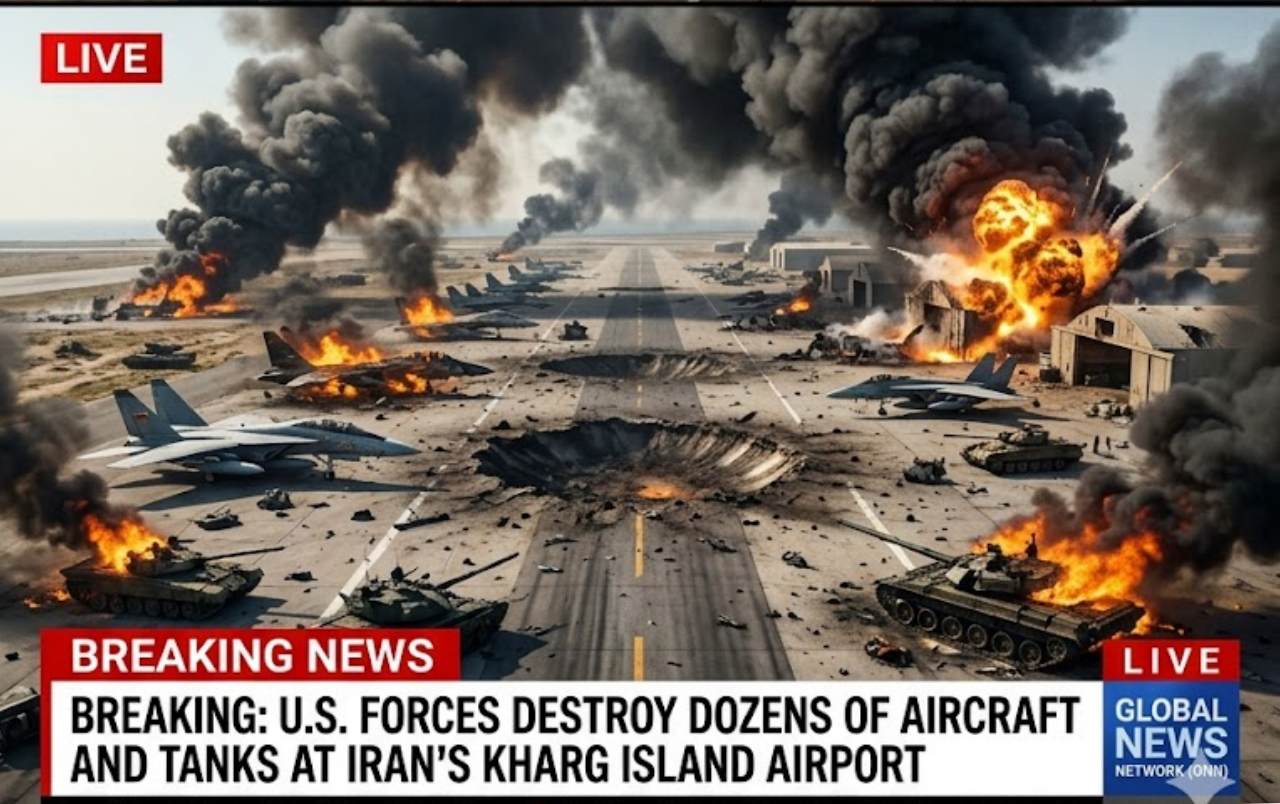
In one of the most dramatic military actions of the 2026 U.S.–Iran war, American forces carried out a powerful precision air campaign on Kharg Island, a strategically vital Iranian oil export hub in the Persian Gulf, destroying numerous Iranian military aircraft, tanks, and defensive positions near the island’s airport as part of broader efforts to degrade Tehran’s warfighting capacity.
On March 13, 2026, U.S. Central Command announced that it had launched a concentrated strike against military targets across Kharg Island. Although global reporting varies on the precise tally of destroyed equipment, U.S. military officials claimed that dozens of Iranian aircraft and armored vehicles, including tanks positioned near or at the island’s airfield and military depots, were successfully hit in the operation. The raid also targeted air defense installations, missile storage bunkers, and other fortified sites that Tehran had used to support its interdiction of shipping through the nearby Strait of Hormuz.
Kharg Island—often described as the “crown jewel” of Iran’s oil infrastructure—handles the bulk of the country’s crude exports through pipelines and terminals linking offshore wells to global markets. Though American strikes were deliberately calculated to take out military assets rather than oil infrastructure itself, the presence of hundreds of tanks and aircraft at the island’s airport suggested Iran was strengthening defenses in anticipation of a possible wider confrontation or even a threatened U.S. ground operation to seize control of the export hub.
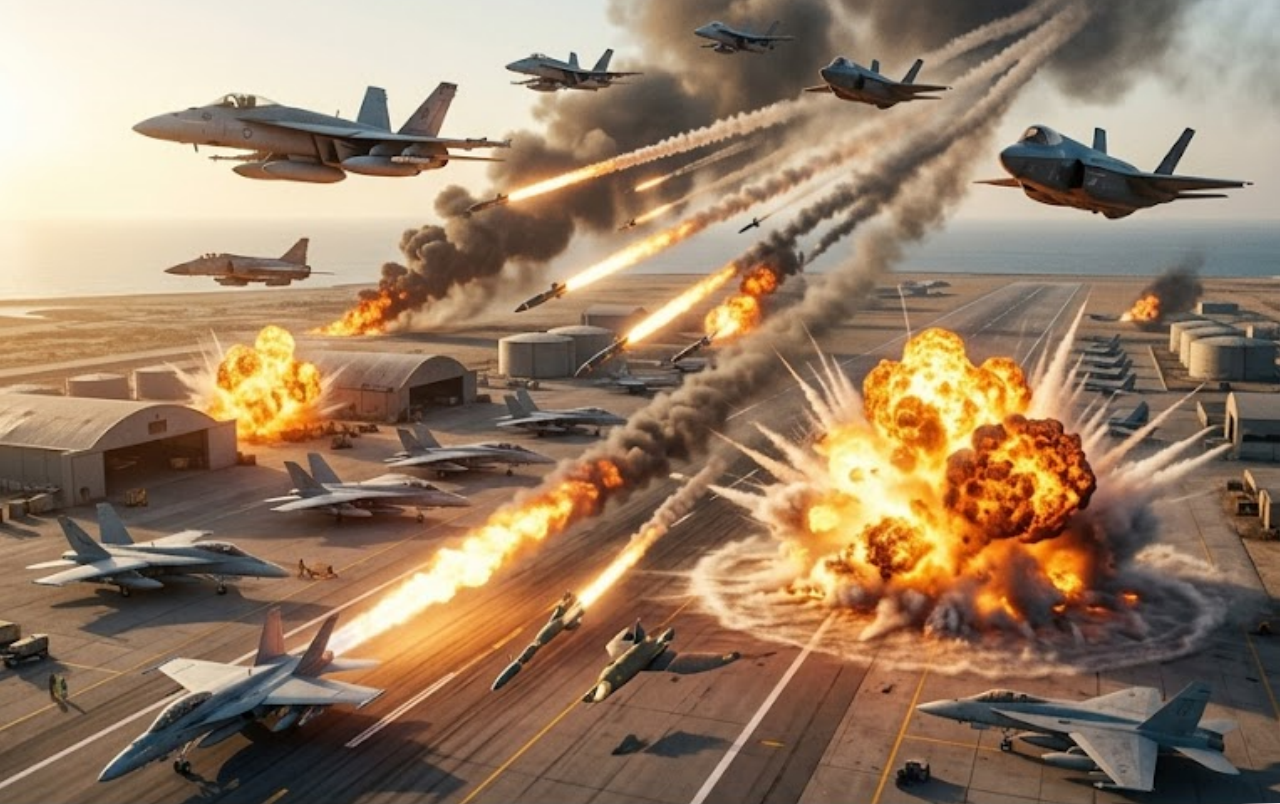
President Donald Trump hailed the air campaign as one of the most forceful and precise U.S. operations in the region, asserting that the destruction of Iranian military aircraft and armored vehicles “greatly weakened Tehran’s ability to project force across the Gulf.” Iranian state sources, however, downplayed the extent of the damage to their defenses and claimed that none of the critical oil facilities were harmed despite the explosions observed during the bombardment.
The strikes on Kharg Island’s airport and surrounding military infrastructure have reverberated well beyond Tehran’s shores, contributing to renewed tensions with Gulf states and global energy markets already destabilized by weeks of conflict. Iran’s leadership warned that further U.S. attacks on energy or export infrastructure could prompt retaliation against allied facilities and shipping lanes, adding pressure on international diplomatic efforts to de‑escalate.
Meanwhile, U.S. strategists continue to weigh broader options in the conflict, including potential ground operations to seize key nodes like Kharg Island to force Tehran to end its blockade of the Strait of Hormuz. Such plans, according to defense analysts, carry significant risk given Iran’s extensive air defenses and the island’s proximity to hostile territory, but the sheer scale of aircraft and armored destruction at the airport marks a profound shift in how the U.S. military is conducting operations in this war.
As the situation evolves, the destruction of aircraft and tanks at Kharg Island’s airfield underscores both the intensity of the conflict and the strategic significance of the Persian Gulf’s vital export and transit routes.