
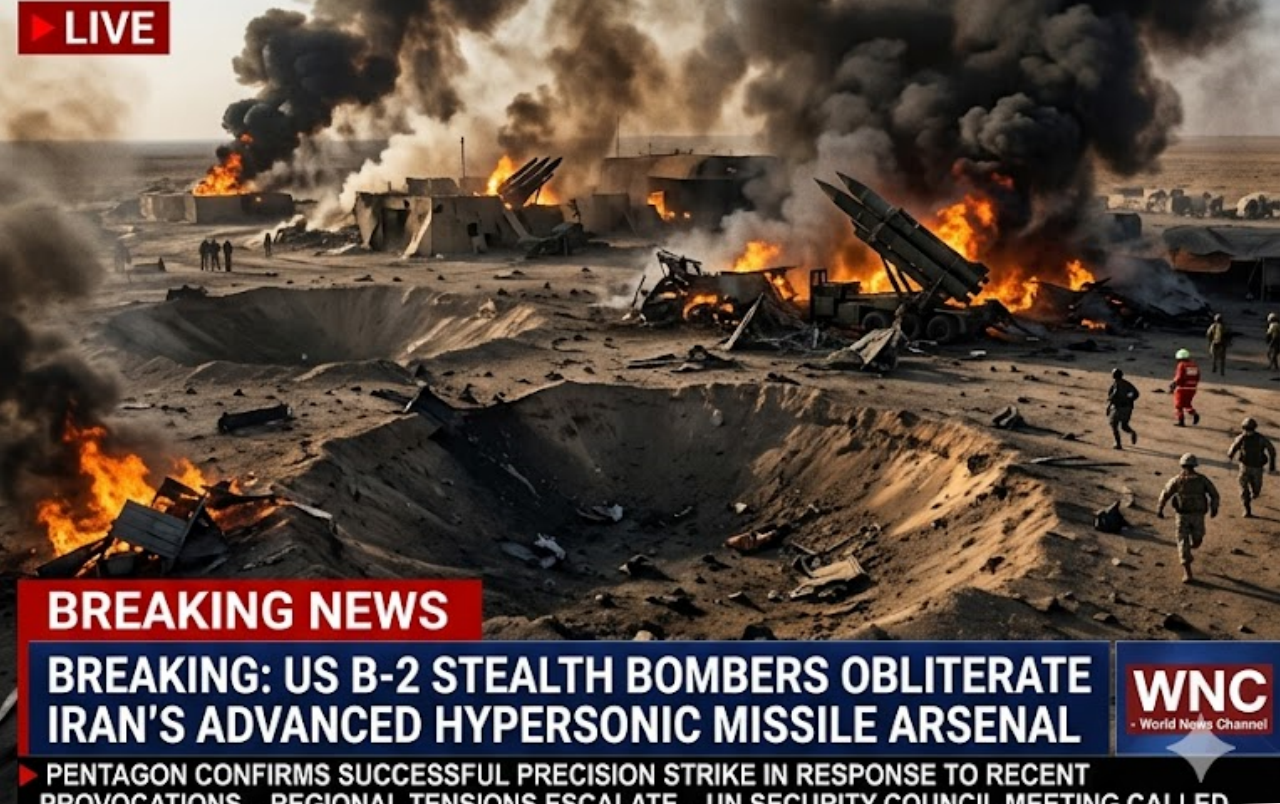
In a major escalation of the ongoing conflict, U.S. forces have reportedly deployed B-2 Spirit stealth bombers in a high-precision strike targeting Iran’s most advanced missile infrastructure. The operation, carried out under intense secrecy, is being described as one of the most sophisticated air assaults of the war—aimed directly at neutralizing Iran’s next-generation missile capabilities, including systems believed to be linked to hypersonic technology.
According to defense reports, the strike focused on deeply buried underground missile facilities, long considered the backbone of Iran’s strategic deterrence. These sites, often referred to as “missile cities,” are engineered to withstand conventional airstrikes, protected by layers of reinforced concrete and mountain terrain. However, the B-2 bomber—designed specifically for penetrating heavily defended airspace—was equipped with powerful bunker-buster munitions capable of reaching and destroying targets far below the surface.
During the operation, B-2 aircraft dropped multiple 2,000-pound penetrator bombs, specifically designed to pierce hardened structures before detonating. These weapons were used to strike underground launch systems and storage areas tied to Iran’s long-range missile program. The goal was clear: dismantle Iran’s ability to launch high-speed, hard-to-intercept missiles that could threaten U.S. bases and allied nations across the region.
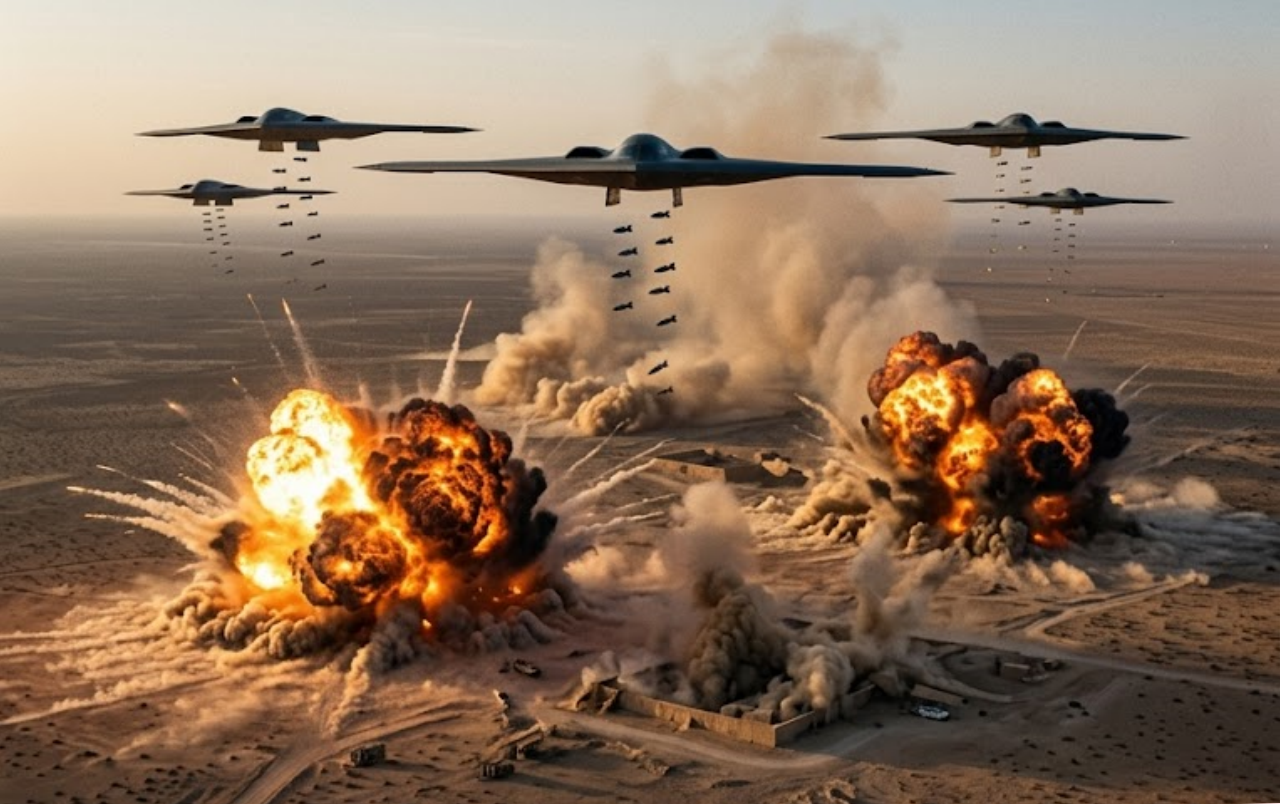
The broader campaign, known as Operation Epic Fury, has already seen the United States conduct thousands of strikes across Iran, targeting missile launchers, air defense systems, and command centers. Within this context, the use of B-2 bombers represents a shift toward eliminating the most protected and strategically valuable assets—those that cannot be destroyed by conventional aircraft alone.
While the headline claims that Iran’s “hypersonic missile arsenal” has been completely obliterated, the reality is likely more complex. Military analysts note that although these strikes can severely damage infrastructure and delay development, Iran’s missile program is highly decentralized and resilient. Facilities are often dispersed, duplicated, or rapidly repaired, making total destruction difficult to confirm in a single operation.
Nevertheless, the impact of such a strike would be significant. Hypersonic weapons—capable of traveling at speeds greater than five times the speed of sound and maneuvering unpredictably—represent a major challenge to existing missile defense systems. By targeting these capabilities early, the United States is attempting to maintain strategic dominance and reduce future threats before they fully materialize.
The psychological effect is equally important. Demonstrating the ability to penetrate and destroy even the most secure Iranian facilities sends a clear message: no target is beyond reach. This not only weakens Iran’s military posture but also pressures its leadership at a critical moment in the conflict.
As the situation continues to evolve, one thing remains certain: the use of B-2 stealth bombers marks a new phase in the war—where the focus is no longer just on visible targets, but on eliminating the hidden, hardened systems that define modern strategic warfare.