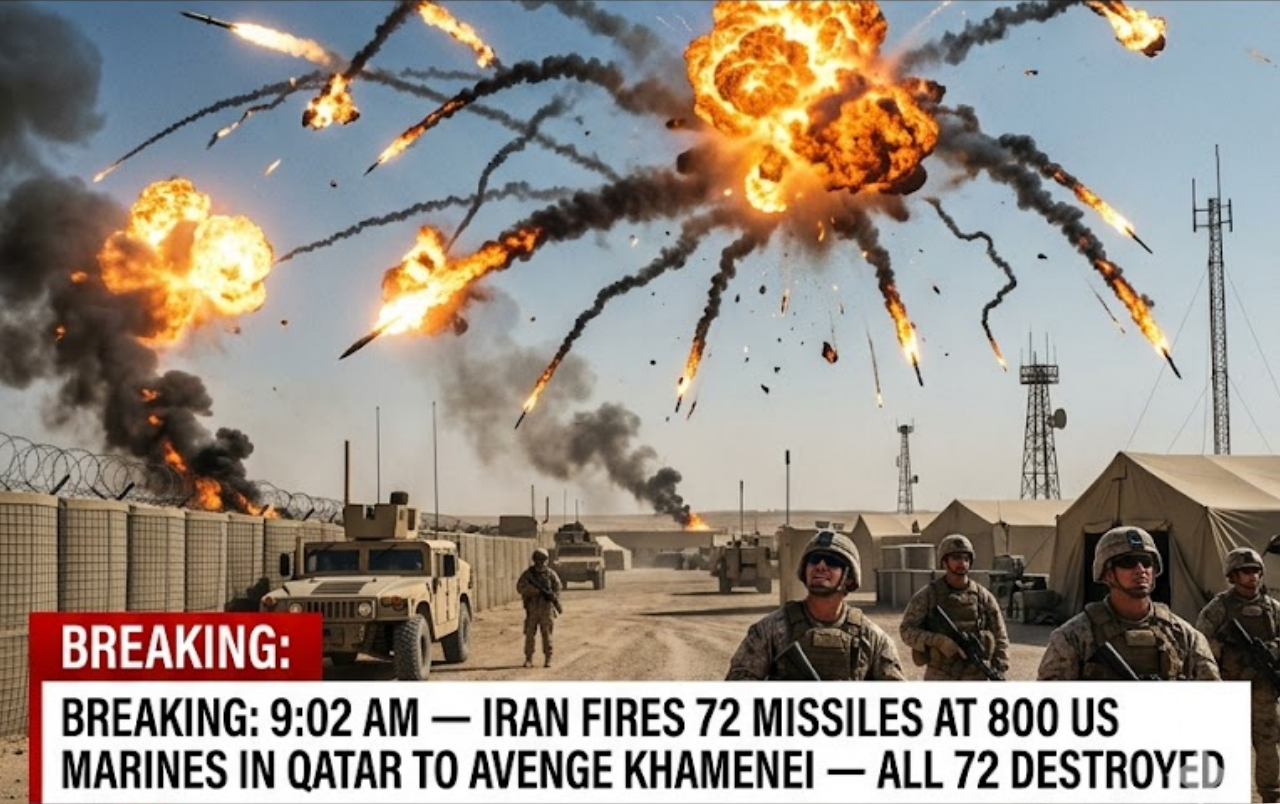
At 9:02 AM today, reports emerged of a dramatic escalation in the ongoing U.S.–Iran conflict. According to sources aligned with Iranian military communications, the Islamic Revolutionary Guard Corps (IRGC) launched a massive coordinated missile barrage aimed at U.S. forces stationed in Qatar, where approximately 800 U.S. Marines are based as part of regional defensive deployments amid rising tensions. This barrage was reportedly intended as retaliation following the death of Iran’s Supreme Leader, Ayatollah Ali Khamenei, whose death was confirmed by U.S. officials after strikes on Iranian territory escalated the conflict.
According to the narrative circulating in regional reporting and military commentary, the IRGC fired 72 ballistic and cruise‑type missiles toward U.S. positions near Doha and other outposts in Qatar. The intent, as described by Iranian commentators, was to avenge Khamenei’s death and inflict significant damage on U.S. forces in the Gulf. This represented one of the largest single‑wave missile attacks claimed by Tehran since the broader Middle East war began earlier this year.
However, the bulk of publicly confirmed information from official military and government sources indicates that Qatari armed forces and allied air defence systems successfully intercepted incoming projectiles directed toward the country and military installations within its borders. The Qatar Ministry of Defence stated that its forces engaged a missile and drone threat on Sunday, shooting down all incoming cruise missiles and unmanned aerial vehicles before they could reach populated or military areas. There were no reported casualties or damage following these interceptions.
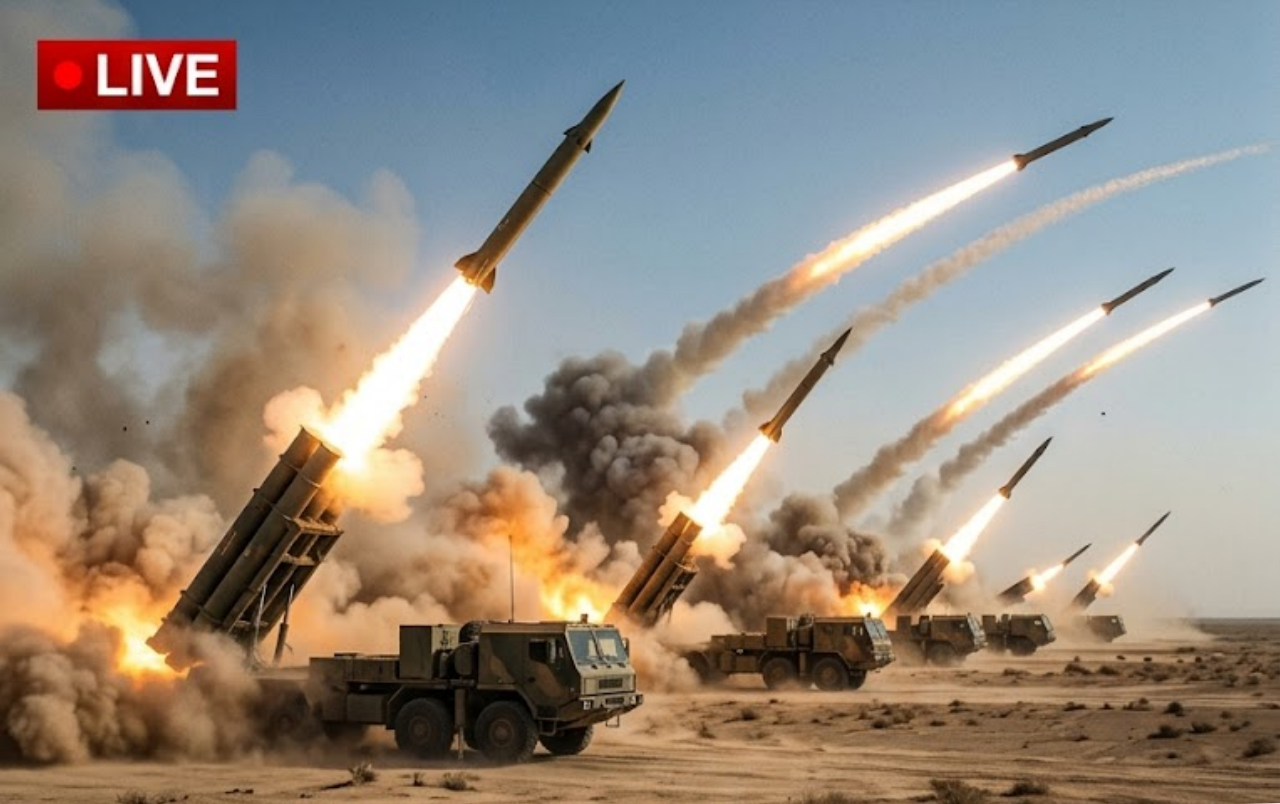
Iran has previously fired missiles and drones toward U.S. and coalition forces across the Gulf as part of a series of retaliatory operations following American and Israeli strikes on its territory. These launches have targeted bases in Gulf states including Kuwait, Bahrain, Saudi Arabia, and Qatar. Some attacks have been intercepted by local and allied air defence systems, while others sparked temporary alerts and sirens but caused no confirmed casualties on the ground.
While the specific figure of 72 missiles striking a U.S. marine contingent is part of a narrative circulating in certain military commentary and unverified reports, what is confirmed by host nation defence authorities is that missile and drone threats originating from Iran were engaged and destroyed before impact in Qatar. The Qatari Armed Forces affirm their air defence systems have worked closely with allied partners to protect military installations and civilian areas from inbound threats, and state media indicates all incoming missiles were intercepted.
The broader context of these events reflects an intensifying cycle of retaliation and counter‑retaliation between Iran and U.S.–led forces in the region. Following the deaths of key Iranian figures during a massive joint U.S.–Israeli strike, Tehran vowed to retaliate against American military assets across the Gulf. In response, Western and Gulf partners have continued their defensive posture, activating Patriot and other air defence systems to safeguard bases and personnel.
In summary, while claims of a 72‑missile strike aimed at U.S. Marines in Qatar have circulated, the verified information from defence ministries in the region points to successful interception of all reported projectiles and no casualties or damage to U.S. forces or allied installations.
If you’d like a timeline of recent missile exchanges in the Gulf or a news‑style article version of this summary, just let me know.