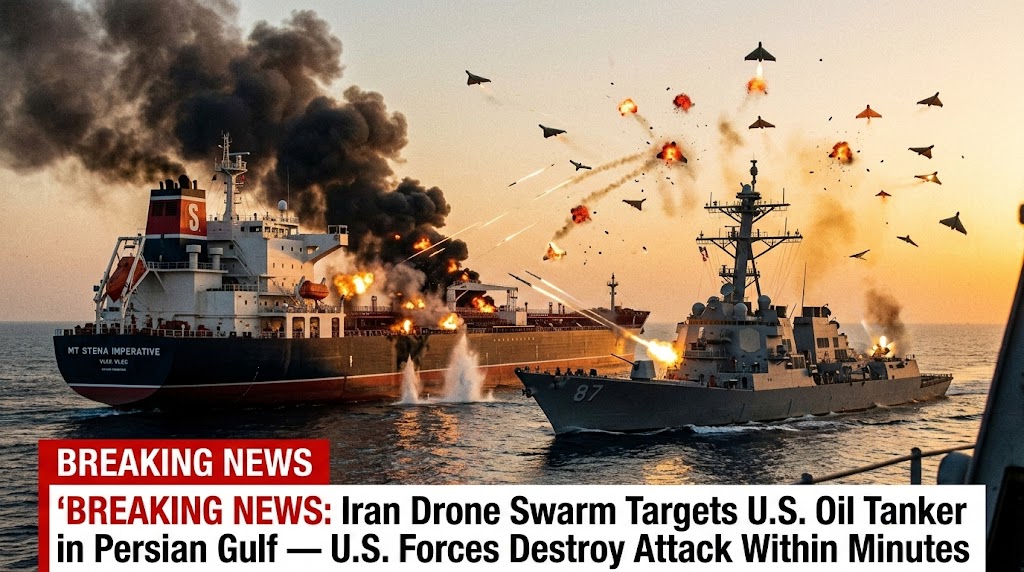
Tensions across the Persian Gulf have intensified following new reports that Iran carried out a coordinated attack using unmanned systems against an oil tanker connected to U.S. interests. The incident triggered a swift and forceful defensive reaction from American naval forces operating in the region, highlighting how rapidly confrontations at sea can escalate—especially in areas critical to global energy supply during an active conflict.
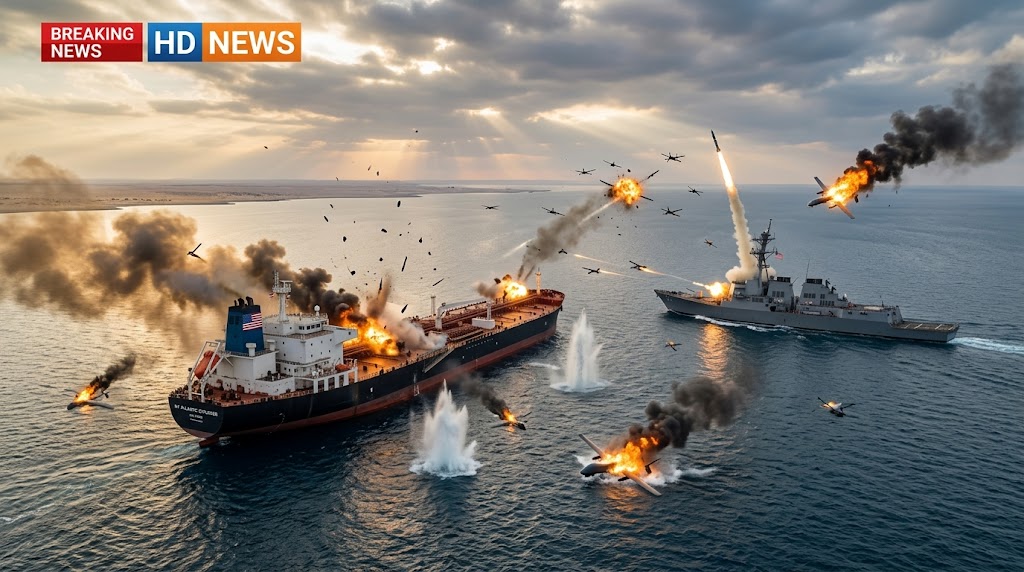
Emerging accounts from regional observers and widely circulated social media footage indicate that several unmanned aerial or surface vehicles converged on a tanker in the northern part of the Gulf. This zone has previously witnessed similar incidents, as Iran has been accused of targeting commercial shipping amid rising geopolitical friction. While the exact launch points of these drones remain uncertain—whether from coastal installations, small vessels, or larger naval platforms—the scale of the operation suggests a deliberate “swarm” tactic. Such an approach is designed to overwhelm defensive systems by attacking from multiple directions simultaneously, complicating interception efforts.
In response, U.S. Navy units, alongside allied forces stationed in the area, reportedly reacted within minutes. Using a combination of layered defense systems—likely involving radar tracking, missile interception, and close-range countermeasures—they were able to neutralize the incoming threats before any significant damage could be inflicted. Although there has yet to be formal confirmation from U.S. Central Command, initial battlefield reports suggest the operation successfully protected the tanker and avoided casualties.
This incident is part of a broader pattern of instability affecting maritime activity in the Persian Gulf. In recent weeks, multiple oil tankers and commercial ships have faced threats ranging from drone attacks to naval mines. These disruptions have already had ripple effects on international shipping routes and have contributed to volatility in global oil prices. For example, even a temporary threat to a single tanker can influence insurance costs, shipping timelines, and market confidence worldwide.
At the center of these tensions lies the Strait of Hormuz, one of the most strategically important waterways on the planet. Roughly 20 percent of the world’s crude oil passes through this narrow passage. Ongoing hostilities have significantly reduced traffic through the strait, as shipping companies weigh the risks of operating in such a volatile environment. Iran has increasingly relied on asymmetric warfare techniques—such as fast attack boats, drone vessels, and unmanned aerial systems—to challenge larger, more conventional naval forces. These tactics allow Iran to exert influence without engaging in direct large-scale confrontation.
As a result, U.S. and allied navies have been forced into a heightened state of readiness. Patrols have increased, escort missions for commercial vessels have become more frequent, and defensive protocols have been strengthened. The goal remains clear: to ensure the continued flow of energy resources and maintain freedom of navigation in one of the world’s most critical maritime corridors.
The latest episode underscores a significant shift in modern naval conflict. Unmanned technologies are no longer supplementary tools; they are becoming central to strategic planning and execution. Their relatively low cost, combined with their ability to operate in large numbers, makes them particularly effective in contested environments like the Persian Gulf.
Looking ahead, key questions remain unresolved. Will this event signal the beginning of a sustained campaign of drone-based attacks against shipping, or will improved defensive strategies be sufficient to deter further escalation? The answer will likely shape not only regional security dynamics but also the stability of global energy markets in the months to come.