
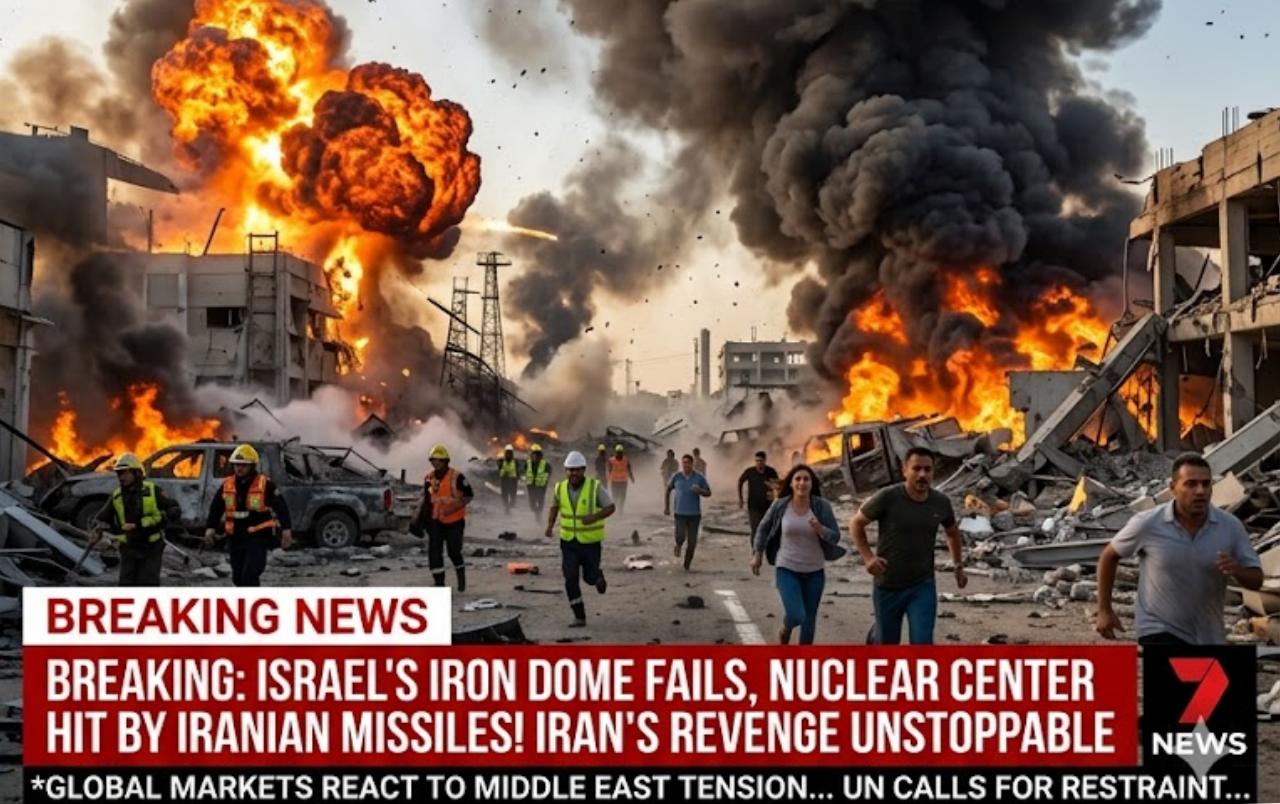
A shocking escalation in the Israel–Iran conflict has sent waves of alarm across the globe, as reports indicate that Iranian ballistic missiles have breached Israel’s famed air defense system, striking areas near one of the country’s most sensitive nuclear facilities. The incident has raised urgent questions about the limits of even the most advanced missile defense networks.
For years, Israel’s Iron Dome has been considered one of the most effective air defense systems in the world, designed to intercept short-range rockets and protect civilian populations. However, recent developments suggest that the system—and Israel’s broader multi-layered defense network—may be facing unprecedented challenges. According to emerging reports, several Iranian missiles evaded interception and impacted near the Dimona nuclear research site, a location typically shielded by the highest level of protection.
The attack appears to be part of a broader Iranian strategy to overwhelm Israeli defenses. Analysts point to the use of advanced ballistic missiles, including those equipped with cluster-style warheads that can split into multiple submunitions mid-flight. This tactic complicates detection and interception, potentially saturating defense systems like Iron Dome, David’s Sling, and Arrow.
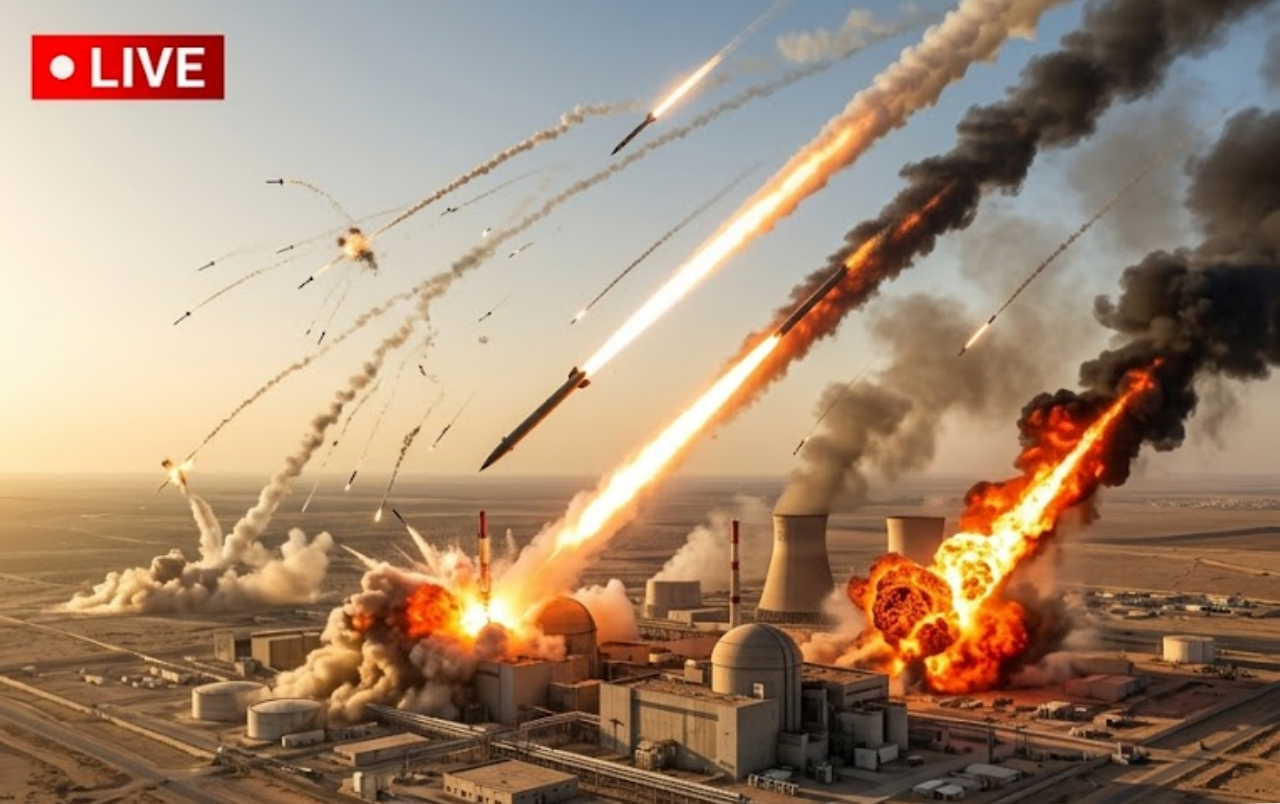
While Israeli officials have not described the situation as a total system failure, they have acknowledged that certain interceptions did not succeed. In heavily defended مناطق, even a single missile getting through represents a serious breach. Reports indicate that dozens, and in some cases hundreds, of civilians were injured in strikes near strategic areas, underscoring the human cost of these breakthroughs.
The psychological impact has been equally significant. The perception of invulnerability that once surrounded Israel’s air defenses is now under strain, as images of missile impacts circulate widely. Public confidence has reportedly dipped, and analysts warn that continued successful penetrations could shift both military strategy and political decision-making.
From Iran’s perspective, the strikes are being framed as a powerful act of retaliation. Officials claim that the ability to hit high-value, heavily defended targets signals a new phase in the conflict—one in which Israeli skies are no longer fully secure. Whether this claim holds true in the long term remains uncertain, but the message is clear: the balance of deterrence is being tested.
Despite these developments, experts caution against overstating the situation. Israel’s air defense systems still intercept the majority of incoming threats, and no system is designed to be 100% effective, especially under large-scale, coordinated attacks. Even a highly successful defense can be pierced under saturation conditions.
As tensions continue to rise, this incident highlights a stark reality of modern warfare: no defense is impenetrable. The battle between missile technology and interception systems is evolving rapidly, and each breakthrough—on either side—reshapes the strategic landscape.
For now, the world watches closely as both nations brace for what could be the next, even more dangerous phase of the conflict.