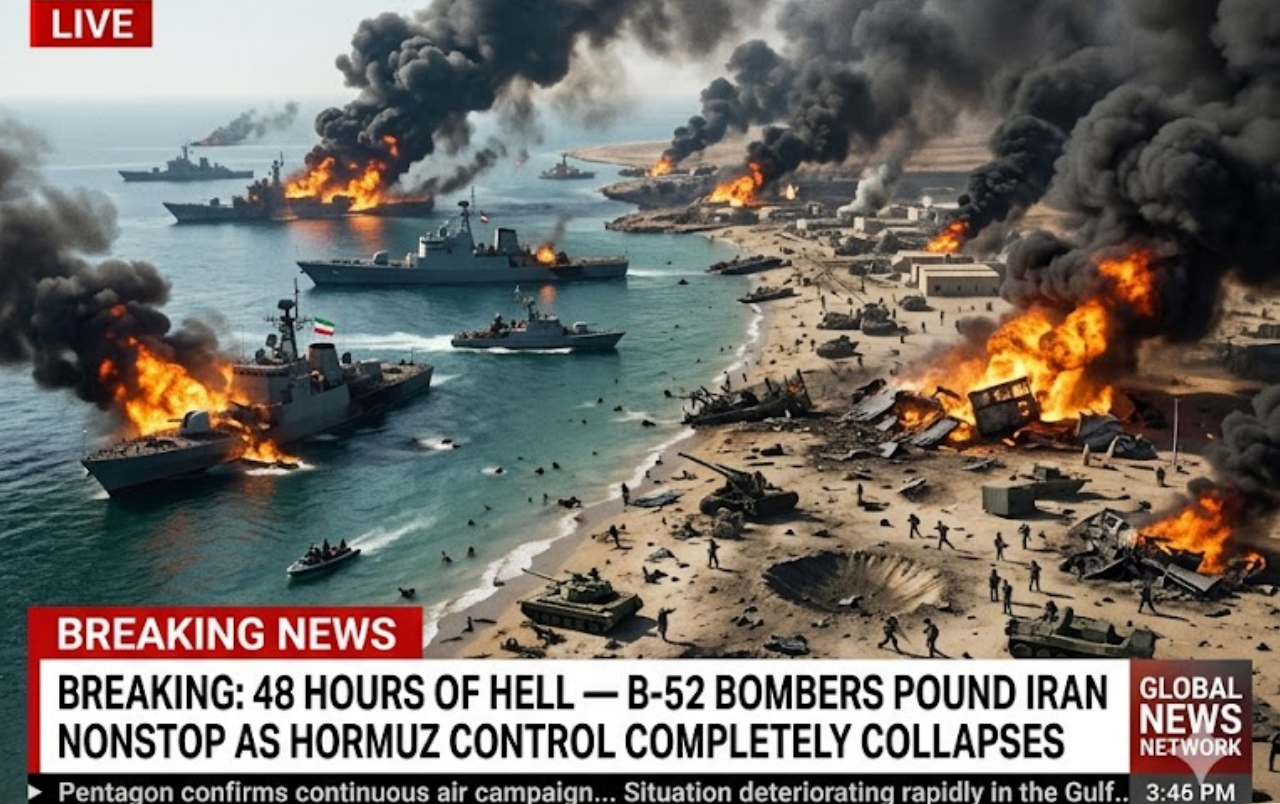
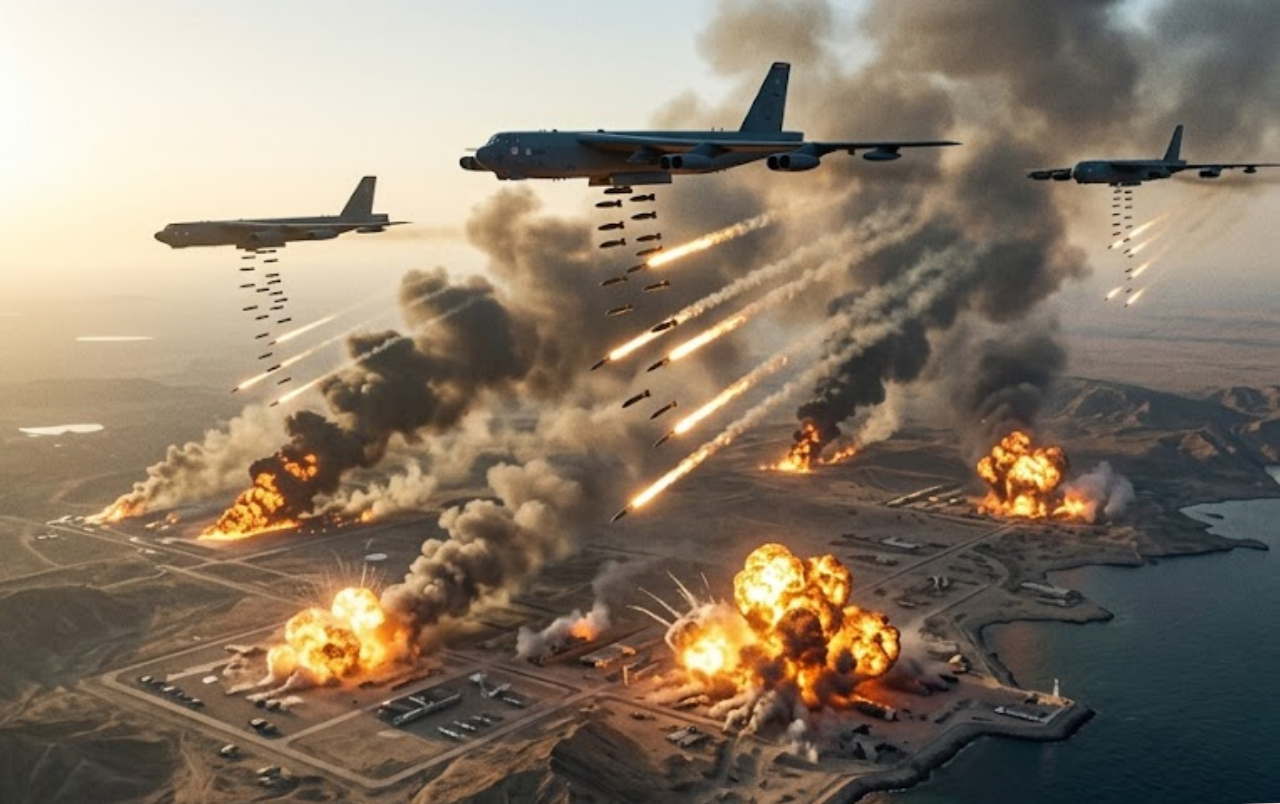
In a dramatic escalation of the ongoing U.S.–Iran war, American B‑52 Stratofortress bombers have been flying sustained bombing missions over Iranian territory, striking targets across the country in what military officials describe as 48 hours of relentless air power. This campaign marks a major shift in the conflict, with long‑range bombers joining precision strike efforts after U.S. forces achieved significant control of Iranian airspace.
The venerable B‑52s, aircraft in service for over 70 years, have been cleared to conduct overland bombing runs against a range of military and infrastructure targets deep inside Iran. These missions are possible because of expanded air superiority that U.S. and allied forces have asserted over much of Iranian airspace, enabling even non‑stealth platforms to carry out heavy bombardment without the level of risk seen earlier in the conflict.
Over the span of two days, these bombers reportedly dropped large quantities of JDAM‑guided gravity bombs and other munitions on Iranian military installations, logistics hubs, and defensive sites. Pentagon officials have suggested that these strikes are intended to further degrade Tehran’s ability to project force, weaken Iran’s air defenses, and undercut command‑and‑control networks that have kept Iranian missile and drone units operational.
The uptick in B‑52 missions coincides with U.S. President Donald Trump’s ultimatum to Iran, demanding the reopening of the Strait of Hormuz — a strategically vital waterway responsible for facilitating nearly a fifth of global petroleum shipments — within 48 hours or face even harsher military consequences. Trump’s stark warning underscores how central control of the strait has become to both strategic calculations and global economic stability.
Iranian defenses, although significantly damaged, have not fully collapsed. Iranian forces have continued retaliatory missile and drone attacks on U.S. bases and allied targets in the region, even as their missile launchers and bunker complexes have been repeatedly struck. Intelligence reports also suggest Iran is rapidly repairing some facilities, digging out launchers after bombardments, and maintaining mobile launch units despite sustained assault.
The intense B‑52 campaign also reflects a broader deterioration in control over the Strait of Hormuz itself. With Iranian forces intermittently laying mines, deploying anti‑ship missiles, and threatening to close the waterway indefinitely if attacked further, maritime traffic has been severely disrupted. This collapse has reverberated through international energy markets, pushing oil prices higher and threatening global supply chains.
While U.S. military leaders assert that the sustained bomber operations are aimed at hastening the war’s end on favorable terms, critics warn that such heavy bombardment — especially without a clear diplomatic solution — risks deepening the conflict and triggering broader regional instability. The deployment of strategic bombers like the B‑52 in sustained overland missions demonstrates the intensity of the current phase of the war, but it also highlights how far the conflict has diverged from limited strikes to full‑scale, high‑impact aerial warfare.