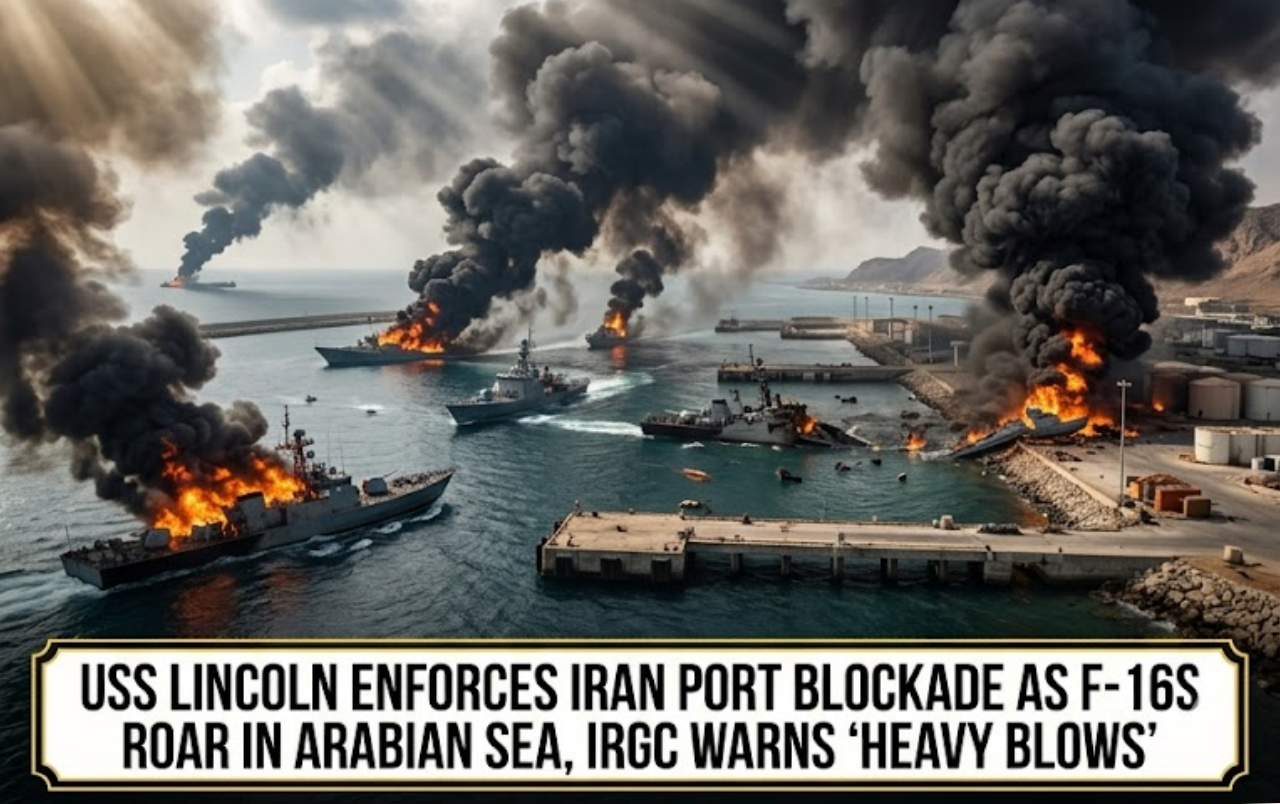
A high-stakes maritime confrontation is unfolding across the Arabian Sea as the United States intensifies its naval blockade of Iranian ports, placing one of its most powerful aircraft carriers—the USS Abraham Lincoln—at the center of escalating tensions. The operation, described by U.S. Central Command as a large-scale enforcement effort, signals a sharp increase in pressure on Tehran amid an already volatile regional crisis.
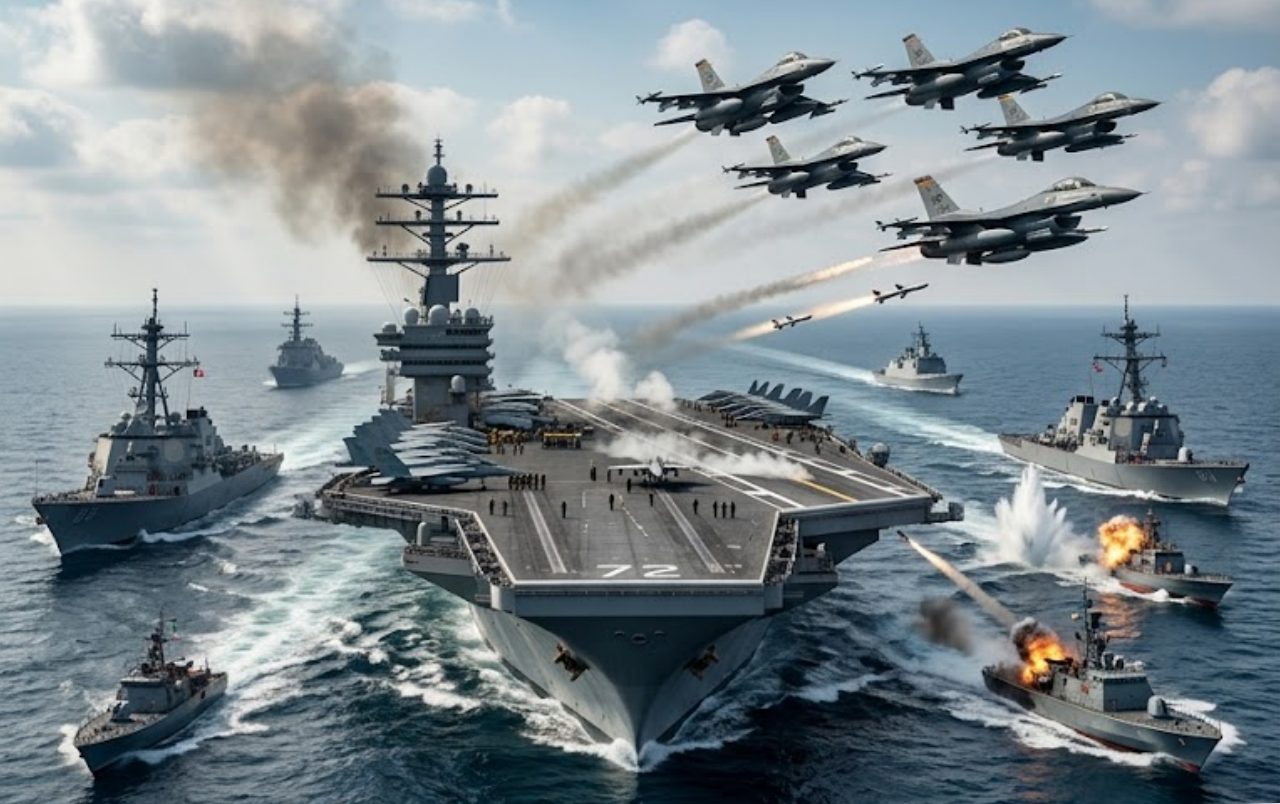
The USS Abraham Lincoln (CVN-72), leading a formidable carrier strike group, has been actively conducting blockade operations aimed at restricting maritime traffic to and from Iranian ports. Backed by more than 10,000 personnel, over a dozen warships, and upwards of 100 aircraft, the U.S. military presence represents one of the most significant naval deployments in the region in recent years.
Fighter jets—including advanced aircraft operating from both the carrier and regional bases—have been roaring across the skies, maintaining constant surveillance and rapid-response capability. While reports often mention F-16 activity in the broader theater, the USS Abraham Lincoln itself carries a powerful air wing that includes F-35C stealth fighters and F/A-18 jets, capable of launching precision strikes or defensive operations within minutes.
The blockade appears to be having tangible effects. Recent reports indicate that multiple vessels attempting to move oil or goods from Iranian ports have been intercepted or turned back, as U.S. forces enforce strict maritime controls. At the same time, surveillance operations have tracked tankers navigating cautiously through nearby waters, highlighting the ongoing cat-and-mouse dynamic between enforcement and evasion.
Iran, however, has responded with defiance. The Islamic Revolutionary Guard Corps (IRGC) has issued strong warnings, threatening “heavy blows” if U.S. forces escalate further. Such rhetoric reflects a broader pattern of strategic signaling, where both sides демонstrate القوة while avoiding direct large-scale confrontation. Analysts note that similar encounters in the past—including drone approaches toward U.S. carriers—have brought forces dangerously close to open conflict.
Despite the rising tensions, the Strait of Hormuz remains open for now, though the situation is fragile. Even brief disruptions in this critical waterway could send shockwaves through global energy markets and international trade. Diplomatic efforts continue in parallel, but the heavy military presence underscores how quickly the situation could shift.
For now, the USS Abraham Lincoln and its strike group stand as both a symbol of American military reach and a focal point of geopolitical तनाव. As IRGC warnings grow sharper and U.S. enforcement tightens, the waters of the Arabian Sea are becoming an increasingly dangerous stage—where a single miscalculation could trigger consequences far beyond the region.