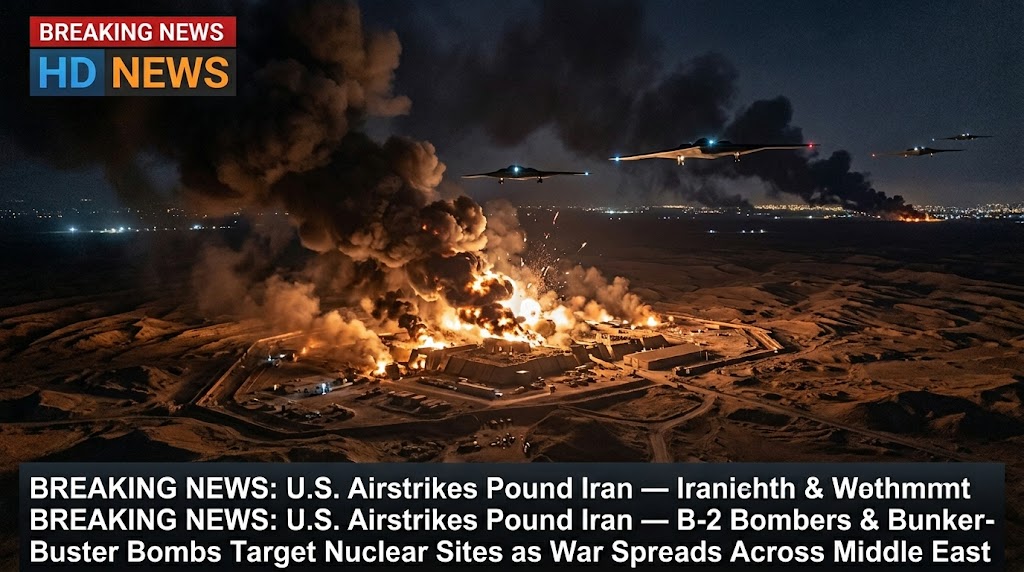
A significant intensification of the ongoing conflict in the Middle East has been reported, as the United States carried out a series of coordinated airstrikes targeting Iran’s nuclear and military infrastructure. This operation is being described as one of the most forceful and strategically complex aerial campaigns seen in the conflict to date.
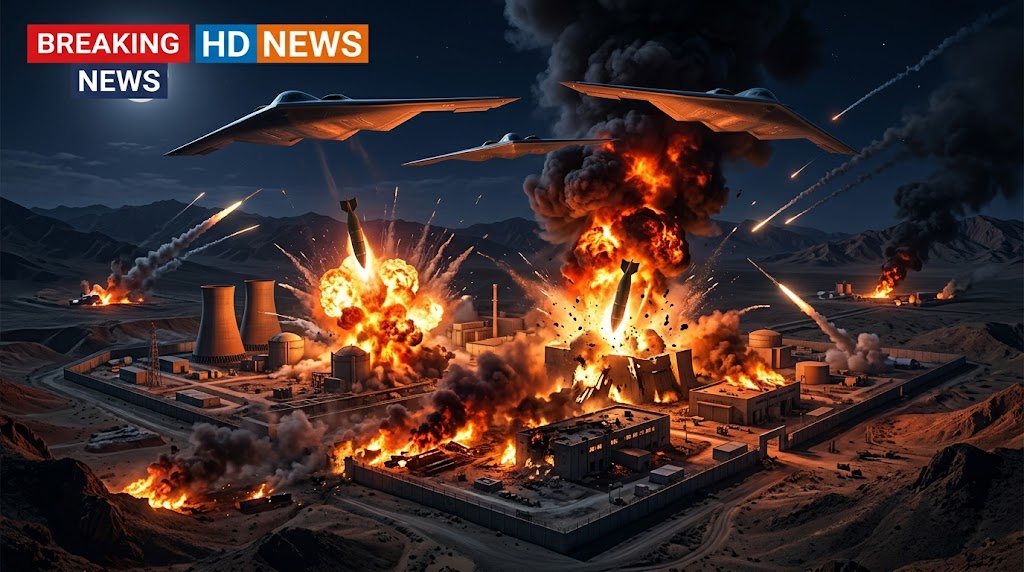
Central to the mission were U.S. B-2 Spirit stealth bombers, aircraft specifically designed to evade advanced air defense systems and carry out long-range strikes. These bombers reportedly traveled vast distances to reach heavily protected Iranian facilities, including deeply buried nuclear enrichment sites. Such locations are typically shielded by layers of reinforced materials and underground construction, making them exceptionally difficult to destroy through conventional means. The B-2’s ability to deliver specialized munitions allowed the U.S. to directly target these hardened installations.
The operation relied heavily on advanced weaponry engineered for maximum penetration and precision. Among the munitions used were bunker-penetrating bombs capable of breaking through thick layers of concrete and earth before detonating. These weapons are specifically designed to disable underground complexes, including research centers and enrichment facilities that play a key role in nuclear development. In addition to these bombs, long-range cruise missiles were launched from strategic platforms, enabling strikes from a safe distance while maintaining high accuracy. Together, these tools formed a coordinated effort aimed at weakening critical components of Iran’s nuclear capabilities.
These strikes are not occurring in isolation but are part of a broader escalation across the region. Tensions have been rising steadily, with multiple actors becoming increasingly involved. Missile exchanges between opposing forces have intensified, while energy infrastructure—such as oil facilities and pipelines—has also come under attack. The involvement of the United States, Israel, and Iran in overlapping military actions has contributed to a rapidly expanding conflict landscape. As a result, the situation has grown more volatile, with diplomatic channels struggling to keep pace with the speed of military developments.
The wider implications of these actions extend far beyond immediate battlefield outcomes. By targeting deeply buried and strategically significant sites, the United States is demonstrating its capacity to project power across long distances and operate effectively against fortified targets. This sends a strong signal regarding its strategic priorities, particularly in limiting Iran’s ability to advance its nuclear program. At the same time, such actions carry risks, as they may provoke further retaliation or encourage additional escalation from regional actors.
The consequences are also being felt on a global scale. Heightened instability in the Middle East often affects international energy markets, given the region’s central role in oil production and distribution. Disruptions to supply chains or infrastructure could lead to fluctuations in energy prices, impacting economies worldwide. Additionally, concerns about broader security risks are growing, as the potential for miscalculation or unintended escalation increases with each new development.
As more information about the operation becomes available, analysts and policymakers alike are grappling with its long-term significance. One of the key questions is whether these strikes will successfully diminish Iran’s strategic capabilities or instead trigger a cycle of retaliation that deepens the conflict further. History has shown that military actions of this scale can produce unpredictable outcomes, particularly in a region already marked by complex alliances and longstanding tensions.
Ultimately, this latest development highlights both the intensity of the current conflict and the high stakes involved. The situation remains fluid, and the decisions made in the coming days and weeks will likely shape not only the trajectory of the conflict but also the broader stability of the Middle East and beyond.