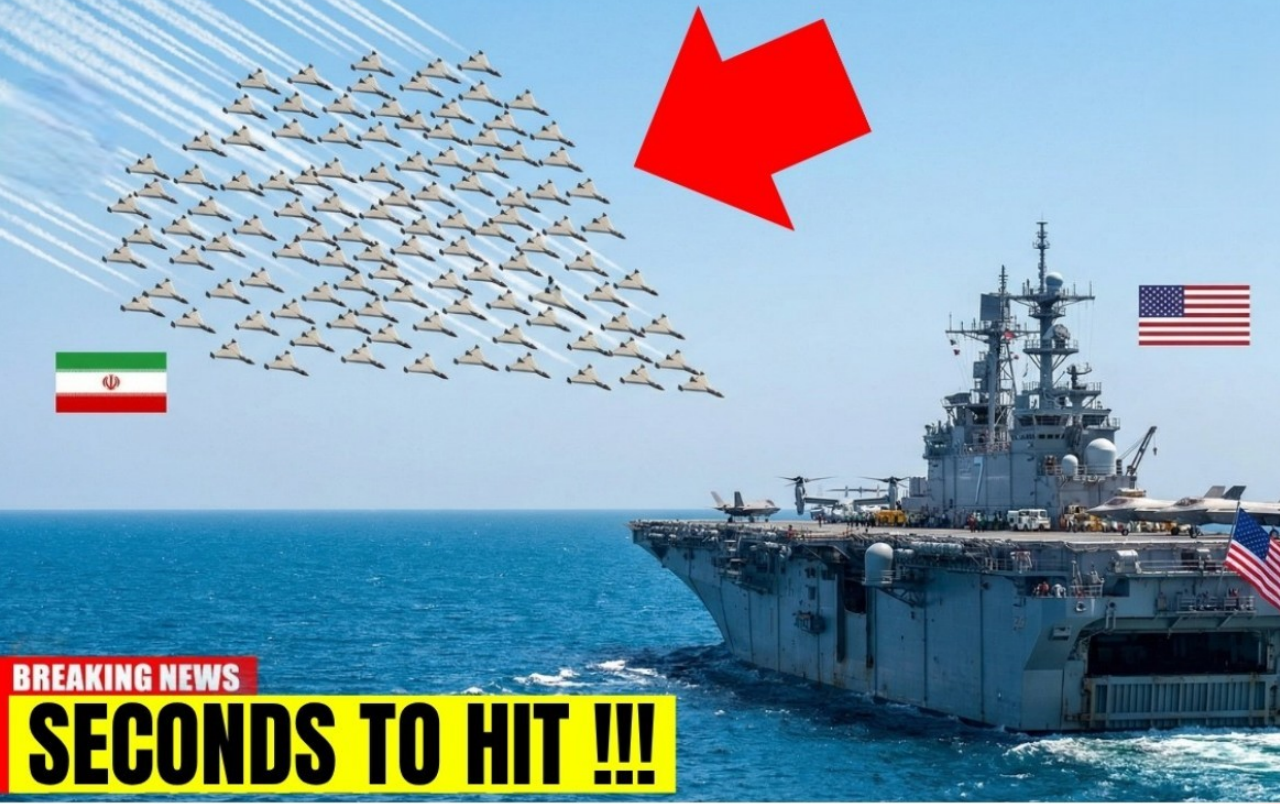
It started as a swarm.
Low over the water… barely visible on radar… dozens—then hundreds—of small, fast-moving objects closing in on one of the most powerful warships on Earth. A U.S. Navy carrier strike group, worth billions and protected by layers of cutting-edge defense systems, suddenly found itself facing one of the most dangerous threats in modern warfare:
A mass drone attack.
Iran has spent years perfecting this exact tactic.
Instead of relying on a few expensive missiles, Tehran deploys large numbers of cheap, expendable drones—designed to overwhelm defenses through sheer volume. These drones, like the widely used Shahed series, are low-cost but highly effective, forcing advanced systems to respond again and again until they are stretched thin.
And that’s the idea behind a swarm.
Saturate. Confuse. Break through.
Military experts have warned that drone swarms pose a “credible threat” even to U.S. aircraft carriers, especially in confined waters where reaction time is limited.
So what happens when 100+ drones come at once?
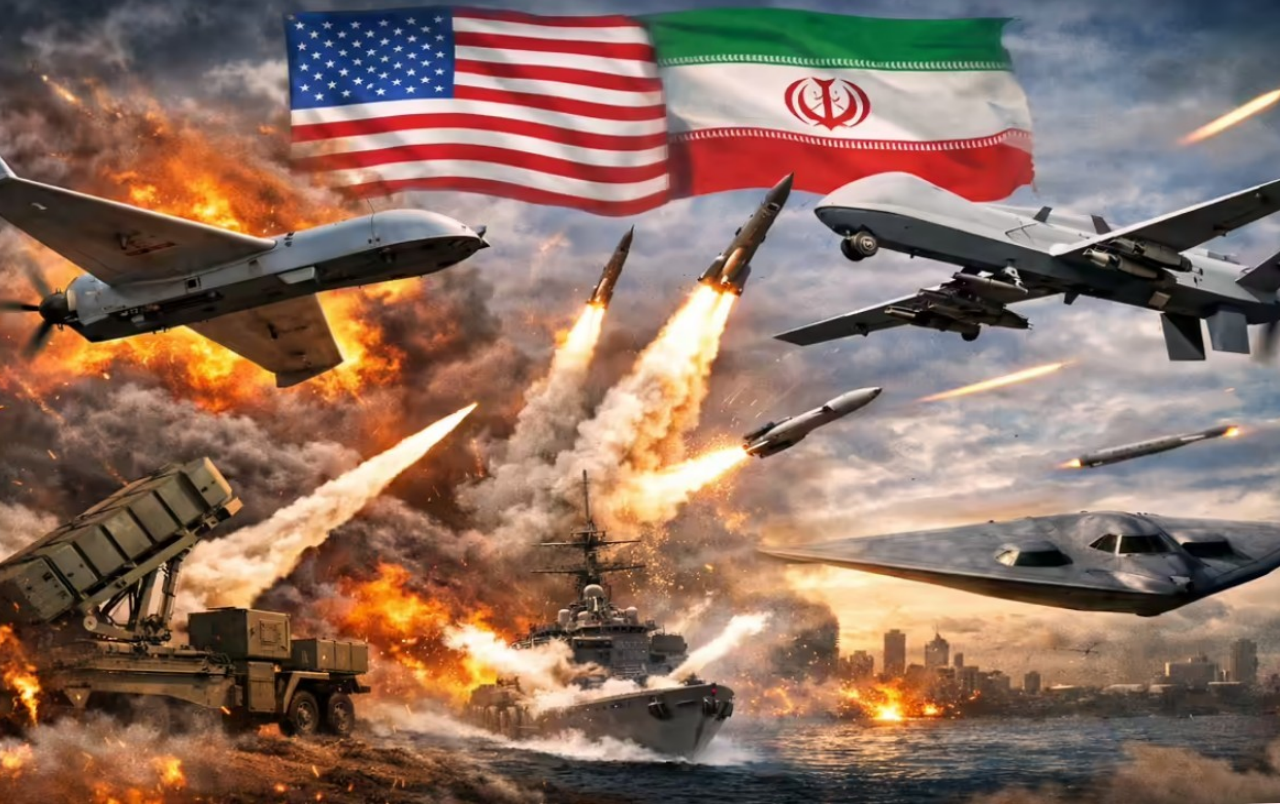
Everything activates.
Radar systems lock targets.
Interceptor missiles launch.
Electronic warfare units attempt to jam guidance signals.
Close-in weapon systems—rapid-fire cannons—begin firing at incoming threats.
A carrier isn’t alone. It’s surrounded by destroyers, cruisers, and layered defenses designed exactly for moments like this.
And that’s where the “huge mistake” comes in.
Because while drone swarms are dangerous—they’re also predictable.
To launch that many drones at once, you reveal positions. You expose launch sites. You burn through resources. And most importantly—you trigger a massive response.
Recent reports show that U.S. forces have been adapting quickly to Iran’s drone-heavy strategy, deploying new counter-drone systems, electronic warfare tools, and even their own autonomous platforms to neutralize threats more efficiently.
In many cases, the majority of incoming drones are intercepted or disabled before reaching their targets.
And once the attack fails?
Retaliation follows.
Precision strikes.
Targeted responses.
Launch sites destroyed.
In the current conflict, U.S. forces have already inflicted heavy losses on Iranian assets—including ships, drones, and missile infrastructure—after repeated attacks.
That’s the risk of escalation.
A swarm attack might look overwhelming—but if it doesn’t succeed, it can backfire hard.
Still, one truth remains:
Even if 90% of drones are stopped… it only takes a few to get through to cause damage. That’s why these attacks are taken so seriously—and why they continue to evolve.
So was it a huge mistake?
Maybe.
Or maybe it was a test.
Because in modern warfare, the real battle isn’t just about who has the strongest weapons…
It’s about who adapts faster.
And right now, both sides are learning—fast.