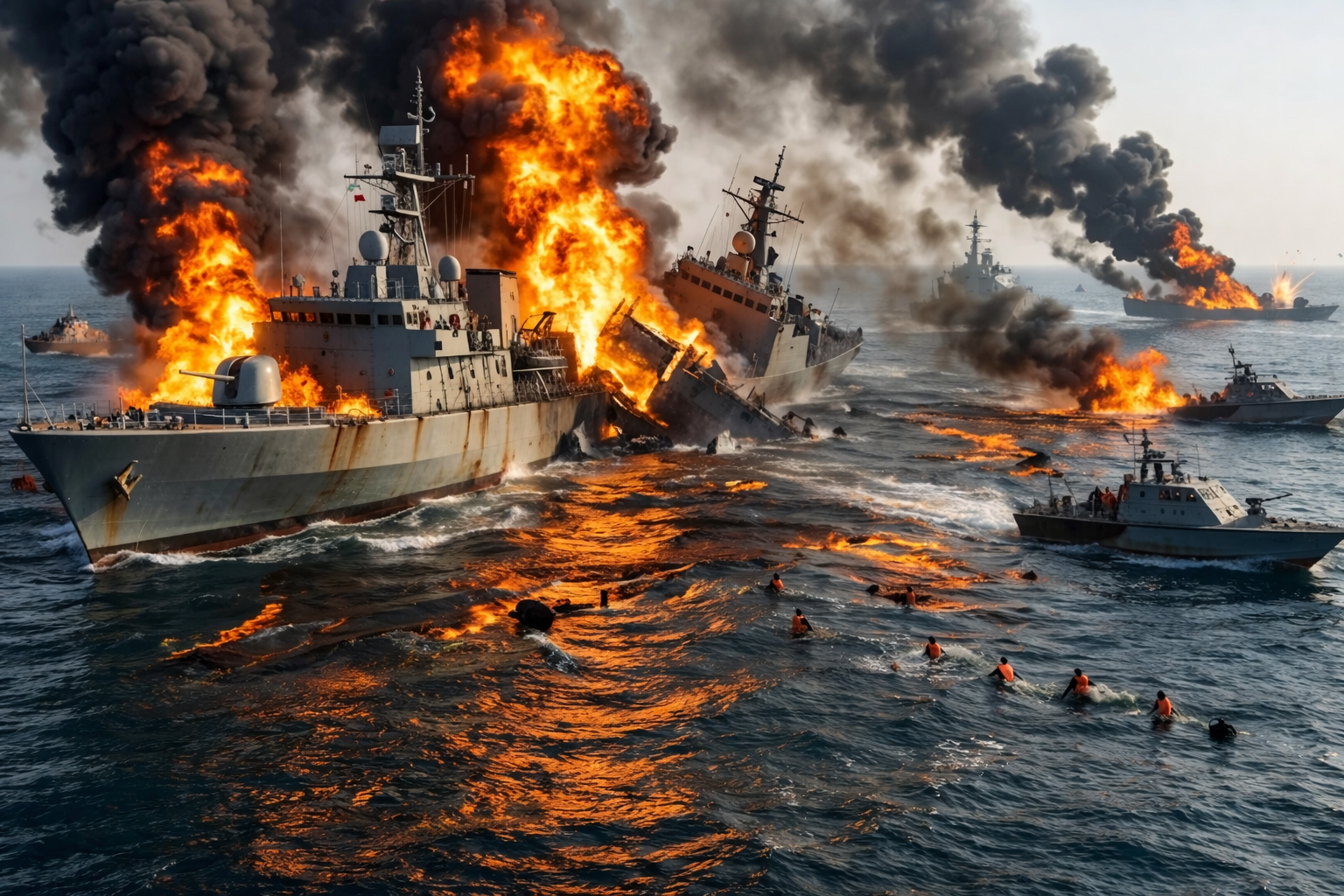
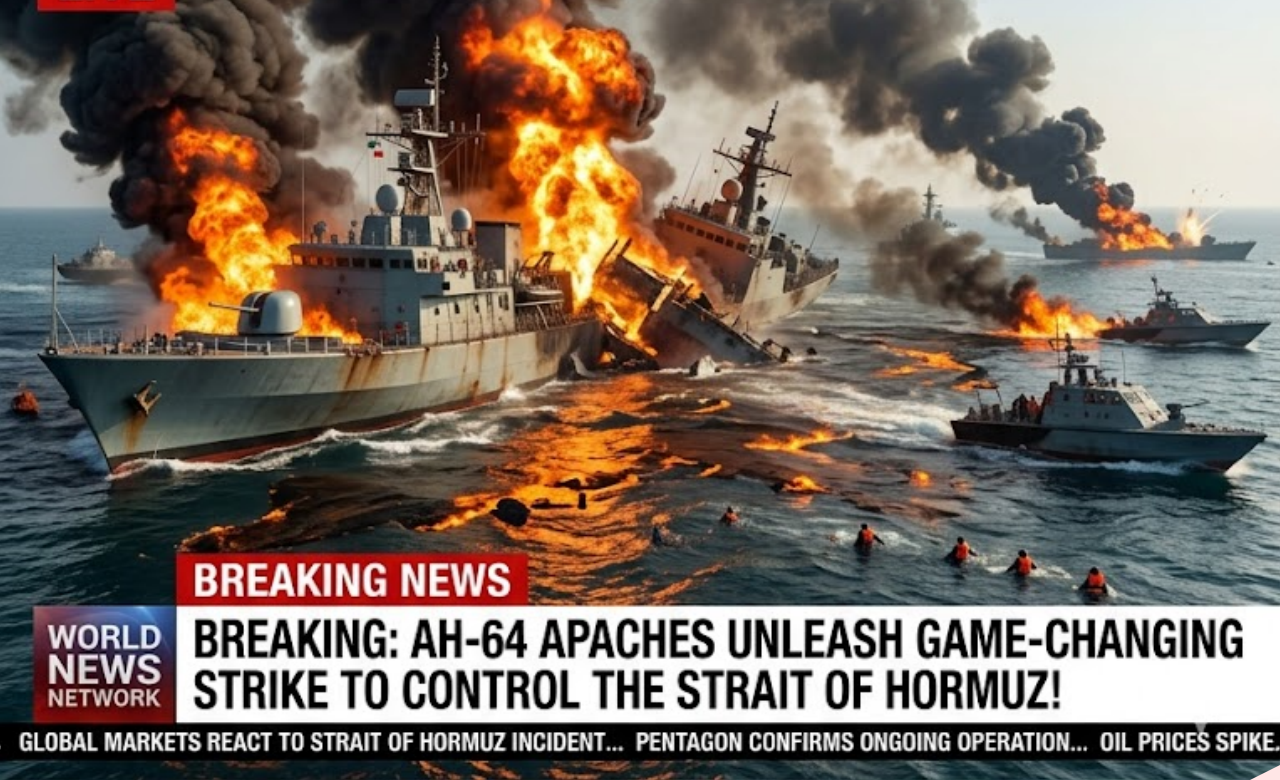
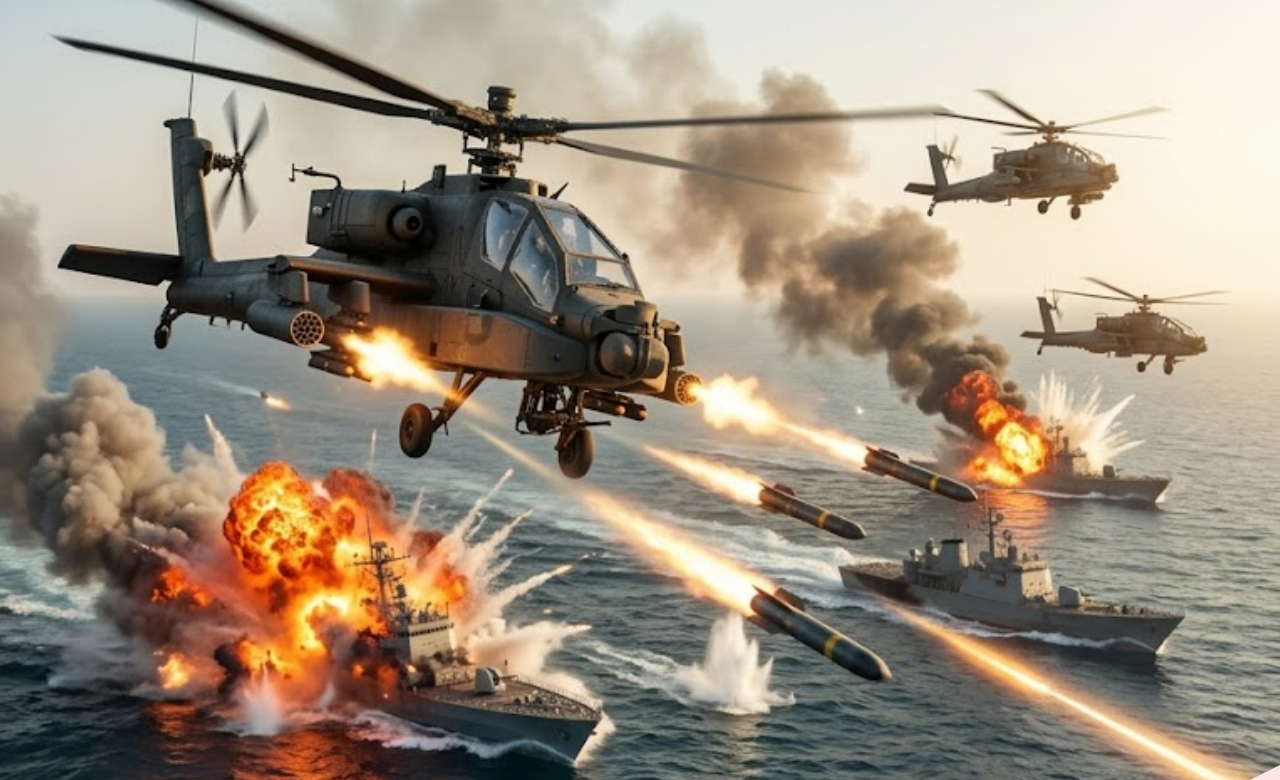
In a striking demonstration of U.S. military superiority in the air, AH-64 Apache helicopters from the U.S. Army carried out a decisive operation that has effectively ensured the safety of maritime traffic through the Strait of Hormuz. Working in tightly coordinated formations alongside naval forces, these advanced attack units successfully eliminated numerous Iranian anti-ship missile systems, coastal surveillance installations, and fast-moving IRGC boats that had posed a threat to commercial shipping.
Flying at low altitudes, the Apaches—known for their accuracy and resilience in combat—delivered a relentless assault using Hellfire missiles and their powerful 30mm chain guns. The aftermath is visible along the northern shoreline, where plumes of dark smoke rise from destroyed positions and damaged patrol boats drift across the waterway. With major threats neutralized, vital shipping lanes have reopened, allowing oil tankers to once again pass safely through this critical route that handles a significant portion of the world’s energy supply.
This operation comes amid mounting pressure on Iran’s leadership. Key components of its military infrastructure have reportedly been dismantled, including nuclear facilities, weapons stockpiles, drone reserves, and air defense systems. These losses have significantly reduced Tehran’s capacity to influence the region militarily.
President Donald Trump commended the Apache crews for their performance, describing the mission as “highly effective and decisive.” He reiterated the United States’ commitment to protecting global energy routes and preventing any disruption to international commerce. Under his direction, U.S. strategy in the region has shifted from a defensive stance to one of assertive control over the Strait.
Experts view this development as a major turning point. Beyond addressing immediate dangers, the operation has reinforced U.S. influence over one of the world’s most strategically important waterways. Regional allies, particularly those reliant on stable energy exports, are likely to see this as a reassuring move that safeguards both economic stability and national security.
Rather than simply containing threats, this action signals a broader assertion of dominance. Attempts by Iran to interfere with global trade appear to have had the opposite effect, weakening its own military position.
The broader implication is clear: control of the Strait is no longer contested in the same way. The United States has demonstrated its ability to respond swiftly and decisively, reinforcing its presence across multiple domains with significant force.