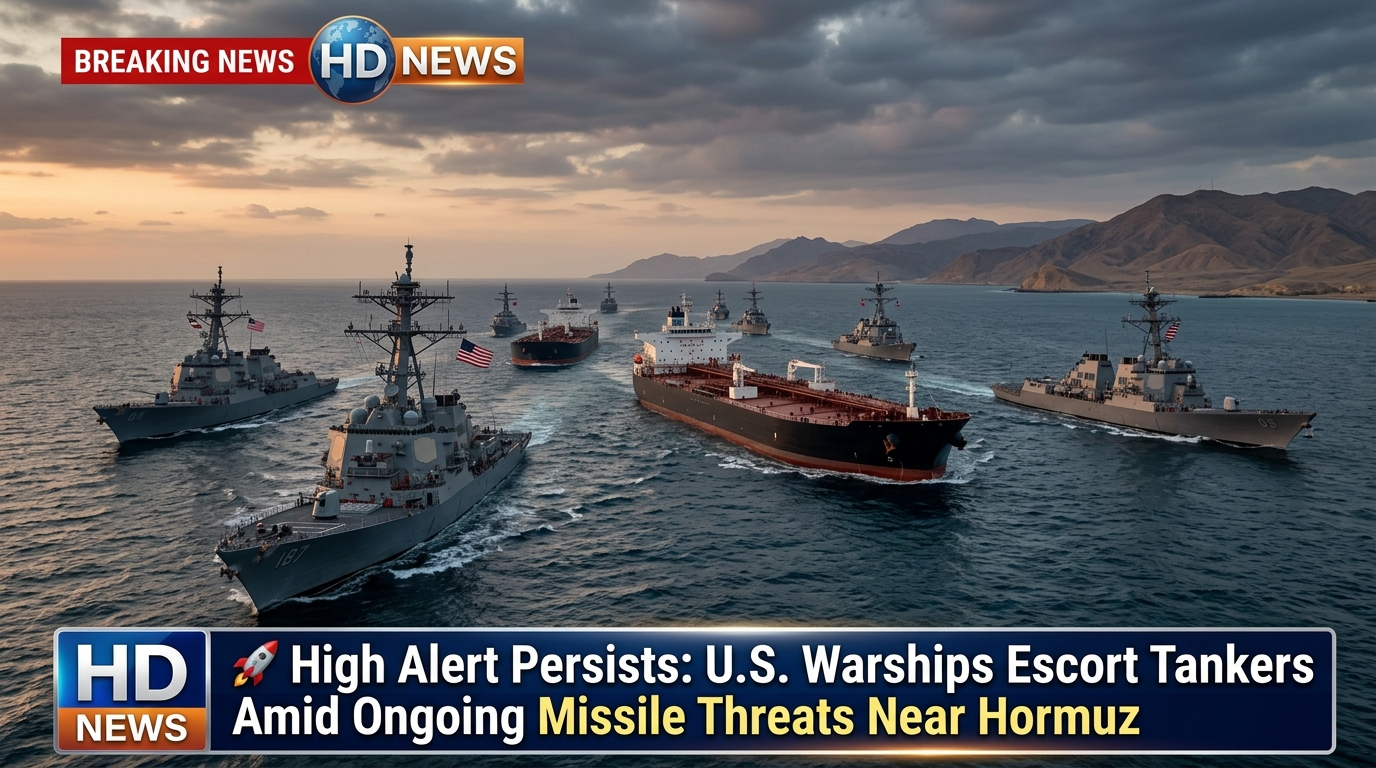
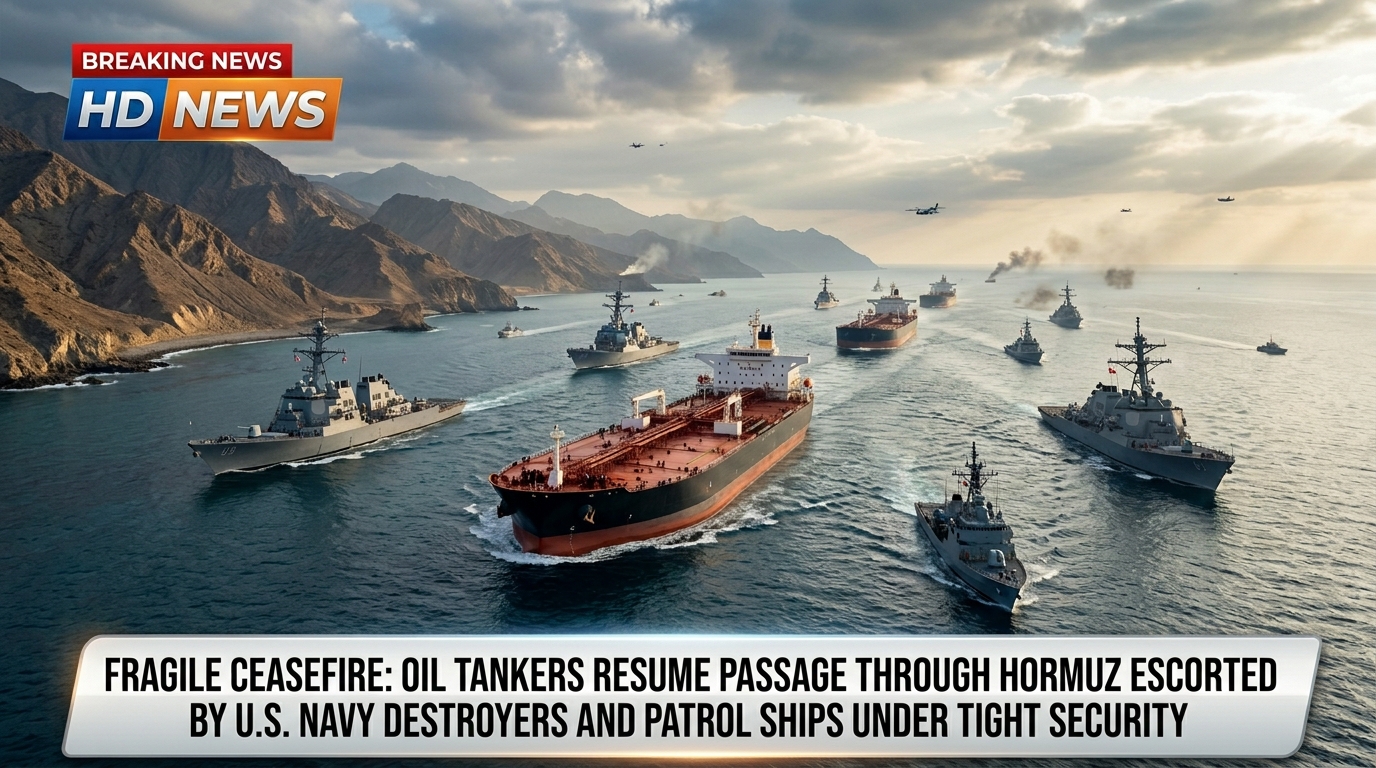
Oil tankers have cautiously resumed transit through the Strait of Hormuz following the announcement of a fragile ceasefire, offering a tentative sign of stability in one of the world’s most strategically vital waterways. However, the return of maritime traffic comes under extraordinary security measures, with heavily armed naval escorts accompanying commercial vessels amid lingering fears of renewed conflict.
According to regional maritime authorities, several tankers began moving through the narrow strait earlier today, marking the first significant flow of energy shipments since hostilities disrupted operations days ago. The passage, which connects the Persian Gulf to global markets, is a critical artery for international oil supply, with nearly 20 percent of the world’s النفط exports typically passing through it.
Naval forces from multiple countries have deployed a visible and robust presence in the area. Warships, surveillance aircraft, and patrol vessels are actively monitoring the route, forming protective corridors for civilian shipping. Officials describe the operation as a “coordinated security effort” aimed at deterring potential attacks and reassuring global markets that trade can continue despite the tense environment.
Shipping companies, while relieved at the reopening, remain cautious. Many operators are proceeding with heightened risk protocols, including reduced speeds, increased communication checks, and contingency planning in case the ceasefire collapses. Some firms are still delaying voyages, waiting for clearer signals that the truce will hold.
The ceasefire itself remains delicate. It follows a period of intense escalation involving missile strikes, drone attacks, and reported confrontations between regional powers and international forces. Although diplomatic channels have helped broker a pause in hostilities, no long-term agreement has yet been secured, leaving the situation highly unpredictable.
Energy markets have responded with cautious optimism. Oil prices, which surged sharply during the height of the الأزمة, showed early signs of stabilization as tankers resumed movement. Analysts warn, however, that even minor incidents could trigger renewed volatility, given the strategic importance of the strait and the concentration of global energy flows through it.
Meanwhile, maritime insurers are reassessing risk levels in real time. Premiums for vessels operating in the region remain elevated, reflecting the ongoing uncertainty. Industry experts note that insurance costs, combined with security expenses, could continue to impact shipping rates and, ultimately, global commodity prices.
International leaders have called for restraint and emphasized the importance of maintaining open shipping lanes. Diplomatic efforts are ongoing to strengthen the ceasefire and prevent further escalation, but trust between key actors remains fragile.
As tankers continue their escorted journeys, the situation in the Strait of Hormuz serves as a stark reminder of how quickly geopolitical tensions can disrupt global trade. For now, the resumption of traffic offers a measure of relief—but with warships still shadowing every movement, the path to lasting stability remains uncertain.